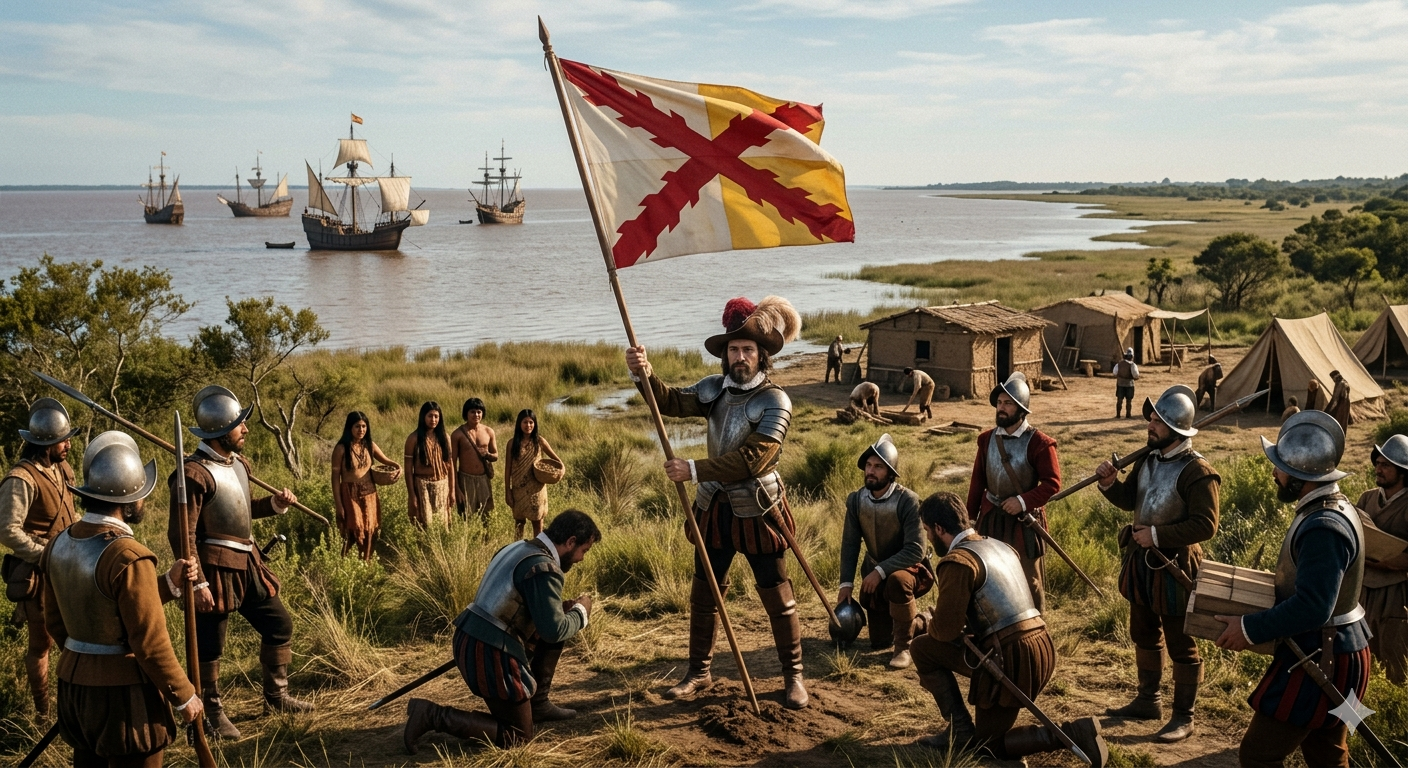
On February 2, 1536, a Spanish conquistador named Pedro de Mendoza stood on the western bank of a vast, tawny estuary at the southern edge of South America and decreed the founding of a city. He named it Ciudad de Nuestra Señora Santa María del Buen Ayre — City of Our Lady Saint Mary of the Fair Winds — a name that would eventually be compressed, over centuries, into the two words by which this city is now known across the world: Buenos Aires. The settlement Mendoza planted that February afternoon was fragile, feverish in its leadership, and bitterly contested by the people who already called those riverbanks home. Within five years it would be abandoned, burned, and left to the wind. Yet the act of founding itself — the first European attempt to plant a permanent settlement on what would become Argentine soil — set in motion a sequence of events that led, eventually, to one of the great cities of the Southern Hemisphere. The story of Buenos Aires begins not with triumph but with struggle, illness, violence, and the strange obstinacy of men determined to make a mark on a continent that did not want them.
The World That Made Pedro de Mendoza: Noble Ambition in an Age of Conquest
Pedro de Mendoza was born around 1487 in Guadix, in the Kingdom of Granada, into a distinguished Spanish noble family. His father, Fernando de Mendoza of Guadix, was a descendant of Íñigo López de Mendoza, the first Marquis of Santillana, one of the great literary and aristocratic figures of fifteenth-century Castile. The family had settled in Guadix after its reconquest by Christian forces from the Moors in 1489, and they were deeply embedded in the culture of the Reconquista — the centuries-long campaign to drive Islam from Iberian soil that had given Spanish nobility its identity, its military ethos, and its appetite for conquest. Mendoza was a page at the court of Emperor Charles V and accompanied the sovereign on his journey to England. He was knighted into the Order of Alcántara in 1524 and later entered the Order of Santiago through the influence of his father.
Like many ambitious Spanish noblemen of his generation, Mendoza looked to the Americas for the wealth and glory that the Old World could not easily provide. The conquest of Peru by Francisco Pizarro in the early 1530s, which had delivered staggering quantities of Inca gold and silver to Spain, had electrified the court of Charles V and inflamed the imaginations of every Spanish adventurer who heard about it. In 1529, Mendoza offered to explore South America entirely at his own expense and to establish colonies there in the name of the Crown. It took five years for his offer to be formally accepted, but in 1534 his proposal was endorsed partly through the efforts of his relative María de Mendoza, wife of the powerful Secretary of State Francisco de los Cobos. That same year, Mendoza was appointed adelantado, governor, captain-general, and chief justice over New Andalusia — a title that gave him authority over as much territory as he could conquer within 200 leagues of the southern limit of New Toledo, understood by all parties to mean the region of the Río de la Plata on the Atlantic coast.
The Largest Expedition Ever Sent from Spain to the Americas
The terms of Mendoza’s commission from Emperor Charles V were ambitious to the point of being almost impossible. The Emperor provided him with 2,000 men and 13 ships on the condition that within two years Mendoza would transport 1,000 colonists, build roads into the interior, and construct three fortified settlements. He was to investigate the rumored interior wealth of the continent and was entitled to half the treasure of any chiefs killed and nine-tenths of any ransom collected. The expedition that assembled at Seville in 1535 was the largest fleet Spain had ever sent to the Americas — a fact that speaks to both the ambition of the enterprise and the desperate interest of the Spanish Crown in securing its claims against Portugal, which was rapidly extending its reach through Brazil.
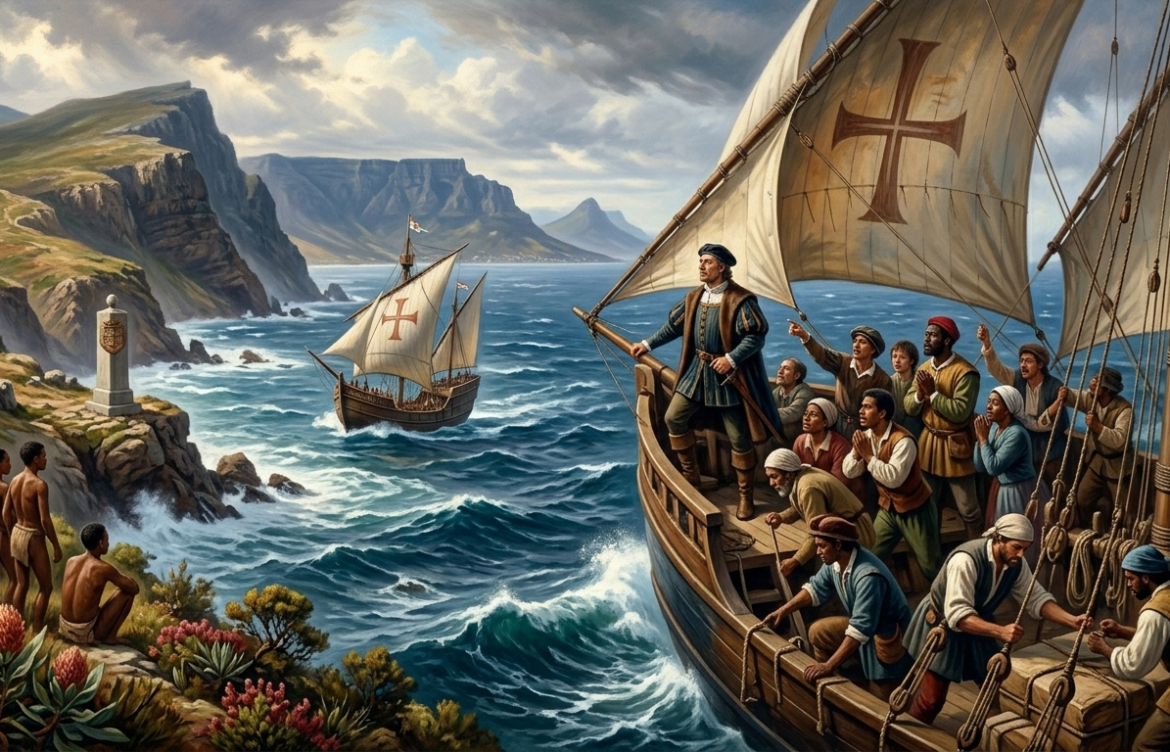
Mendoza set sail on August 24, 1535, with his fleet of approximately 13 ships carrying between 1,500 and 2,000 men — Spanish soldiers, German adventurers, Flemish craftsmen, and assorted fortune seekers drawn from across the empire. Among those aboard was a Bavarian soldier named Ulrich Schmidl (sometimes spelled Ulderico Schmidt or Ulrico Schmidl), who would spend the next eighteen years in the Río de la Plata region and whose written account of the expedition — published in Germany in 1567 under the title “Wahrhaftige Historien” — remains the most important contemporary document of this early period of Argentine history. The crossing of the Atlantic was immediately troubled. A fierce storm scattered the fleet off the coast of Brazil, and the ships had to regroup before pressing southward. During this chaotic interlude, Mendoza’s lieutenant Juan de Osorio was assassinated — by Mendoza’s orders, according to some accounts, on suspicion of treachery and plotting against his commander’s authority.
Arrival on the Río de la Plata and the First Encounter with the Querandí
The fleet entered the mouth of the Río de la Plata — the great estuary formed by the confluence of the Paraná and Uruguay rivers, stretching more than 200 kilometers across at its widest point — in January 1536. The name Río de la Plata, meaning River of Silver, had been given to the estuary by earlier explorers who believed it led to fabulous silver deposits in the continental interior. The first European known to have reached it was Juan Díaz de Solís, who had sailed up the estuary in 1516 only to be killed by the native Charrúa tribe on what is now Uruguayan soil. Ferdinand Magellan had also touched its shores during his circumnavigation. The river was known, then, but its hinterland remained mysterious and largely unexplored by Europeans.
When Mendoza’s expedition arrived and began establishing a settlement on the western bank of the estuary, they encountered a semi-nomadic indigenous people known as the Querandí. The name itself had been given to them by the Guaraní people and meant roughly “men with fat,” a reference to their diet of animal fat from the game they hunted across the Pampas. The Querandí were tall, warlike, and skilled with the bow and the bola — a weapon consisting of stone balls connected by leather cords that could be thrown to tangle the legs of animals or enemies. Their lifestyle was semi-sedentary: in winter they gathered by water sources, and in summer they ranged inland on hunting raids. Initially, the relationship between the Querandí and the Spanish settlers was one of cautious exchange. The indigenous people shared food — fish, game, and whatever provisions they could spare — with the newcomers, accepting Spanish goods in return. For approximately two weeks this fragile commerce sustained both parties.
But the Spanish demands proved unsustainable. The expedition numbered in the thousands, and its appetite for provisions quickly outstripped what the Querandí were willing or able to supply. When the Querandí stopped bringing food and withdrew from contact, the Spanish interpreted it as hostility and retaliated. Mendoza sent his brother, Diego de Mendoza, to lead a military expedition against the Querandí. On June 15, 1536, a savage battle was fought on the banks of the Luján River — a confrontation that according to Ulrich Schmidl killed approximately forty Spaniards and a thousand indigenous warriors, including Diego de Mendoza himself and thirty of his men. The Spanish cavalry was neutralized by the Querandí’s effective use of the bola, and what remained of the force retreated to the settlement under cover of darkness. The Querandí survivors rallied other tribes, laid siege to the nascent settlement, and cut off its food supply entirely. Buenos Aires — the name by which the settlement was already being informally called — teetered on the edge of starvation.
The Founding of the Settlement: February 2, 1536, and the Name “Buenos Aires”
The formal act of founding had occurred on February 2, 1536, when Mendoza established the settlement in what is today the San Telmo district of Buenos Aires, south of the modern city center. The original site is believed to correspond roughly to the area now known as Parque Lezama. The settlement consisted of primitive structures of mud and straw — basic huts, a rudimentary chapel, and a modest wooden and earthen fort. Mendoza named it Ciudad de Nuestra Señora Santa María del Buen Ayre, a name whose origins are worth understanding. The name “Buen Ayre” — Good Winds or Fair Winds — was linked by contemporary accounts to the devotion of the expedition’s chaplain to the Virgin of Buen Ayre, also known as Our Lady of Bonaria, the patroness saint of Sardinia. Spanish and Italian sailors who passed through the Mediterranean had long venerated this Madonna and attributed safe passages to her intercession. When the fleet arrived safely in the Río de la Plata after the Atlantic crossing, the sailors gave thanks to Santa María de los Buenos Aires, and the name attached itself to the place. A popular legend later attributed the name to a Spanish sailor named Sancho del Campo, who supposedly exclaimed “How fair are the winds of this land!” upon arrival, but Argentine historian Eduardo Madero, after extensive research in Spanish archives in 1882, concluded that the maritime Marian devotion was the true source.
Mendoza’s Illness, Departure, and Death at Sea
Pedro de Mendoza was gravely ill throughout much of the founding campaign. He had been afflicted for years with syphilis, a disease that in its later stages causes progressive neurological and physical deterioration. He spent much of his time at Buenos Aires bedridden and was largely unable to exercise effective command. The burden of leadership fell to his lieutenants — men like Juan de Ayolas, Francisco Ruiz Galán, and Domingo Martínez de Irala — who conducted the actual military operations, explored the river system, and managed relations with the indigenous population. Despite his condition, Mendoza did what he could. He sent Ayolas upriver to find friendlier terrain and a more reliable food source. He wrote to Spain begging for reinforcements and provisions, and his will reportedly contained an explicit plea for the Crown to send more men and supplies to save his settlement.
By early 1537, it was clear that Mendoza could neither lead nor survive in Buenos Aires. He made the decision to return to Spain, departing in April 1537, leaving Captain Francisco Ruiz Galán in command of the settlement. He would never see his homeland again. Pedro de Mendoza died at sea on June 23, 1537, while still in the Atlantic Ocean. His body was committed to the deep. He was approximately fifty years old. The promises he had made to his dying men — that help would come, that Spain would not abandon them — went largely unfulfilled. The few hundred survivors left in Buenos Aires held out against starvation and Querandí raids for another four years.
The Abandonment of the First Buenos Aires and the Rise of Asunción
The upriver expedition that Mendoza had sent under Juan de Ayolas and Domingo Martínez de Irala proved to be the most consequential act of the entire first Buenos Aires enterprise, even if it did not save the settlement. Ayolas and Irala pushed approximately a thousand miles up the Paraná and Paraguay rivers, deep into the South American interior. Ayolas was ultimately lost on an exploring expedition — killed by indigenous people while on an overland crossing — but Irala found among the Guaraní people, a largely sedentary agricultural nation, a far more hospitable reception than the Spaniards had received on the Pampas. In 1537, Irala established a fort that became the city of Asunción, now the capital of Paraguay. Asunción offered fertile soil, a settled indigenous population willing to engage with the Spanish, and a location far enough inland to be less exposed to the brutal dynamics of the coastal Pampas.
With Mendoza dead, the remnants of the Buenos Aires garrison gradually recognized that Asunción represented a more viable future. In 1541, the decision was made: the settlers abandoned the first Buenos Aires, and under the governorship of Domingo Martínez de Irala — elected by the men as their third temporary governor — they destroyed what remained of the fort and moved upriver to Asunción. The Querandí, or their allied tribes, burned what was left. For the next four decades, Asunción served as the center of Spanish colonial activity in the southern cone of South America. The cities of Santiago del Estero (1553), Córdoba (1573), Tucumán (1565), and Salta (1582) were all founded in subsequent years as streams of colonization spread southward and westward from Asunción and from Peru.
Juan de Garay and the Second, Permanent Founding of Buenos Aires: June 11, 1580
The return to Buenos Aires came forty-four years after its abandonment, driven by the Spanish Crown’s need for a direct Atlantic port to service its growing empire in the southern continent. Goods from the silver mines of Potosí in Upper Peru had to travel overland to Pacific ports and then by sea around the continent — a brutally inefficient route. A settlement on the Río de la Plata would provide direct Atlantic access, dramatically shortening the commercial and military supply chains of the empire. It would also consolidate Spanish claims against Portuguese encroachment from Brazil.
The man chosen for the refounding was Juan de Garay, a Spanish conquistador born around 1528, who had lived in Asunción for more than twenty years and risen to the rank of Captain General of the Viceroyalty. On June 11, 1580, Garay sailed down the Paraná River from Asunción with a small expedition — approximately forty-five men, a Franciscan priest, and one woman, Ana Díaz, whose exact role in the expedition was never clearly defined by contemporaries but whose presence Frommer’s later noted seemed to serve as a charm for the colony’s success. Landing at the riverbank in the location that would become the Plaza de Mayo, Garay formally refounded the city, calling it Ciudad de la Santísima Trinidad — City of the Most Holy Trinity — and naming its port Santa María de los Buenos Ayres. The settlement was laid out according to the Laws of the Indies: a rectangle of 144 blocks divided by regular streets, centered on the Plaza Mayor, with the most important civic buildings — the cabildo, the church, and the governor’s house — arranged around the central square.
Juan de Garay was killed on March 20, 1583, during a journey from Buenos Aires to Santa Fe. His party of forty men, a priest, and several women stopped for the night on the banks of the Carcarañá River near the ancient Sancti Spíritus Fort and was ambushed by Querandí warriors. The founder of permanent Buenos Aires met the same fate as the first expedition he had come to complete — death at indigenous hands on the Argentine frontier. But the settlement he had planted survived. The name “Buenos Aires” gradually displaced “Trinidad” in common usage over the course of the seventeenth century, becoming the universal name for the city by which Mendoza had first called the place where he planted Spain’s ambitions in 1536.
From Settlement to Capital: The Long Arc of Buenos Aires’ Rise
The city that grew from Mendoza’s first act of founding — and Garay’s permanent reestablishment — did not immediately become a major power. For much of the colonial period it remained a secondary settlement, overshadowed by Lima and the wealth of the Viceroyalty of Peru. Its commercial growth was deliberately stunted by Spanish mercantilist restrictions that prohibited direct trade with Buenos Aires, forcing all commerce through Panama and Lima to prevent smuggling. The city survived and grew partly through illegal trade — contraband was woven into the economic fabric of colonial Buenos Aires from its earliest decades.
The transformation came in 1776, when King Carlos III of Spain created the Viceroyalty of the Río de la Plata, encompassing what is today Argentina, Bolivia, Paraguay, and Uruguay, and designated Buenos Aires as its capital. The city that Mendoza had planted on a river bank with mud huts and a wooden fort was now the administrative center of one of the largest colonial units in the Americas. Its population grew, its port expanded, and its cultural life blossomed. In May 1810, taking advantage of the political vacuum created by Napoleon’s invasion of Spain, the Buenos Aires city council launched the Revolution of May and declared self-governance — the first step toward Argentine independence, formally declared in Tucumán on July 9, 1816. In 1880, Buenos Aires became the national capital of the Republic of Argentina, separated from the Province of Buenos Aires and designated a federal district. Today it is home to more than 3.1 million people within the city proper and approximately 16.7 million in its metropolitan area — one of the twenty largest urban centers in the world.
All of it traces back to that windy February day in 1536, when a dying nobleman from Guadix, Granada, stood on the muddy bank of an enormous river at the edge of a continent and gave a city its name.