3/11: The Day Japan Faced Its Greatest Modern Catastrophe
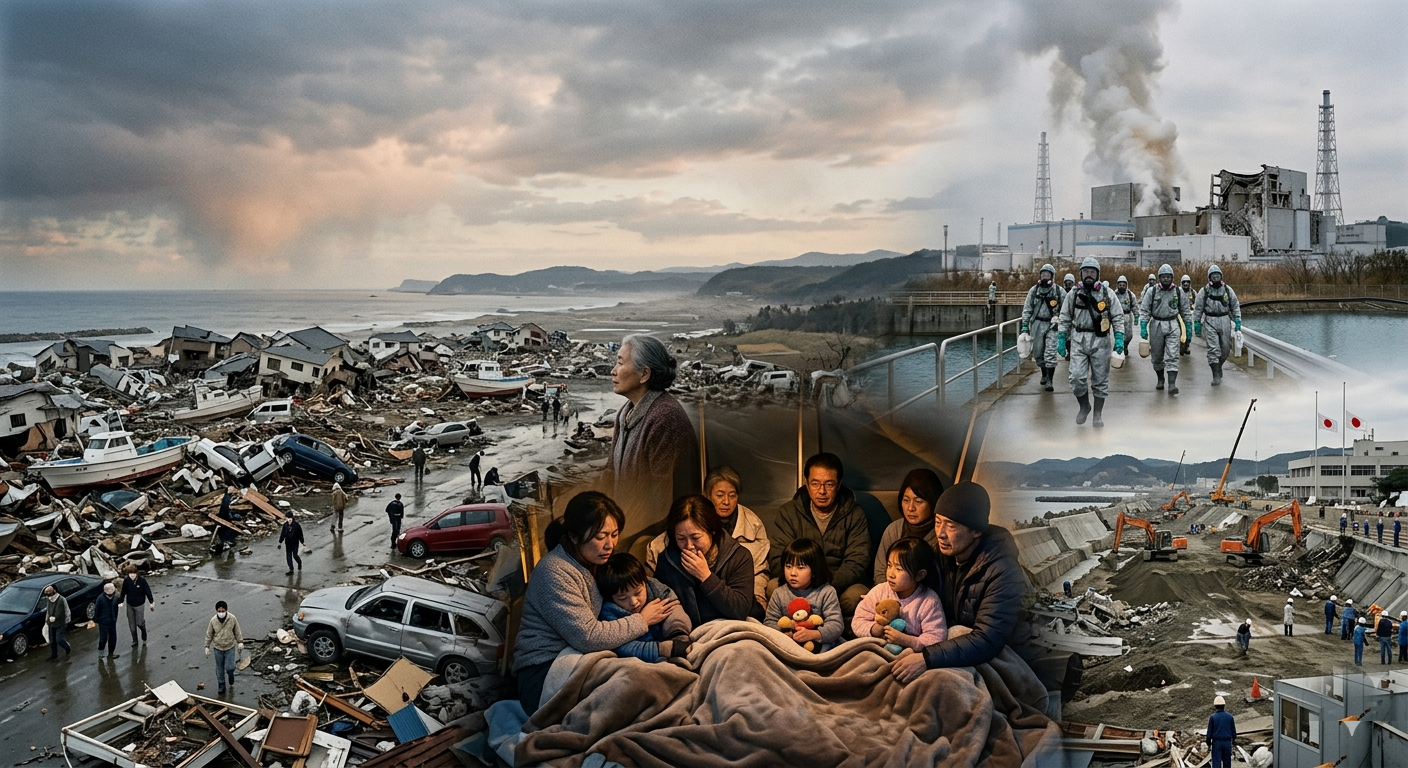
At 2:46 in the afternoon of Friday, March 11, 2011, the ground beneath the Pacific Ocean off the northeast coast of Japan’s main island of Honshu ruptured in one of the most violent seismic events in recorded history. The earthquake that followed—registering a moment magnitude of 9.0 to 9.1, depending on the measurement source—was the most powerful earthquake ever documented in Japan and the third or fourth most powerful globally since modern seismological recording began in the late nineteenth century. It sent enormous tsunami waves racing toward the Tohoku coastline, inundating hundreds of kilometers of coastline, killing more than 15,900 people outright, leaving more than 2,500 others missing and presumed dead, destroying more than 123,000 buildings entirely, and damaging nearly one million more. It then triggered what became the second-worst nuclear accident in human history, at the Fukushima Daiichi Nuclear Power Plant on the Pacific coast of Fukushima Prefecture.
The day is known in Japan as “3/11″—shorthand for March 11 — in direct parallel to the American designation of 9/11 for the September 11, 2001 terrorist attacks. The event is formally called the Great East Japan Earthquake or the Tohoku Earthquake and Tsunami, in reference to the northeastern Tohoku region of Honshu that bore the brunt of both the seismic shaking and the tsunami flooding. Its consequences were felt on a scale that went far beyond the borders of Japan. The nuclear accident at the Fukushima Daiichi plant forced the evacuation of approximately 154,000 people from the surrounding area, triggered a global reassessment of nuclear energy safety, reshaped Japan’s domestic energy policy for more than a decade, and initiated a decommissioning process that will take an estimated forty years to complete. The combined economic cost of the earthquake, tsunami, and nuclear disaster was estimated at approximately 220 billion US dollars, making it the most expensive natural disaster in human history.
The Geology of Catastrophe: What Caused the 9.1 Magnitude Tohoku Earthquake
The earthquake of March 11, 2011 was generated by the rupture of the subduction zone fault at the Japan Trench, where the westward-moving Pacific Plate has for millions of years been slowly diving beneath the overlying Okhotsk Plate — part of the broader North American Plate system — at a rate of approximately 8 to 9 centimetres per year. The Pacific Plate is one of the most seismically active tectonic boundaries on Earth, and northeastern Japan has experienced numerous devastating earthquakes throughout its recorded history, including a catastrophic event in the year 869 AD known as the Jogan earthquake and tsunami, which historical and geological records suggest was comparable in scale to the 2011 disaster and which flooded vast areas of Miyagi and Fukushima prefectures. The 2011 earthquake occurred when locked sections of the fault — called asperities — simultaneously ruptured across a source area approximately 200 kilometres wide and 400 kilometres long along the seafloor.
The earthquake’s epicentre was located approximately 70 kilometres east of the Oshika Peninsula of Miyagi Prefecture, at a depth of approximately 30 kilometres below the ocean floor. The rupture propagated along the fault in a complex sequence involving two or three separate asperity zones, producing intense shaking that lasted approximately three minutes — an unusually long duration for an earthquake, and a characteristic described by the World Nuclear Association as a rare and complex double quake. The Japan National Research Institute for Earth Science and Disaster Prevention calculated a peak ground acceleration of 2.99 g in the most severely shaken areas. The US Geological Survey’s seismic installation at Kurihara, Miyagi, recorded a peak ground acceleration of 2.751 g. Modified Mercalli Intensity ratings of IX, described as violent shaking, were recorded at multiple stations across Miyagi, Iwate, and Fukushima prefectures. Significant shaking was felt as far away as the Greater Tokyo Area, and tremors were detected across the Korean Peninsula, Taiwan, northeastern China, and the Russian Far East.
The physical displacement caused by the earthquake was staggering in scale. An area of seafloor extending approximately 650 kilometres north to south moved horizontally by 10 to 20 metres in the space of minutes. The entire main island of Japan was pushed approximately 2.4 metres eastward. The local coastline of Tohoku subsided by approximately half a metre, permanently lowering the land surface and making large areas permanently more vulnerable to future flooding. A satellite orbiting at the outer edge of Earth’s atmosphere detected infrasound waves — very low frequency sound waves — generated by the quake, a measure of the extraordinary energy released.
The Tsunami: Walls of Water and the Destruction of the Tohoku Coast
Forty-one minutes after the earthquake struck at 2:46 PM, the tsunami generated by the seafloor displacement began arriving at the coastlines of Iwate, Miyagi, and Fukushima prefectures. The Pacific Tsunami Warning System, established in 1965 following earlier Pacific-wide tsunamis, had issued warnings within minutes of the earthquake. Japan itself, arguably the best-prepared country in the world for tsunami events, had an extensive network of seawalls, tsunami gates, and warning systems in place along its northeastern coast. Decades of public education had taught coastal residents to move immediately to high ground upon feeling a large earthquake. And yet, the tsunami that arrived on March 11, 2011 exceeded the design specifications of virtually every protective measure along the Tohoku coast.
Individual tsunami waves reached heights of between 10 and 40.5 metres at various points along the coast, with the most extreme run-up heights recorded in the deeply indented valleys and bays of Iwate Prefecture. A wave measuring approximately 10 metres high inundated the coastline and flooded large sections of the city of Sendai, the largest city of the Tohoku region with a population of approximately one million people, including its airport and the surrounding agricultural land. According to multiple reports, one wave penetrated approximately 10 kilometres inland from the coast after causing the Natori River to overflow its banks. The tsunami inundated approximately 560 square kilometres of land along the Japanese coastline — an area roughly equivalent to the city of Chicago.
The destruction was almost total in the areas struck by the largest waves. Entire towns and fishing villages that had stood for centuries on the Tohoku coast were wiped from the landscape within minutes. Cars, ships, houses, and industrial infrastructure were swept inland and then dragged back out to sea as the water receded. Fires broke out in the debris fields as gas lines ruptured and electrical equipment sparked. More than 123,000 buildings were completely destroyed across the affected area, and close to one million more were damaged. Coastal ports that had supported Tohoku’s fishing industry for generations were obliterated. The death toll from the tsunami alone exceeded 15,000 confirmed deaths, with the overwhelming majority of victims dying from drowning. The National Police Agency of Japan confirmed 15,901 deaths and 2,519 people listed as missing and presumed dead as of March 2026. An additional 6,157 people were injured. Ninety-eight percent of all the damage caused by the March 11 event was attributed directly to the tsunami rather than to the earthquake itself.
Japan’s sophisticated tsunami warning and preparedness system, while imperfect in its response to an event of this scale, is credited with saving a significant number of lives that might otherwise have been lost. The Onagawa Nuclear Power Plant, located even closer to the earthquake’s epicentre than Fukushima Daiichi, survived the tsunami intact because its seawall had been built to a height of 14 metres — high enough to withstand the waves that struck it. This contrast with Fukushima’s outcome would later form one of the central lessons of the disaster for nuclear regulators worldwide.
Fukushima Daiichi: The Nuclear Plant That Would Become Synonymous with Catastrophe
The Fukushima Daiichi Nuclear Power Plant — Daiichi meaning Number One in Japanese — was located on an 860-acre coastal site in the town of Okuma, in the Futaba District of Fukushima Prefecture, approximately 220 kilometres northeast of Tokyo and about 100 kilometres south of Sendai. The facility was operated by the Tokyo Electric Power Company, universally known by its abbreviation TEPCO, which at the time was one of the largest electric utilities in the world. The plant had been constructed beginning in the 1960s and had come into commercial operation in stages starting in 1971, making it one of the older nuclear facilities in Japan. It consisted of six boiling water reactors designed by General Electric and constructed in partnership with TEPCO, Hitachi, and Toshiba. At full capacity, the six reactors had a combined generating output of approximately 4.7 gigawatts of electrical power, making Fukushima Daiichi one of the twenty-five largest nuclear power stations in the world at the time of the accident.
At the moment the earthquake struck on March 11, 2011 at 2:46 PM, reactors 1, 2, and 3 were operating at full power generating electricity for the Japanese grid. Reactor 4 had been taken offline for planned maintenance and its fuel had been removed from the reactor vessel and placed in the spent fuel pool. Reactors 5 and 6 were also shut down for maintenance. All six reactors’ spent fuel pools required continuous cooling regardless of whether the reactors themselves were operating, because spent nuclear fuel continues to generate significant heat through radioactive decay for years after it has been removed from the reactor core. This detail would prove critically important in the hours and days following the disaster.
The plant sat on ground approximately 10 metres above sea level. When engineers and planners had designed the facility in the 1960s, they had assessed the historical record of tsunamis on the Fukushima coast and determined that a seawall capable of withstanding waves of approximately 5.7 metres was adequate. This calculation, it would later emerge, was based on an incomplete understanding of the seismic and tsunami hazard in the region. As far back as 2009, the Active Fault and Earthquake Research Center of Japan had urged TEPCO and the Nuclear and Industrial Safety Agency — known as NISA — to revise their assumptions for possible tsunami heights upward, based on research findings about the 869 Jogan earthquake. This recommendation was not acted upon. In the years before the accident, some TEPCO engineers had internally raised concerns that a tsunami taller than the design basis could damage the plant’s diesel generators, which were essential backup power sources. These concerns had not led to substantive protective action.
Station Blackout: How the Tsunami Destroyed Fukushima’s Power and Cooling Systems
When the earthquake struck, the automatic safety systems at Fukushima Daiichi performed exactly as designed. Within seconds of detecting the seismic event, the operating reactors 1, 2, and 3 automatically and successfully inserted their control rods — a process called SCRAM — halting the nuclear chain reaction. The emergency diesel generators started up automatically to provide backup power for the cooling systems and safety instrumentation, since the earthquake had damaged the external power grid connections to the plant. For the first fifty minutes after the earthquake, the situation was serious but under control.
At approximately 3:27 PM — forty-one minutes after the earthquake — the first tsunami wave arrived at the Fukushima Daiichi site. This initial wave, measuring approximately 4 metres in height, was deflected by the existing seawall. At approximately 3:35 PM, a second wave arrived. This wave was more than 15 metres high — in some measurements exceeding 14 to 15 metres — and it overtopped the 10-metre ground level of the plant entirely. The tsunami surged across the site, flooding the turbine buildings, the basements, and, critically, the rooms housing the emergency diesel generators. Of the thirteen emergency generators serving the plant, twelve were destroyed or disabled by flooding within minutes. The tsunami also knocked out the direct current battery backup systems, the electrical switchgear, and the seawater pumps that circulated cooling water through the reactors. The result was what nuclear engineers call a station blackout — the complete loss of all electrical power at the facility, including both external grid power and backup generation.
Without electrical power, the cooling systems for reactors 1, 2, and 3 began to fail. Although the nuclear chain reaction in all three reactors had been stopped by the SCRAM, the fuel in each reactor core continued to generate intense heat through the radioactive decay of fission products — a process that cannot be halted and that diminishes only gradually over hours, days, and weeks. This decay heat, if not continuously removed by cooling water, would cause the temperature inside the reactor vessels to rise rapidly. In reactor 1, the isolation condenser — a passive cooling system that does not require external electrical power — had been activated but is believed to have failed within hours of the tsunami. Computer simulations published by the Japan Atomic Energy Agency in 2017 suggested that significant core damage in Unit 1 began as early as four to five hours after the tsunami struck, around 7 to 8 PM on the evening of March 11.
The situation at the plant was made more difficult by the collapse of communications infrastructure and the flooding and debris from the tsunami that hampered access to the site. Plant director Masao Yoshida and his team found themselves managing a crisis of unprecedented scale with severely degraded tools, uncertain information, and no external power. At 7:03 PM on March 11, Prime Minister Naoto Kan declared a nuclear emergency — the first such declaration in Japan’s history. The Japanese government immediately ordered the evacuation of all residents within a 3-kilometre radius of the plant, and shortly afterward Prime Minister Kan expanded that zone to 10 kilometres.
The Hydrogen Explosions and Triple Core Meltdown: Days of Escalating Crisis
By the early morning of March 12 — the day after the earthquake — the situation inside reactor 1 had become critical. With cooling water no longer reaching the fuel rods, temperatures inside the reactor vessel had climbed far beyond normal operating levels. The zirconium alloy cladding surrounding the fuel rods — normally a highly stable material — begins to react chemically with steam at temperatures above approximately 1,200 degrees Celsius, producing hydrogen gas in an exothermic reaction that adds additional heat to the already overheating system. As the fuel rods became partially and then largely uncovered by receding cooling water, this zirconium-steam reaction produced large quantities of hydrogen gas that accumulated inside the reactor building.
At 3:36 PM on March 12 — exactly twenty-four hours after the tsunami had arrived at the plant — hydrogen gas that had accumulated in the upper level of the reactor 1 building ignited and exploded. The explosion blew apart the outer concrete walls of the building’s upper structure, leaving only the steel framework standing, and injured four workers. The explosion damaged electrical cables and fire hoses that workers had been laying in an effort to restore power and cooling, setting back recovery efforts significantly. Prime Minister Kan had personally visited the Fukushima Daiichi site that morning, flying there by helicopter in an act that drew both admiration for its decisiveness and criticism for the delay it may have caused in venting pressure from the reactor. By the evening of March 12, the evacuation zone had been expanded to a 20-kilometre radius.
TEPCO operators had already begun injecting seawater into reactor 1 on the evening of March 12 — a decision that signalled the plant’s operators understood they were fighting to contain a catastrophe, not prevent one. The use of seawater was the death knell for the reactor vessel itself, as seawater irreversibly corrodes the internal components, but it was the only available source of cooling water in sufficient quantity. A second hydrogen explosion, this one at reactor 3, occurred at 11:01 AM on March 14. The explosion at unit 3 was more violent than the one at unit 1, severely damaging the building’s structure and injuring eleven workers. A third explosion, at reactor 2, followed at 6:14 AM on March 15, causing damage to the suppression chamber — the lower section of the containment structure — and is believed to have been the moment at which reactor 2’s containment was breached, allowing radioactive gases to escape more freely into the environment. On the same day, a fire broke out in the spent fuel pool area of reactor 4, where the stored fuel rods had heated up as pool cooling water was lost, releasing additional radioactive material.
By March 14 — three days after the earthquake — TEPCO quietly acknowledged to regulators that fuel in reactors 2 and 3 had also undergone substantial core damage, matching what had already occurred in reactor 1. All three operating reactors had experienced major fuel melting. In each case, molten fuel had fallen to the bottom of the reactor pressure vessel. In reactor 1, investigators later determined that the molten fuel had partially melted through the bottom of the pressure vessel and pooled in the primary containment structure below. The three-reactor meltdown was the most serious nuclear accident since the Chernobyl disaster of April 1986 in the Soviet Union, and the only other accident in the history of civilian nuclear power generation to be assigned a Level 7 rating — the highest possible — on the International Nuclear and Radiological Event Scale. TEPCO officials were instructed internally not to use the phrase core meltdown in the early weeks of the crisis, a decision that was later heavily criticised as a deliberate concealment of the severity of the situation. The company did not formally acknowledge the meltdowns until two months after the accident.
Key Figures in the Crisis: TEPCO, the Government, and the Fukushima Fifty
The management of the Fukushima crisis involved a complex and often fraught set of relationships between the plant operator, the national government, regulatory agencies, and the international nuclear community. At the centre of the on-site response was Masao Yoshida, the plant director of Fukushima Daiichi, who became one of the most significant and controversial figures of the disaster. Yoshida was a veteran TEPCO engineer who had managed the plant since 2010. In one of the most consequential acts of the crisis, Yoshida disobeyed an explicit order from TEPCO headquarters to stop injecting seawater into reactor 1 on March 12, correctly assessing that the seawater injection was essential to prevent an even more catastrophic outcome. He continued the injection secretly while reporting to headquarters that he had complied with the order. TEPCO later acknowledged this disobedience had been the right decision. Yoshida was diagnosed with oesophageal cancer in 2011 and died on July 9, 2013, at the age of 58, though medical authorities stated his cancer was unlikely to have been caused by radiation exposure during the crisis.
Prime Minister Naoto Kan, who led Japan’s Democratic Party of Japan government, was at the centre of the political response. His decision to fly by helicopter to Fukushima on the morning of March 12 to personally question plant director Yoshida about the reactor venting was later criticised as having delayed the crucial venting process, though Kan himself maintained it was necessary for him to get accurate information directly. Kan’s relationship with TEPCO during the crisis was openly combative; he was furious at what he perceived as the company’s slowness, opacity, and its reported consideration of completely withdrawing all workers from the plant — a move Kan described as potentially leading to an uncontrollable chain of events and which he refused to allow. Kan later took an increasingly anti-nuclear position as a result of the disaster. In May 2011 he ordered the closure of the Hamaoka Nuclear Power Plant, and in July 2011 publicly declared that Japan should reduce and eventually eliminate its dependence on nuclear energy.
Yukio Edano served as Chief Cabinet Secretary and was the government’s primary public spokesperson throughout the crisis, appearing at press conferences for days on end with little sleep to provide updates to the Japanese public and international media. His calm and measured public communications, delivered in a crisis environment of extraordinary uncertainty, became a defining image of the government’s response. Edano later became a symbol of the democratic civilian oversight of the crisis, though the government was also significantly criticised for its handling of radiation data from the SPEEDI emergency prediction system — a network that modelled the dispersal of radioactive particles from the plant and whose data was not shared with evacuees or emergency responders in a timely or useful way, potentially causing some evacuees to move into more contaminated areas rather than less contaminated ones.
Inside the plant itself, a rotating group of workers — many of them volunteers — stayed at Fukushima Daiichi in the most dangerous days of the crisis to attempt to restore cooling and prevent a complete loss of containment. These workers, who came to be celebrated in the media as the Fukushima Fifty — though the actual number of those who worked at the plant during the crisis was far larger — operated in an environment of extreme radiation levels, unstable structures, aftershocks, hydrogen explosion risks, and profound uncertainty about the state of the reactors they were trying to cool. Radiation levels in some areas of the plant in the days immediately after the explosions were sufficient to cause radiation sickness in under an hour of exposure. Many workers exceeded their annual radiation dose limits within days. Their actions prevented what many nuclear experts believed could have been an even more catastrophic release of radioactive material.
The Evacuation: 154,000 People Displaced and the Human Cost of the Nuclear Crisis
The evacuation orders issued in the days following the earthquake, tsunami, and nuclear accident resulted in one of the largest and most complex population displacements in Japan’s post-war history. The initial evacuation order on the evening of March 11 covered residents within a 3-kilometre radius of the Fukushima Daiichi plant. By the morning of March 12 this had been expanded to 10 kilometres, and by the evening of the same day to 20 kilometres. Following the explosions at reactors 1 and 3, the government established a shelter-in-place order for residents in the 20 to 30 kilometre zone, asking them to remain indoors to reduce their exposure to airborne radioactive particles. On March 25 those residents were also urged to voluntarily evacuate. By the peak of the displacement, approximately 154,000 people had been forced to leave their homes, and in subsequent years this number grew somewhat as additional areas were identified as having elevated contamination.
The evacuation process itself caused enormous hardship and is believed to have contributed significantly to mortality among evacuated populations, particularly the elderly and infirm. Approximately 2,313 disaster-related deaths — deaths that occurred not as a direct result of radiation exposure or the earthquake and tsunami themselves, but as a result of evacuation-induced stress, disruption of medical care, and deterioration of living conditions — have been officially recorded among evacuees from Fukushima Prefecture. Research published after the disaster suggested that within Fukushima Prefecture, these indirect casualties from the evacuation had already resulted in more deaths than the number of people directly killed by the earthquake and tsunami in that prefecture. The evacuation of approximately 785 hospital patients from the evacuation zone in the immediate aftermath of the disaster, many of whom were critically ill, resulted in a significant number of deaths that were directly attributable to the physical and physiological stress of emergency transport.
The United States government, operating under its own assessment of radiation risks that differed from the Japanese government’s, advised all American citizens to stay at least 80 kilometres — approximately 50 miles — from the plant, a significantly wider exclusion zone than the Japanese government’s 20-kilometre mandatory evacuation area. This divergence in guidance caused additional anxiety and confusion, and the US drew up contingency plans, which were never implemented, to evacuate the approximately 90,000 American citizens living within 80 kilometres of the plant.
Radiation Released, Contamination Spread, and Health Consequences
The three reactor meltdowns and the hydrogen explosions at Fukushima Daiichi resulted in the release of significant quantities of radioactive material into the atmosphere and, through contaminated cooling water, into the ocean. The total release of radioactive iodine-131 equivalent was estimated at approximately 940 petabecquerels — a measure roughly ten percent of the total release from the Chernobyl disaster. The radioactive plume from the plant was carried by wind in varying directions in the days following the accident, depositing caesium-137, iodine-131, and other radionuclides across parts of Fukushima, Miyagi, Iwate, Gunma, Tochigi, and neighbouring prefectures, with lower concentrations detected in Tokyo and beyond. Radioactive iodine was detected in tap water in Tokyo and several other cities; radioactive caesium was found in soil, milk, vegetables, and seafood products from the surrounding region. Japan’s government banned the sale of milk and certain agricultural products from the Fukushima area in the weeks after the accident.
In the ocean directly adjacent to the plant, radiation levels were detected at extraordinary concentrations in the first weeks of the crisis. Iodine-131 in seawater near the plant was measured at 7.5 million times the legal limit at one point in April 2011. Contaminated water from the plant was also found to be flowing directly into the Pacific. In a particularly alarming episode in April 2011, TEPCO began deliberately dumping approximately 11,500 tonnes of low-level radioactive water from storage tanks into the ocean in order to free up tank capacity for more highly radioactive water — a decision that drew international criticism and protests from neighbouring countries.
The health consequences of the radiation exposure from Fukushima have been the subject of extensive scientific study and considerable public debate. The United Nations Scientific Committee on the Effects of Atomic Radiation — known as UNSCEAR — has stated in its reviews of the Fukushima accident that no adverse health effects among Fukushima residents have been documented that are directly attributable to radiation exposure from the accident. The World Health Organisation’s 2013 assessment indicated that for the general public outside the evacuation zone, radiation-induced health impacts were likely to be below detectable levels. For those who lived in the most heavily contaminated areas within the evacuation zone, and for emergency workers who received the highest doses, a small increase in lifetime cancer risk was assessed as possible, though the number of additional cancers expected to result from the exposure was projected to be too small to be detectable against the normal background rate of cancer in the population.
There has been extensive monitoring of thyroid cancer rates in Fukushima children and adolescents, since the thyroid is particularly sensitive to radioactive iodine-131, which concentrates in thyroid tissue. Elevated rates of thyroid cancer have been detected in the Fukushima screening programme, but leading scientific bodies including UNSCEAR have concluded that this elevation is most plausibly explained by the extremely intensive and sensitive screening programme itself — which detects very small lesions that would not previously have been found — rather than by genuine radiation-induced excess cancer. The science in this area remains an active area of research and ongoing debate. No deaths caused by radiation exposure from the Fukushima accident have been formally attributed to the disaster.
The Role of TEPCO and Government Failures: What Went Wrong Before and During the Crisis
Investigations conducted in the years following the accident produced damning assessments of both TEPCO and the Japanese government’s role in allowing the accident to occur and in managing it once it had begun. The most comprehensive and authoritative of these was the report of the Fukushima Nuclear Accident Independent Investigation Commission — established by the National Diet of Japan, the country’s parliament — which concluded in July 2012 that the Fukushima accident was fundamentally a man-made disaster, not a natural one. The commission’s chairman, Kiyoshi Kurokawa, wrote in his introduction that the root causes of the accident were to be found in the ingrained conventions of Japanese culture: the reflexive obedience, the reluctance to question authority, groupism, and insularity.
The commission found that TEPCO had been aware since the mid-1990s of research suggesting that a tsunami significantly larger than its design basis was possible at the Fukushima Daiichi site, and had taken no meaningful corrective action. The Nuclear and Industrial Safety Agency, which was responsible for regulating nuclear safety in Japan, was found to have been captured by the industry it was supposed to regulate — a condition sometimes called regulatory capture — and had failed to enforce safety upgrades or to act on scientific evidence of heightened tsunami risk. The Active Fault and Earthquake Research Center had specifically recommended in 2009 that TEPCO and NISA revise their tsunami height assumptions upward, and this recommendation had been ignored. A report from Japan’s government Earthquake Research Committee that would have addressed tsunami risks for the Fukushima coastline was scheduled for publication in April 2011 — one month after the disaster struck.
During the crisis itself, TEPCO was criticised for the delayed venting of pressure from the reactor containment structures, for the confusion and poor communication between plant management and corporate headquarters in Tokyo, for the deliberate suppression of the phrase core meltdown in public communications despite internal knowledge of the meltdowns, and for the handling of radioactive water contamination. The government was criticised for the delayed release of SPEEDI radiation dispersal data to the public and to emergency responders, for inconsistent and sometimes confusing public communications about radiation risks, and for the gap between the Japanese and American evacuation zones that raised questions about whose risk assessment was correct.
Japan’s Nuclear Energy Policy After 3/11: Shutdown, Rethinking, and Gradual Return
The Fukushima accident produced an immediate and profound disruption of Japan’s nuclear energy sector. Before the accident, nuclear power generated approximately 25 to 30 percent of Japan’s total electricity, and the government had ambitious plans to increase that share to 50 percent by 2030 as part of its strategy to reduce greenhouse gas emissions. Those plans were immediately abandoned. By May 2011, Prime Minister Kan had ordered the closure of the Hamaoka Nuclear Power Plant in Shizuoka Prefecture — a plant located near a major earthquake fault — citing earthquake and tsunami risks. One by one, Japan’s other nuclear reactors were taken offline for safety inspections and were not restarted. By May 2012, every single nuclear reactor in Japan had been shut down — a complete cessation of nuclear power generation in the country for the first time since the 1960s. All 50 of Japan’s operating reactors were offline simultaneously.
The shutdown of nuclear generation forced Japan to dramatically increase its use of fossil fuels — natural gas, oil, and coal — to maintain electricity supply. By 2015, fossil fuels accounted for approximately 94 percent of Japan’s electricity generation, the highest proportion among any International Energy Agency member state. Japan’s trade balance swung dramatically into deficit as liquefied natural gas and oil imports surged. Wholesale electricity prices increased substantially, placing financial pressure on households and businesses. The shift back to fossil fuels also significantly increased Japan’s carbon dioxide emissions, complicating its international climate commitments. The contribution of nuclear energy to Japan’s electricity mix had dropped to less than one percent by 2013.
The political and social debate over nuclear energy that followed 3/11 was intense and lasting. Large public demonstrations against nuclear power took place in Tokyo and other major cities. Prime Minister Kan’s anti-nuclear position, while politically popular, was not shared by all elements of the Japanese political establishment or business community. His successor, Yoshihiko Noda, attempted to manage a gradual restart of some reactors under new safety conditions. Under the government of Prime Minister Shinzo Abe, which took office in December 2012, a new nuclear regulatory authority — the Nuclear Regulation Authority, or NRA — was established to replace the discredited NISA, with a mandate for genuinely independent safety oversight. The NRA developed new post-Fukushima safety standards that reactors would have to meet before being permitted to restart. The first reactor to restart under the new post-Fukushima framework was at the Sendai Nuclear Power Plant in Kyushu, which resumed commercial operation in August 2015 — more than four years after the accident.
The Global Impact of Fukushima: Nuclear Policy Changes Around the World
The Fukushima accident sent shockwaves through nuclear energy policy debates in countries around the world, accelerating decisions that had already been under discussion and prompting urgent safety reviews of operating reactors in many nations. Germany, which had already been debating nuclear phase-out under Chancellor Angela Merkel’s government, announced in May 2011 — just two months after Fukushima — that it would shut down all of its remaining nuclear reactors by 2022, a deadline that was subsequently extended slightly to 2023. The German decision was widely seen as having been directly triggered by the Fukushima accident and the intense public reaction to it in Germany, where memories of the Chernobyl fallout and a strong environmental movement had already produced deep scepticism of nuclear power.
Switzerland voted to phase out nuclear power. Belgium reaffirmed its earlier phase-out schedule. Italy, which had been considering a return to nuclear power after abandoning it following a 1987 referendum, held another referendum and voted decisively against nuclear energy. In the United States, the Nuclear Regulatory Commission ordered a comprehensive safety review of all operating US reactors in the light of Fukushima, with a particular focus on station blackout scenarios — the situation in which all electrical power is lost — and on the adequacy of spent fuel pool cooling systems. IAEA Director General Yukiya Amano stated in September 2011 that the Fukushima disaster had caused deep public anxiety throughout the world and damaged confidence in nuclear power. The IAEA developed an Action Plan on Nuclear Safety, endorsed by its member states in September 2011, which defined a global programme to strengthen the nuclear safety framework in response to lessons learned from Fukushima.
Nuclear power stations around the world began installing passive autocatalytic recombiners — devices that combine hydrogen and oxygen into water without requiring electrical power — to address the hydrogen explosion risk that had destroyed the containment buildings at Fukushima Daiichi. Seawall heights were reassessed. Station blackout procedures were revised. The fundamental assumption that external power and backup generation would always be available for cooling was replaced by a requirement to demonstrate that reactors could be kept safe during extended station blackout conditions. The Fukushima accident at Onagawa, which had survived the same tsunami that destroyed Fukushima Daiichi’s cooling systems because its seawall was built two metres higher, became a standard reference point in discussions of the importance of design margins and the consequences of underestimating natural hazards.
The Long Road to Decommissioning: What Happens to Fukushima Daiichi Now
The decommissioning of the four damaged reactors at Fukushima Daiichi — units 1, 2, 3, and 4 — is the largest and most technically complex nuclear decommissioning project in history. TEPCO and the Japanese government announced a decommissioning timeline in 2011 with a projected completion date of approximately 2052 — a forty-year undertaking. The scale of the challenge is immense: three reactor cores have undergone partial or complete meltdown, with highly radioactive molten fuel, called fuel debris or corium, lying at the bottom of the containment vessels in conditions that remain, more than a decade later, only partially characterised. Radiation levels inside the containment vessels of the most severely damaged reactors are so high — measured in the hundreds of sieverts per hour in some areas — that no human worker can approach them, and even specially designed robots sent into the containment structures have suffered damage from the radiation.
Progress on decommissioning has been made in the area of spent fuel removal. In April 2014, TEPCO completed the removal of 1,535 fuel assemblies from the spent fuel pool of reactor 4 — the unit that had been offline when the earthquake struck but whose spent fuel pool had come close to running dry, threatening an additional uncontrolled release of radiation. The removal of spent fuel from the pools of reactors 1, 2, and 3 is proceeding more slowly, hindered by the structural damage from the hydrogen explosions and by the radiation levels inside the buildings. The actual extraction of the molten fuel debris from the damaged reactor pressure vessels and containment structures — the most technically unprecedented aspect of the decommissioning — has progressed in small steps. In 2024, a robotic arm made first contact with fuel debris in the primary containment vessel of reactor 2, managing to move loose debris at several test locations and providing evidence that eventual removal of the debris may be feasible, though no timeline for full fuel debris extraction has been firmly established.
One of the most persistent and contentious challenges of the decommissioning has been the management of the enormous quantities of water used to cool the damaged reactor cores. Since the accident, water has been continuously injected into reactors 1, 2, and 3 to keep the fuel debris cool. This water becomes contaminated with radioactive materials as it contacts the fuel, and it mixes with groundwater that infiltrates the damaged plant buildings. TEPCO constructed a sophisticated water treatment system called the Advanced Liquid Processing System, known as ALPS, which removes most radionuclides from the contaminated water — but cannot efficiently remove tritium, a radioactive isotope of hydrogen that chemically behaves identically to ordinary water. The treated water, still containing tritium, was accumulated in more than 1,000 storage tanks on the plant site, which by 2021 were approaching capacity.
On April 13, 2021, the Japanese government announced its decision to discharge the ALPS-treated water into the Pacific Ocean through a 1-kilometre-long underwater tunnel, diluted to levels far below international safety standards before release. The discharge began on August 24, 2023. The International Atomic Energy Agency conducted an extensive multi-year safety review of the treated water discharge plan and concluded in its July 2023 comprehensive report that Japan’s approach was consistent with international safety standards and that the discharge as planned would have a negligible radiological impact on people and the environment. The IAEA established a permanent office at the Fukushima Daiichi site to conduct ongoing independent monitoring of the discharge. As of late 2024, monitoring by TEPCO, the Japanese Ministry of the Environment, the Fisheries Agency, and Fukushima Prefecture had shown no significant increase in radioactive material concentrations in the surrounding seawater, with tritium levels remaining well below TEPCO’s own operational limit of 350 becquerels per litre — a tiny fraction of the World Health Organisation’s drinking water guideline of 10,000 becquerels per litre.
The discharge decision nonetheless drew strong opposition from South Korea, China, and Pacific Island nations, as well as from Japanese fishing communities, environmental organisations, and some radiation safety researchers who argued that the long-term consequences of multi-decade tritium release were insufficiently understood. China suspended all imports of Japanese seafood following the start of the discharge, a ban that remained in place through 2024. The tension between the scientific consensus endorsing the safety of the discharge and the public and geopolitical concerns surrounding it reflects the persistent challenge of radioactivity as a subject that combines genuine scientific complexity with deep emotional and political resonance.
The Human Geography of Recovery: Evacuation Zones, Return, and Reconstruction
The reconstruction of the communities destroyed by the earthquake and tsunami — and the slow, partial return of those evacuated because of the nuclear accident — has been one of the most challenging social and political undertakings in post-war Japan. In the towns and coastal communities of Iwate, Miyagi, and the non-nuclear-affected parts of Fukushima Prefecture, reconstruction has been substantial, though the full rebuilding of the social and economic fabric of fishing communities, port towns, and rural settlements has proved a generational task. Many coastal communities relocated their residential areas to higher ground to reduce vulnerability to future tsunamis. Seawalls of unprecedented scale — in some places rising 15 metres or more above sea level — were constructed along vulnerable stretches of the Tohoku coastline, though these structures have been controversial: some local communities welcome the protection they offer while others argue that they sever the visual and cultural connection between coastal communities and the sea that has defined their identity for centuries.
In the areas immediately surrounding the Fukushima Daiichi plant, the evacuation zones established in March 2011 were progressively modified in subsequent years as radiation levels declined and decontamination work was completed. Extensive decontamination of soil and surfaces was carried out across Fukushima Prefecture — a massive undertaking involving the removal and bagging of topsoil from residential areas, farmland, forests, and roadsides, and the temporary storage of millions of black polymer bags of radioactively contaminated soil at collection sites across the prefecture. Gradual lifting of evacuation orders across different zones began in 2012 and continued through subsequent years, with most of the formerly evacuated areas outside the immediate vicinity of the plant having had their evacuation orders lifted by 2020. Return rates among former evacuees have varied widely by area, with younger residents often more reluctant to return than older ones, and with lingering anxieties about radiation and the social disruption of the evacuation years complicating resettlement.
A small core area surrounding the plant — the former towns of Okuma and Futaba, where the plant itself is located — remains largely uninhabitable and is designated as a special decontamination area where full-scale decommissioning work continues. The Japanese government has invested heavily in promoting economic revival and image rehabilitation of the broader Fukushima region, including through agricultural branding initiatives and the promotion of renewable energy development. The 2020 Tokyo Olympics, held in 2021 due to the COVID-19 pandemic, included some events in Fukushima as a symbol of recovery, though this decision was itself controversial among some local residents and international observers.
The Legacy of 3/11: What the Great East Japan Earthquake and Fukushima Disaster Taught the World
The events of March 11, 2011 — the earthquake, the tsunami, and the nuclear accident — constitute one of the most consequential disasters of the twenty-first century, not merely in terms of immediate human suffering and physical destruction, but in terms of the long-term lessons they forced upon governments, industries, scientists, and communities worldwide. Thirteen years on from the disaster, those lessons continue to be elaborated, contested, and applied in ways that shape how humanity manages the interaction between industrial civilisation and natural hazard.
For geoscience and tsunami preparedness, Fukushima and 3/11 confirmed the danger of underestimating the scale of low-probability, high-consequence events. The earthquake exceeded the maximum magnitude estimates for the region that had been embedded in official seismic hazard maps. The tsunami exceeded the historical records that engineers had used to design coastal defences. Research on the 869 Jogan event, which had suggested that a tsunami comparable to 2011 was possible, had been available for years but had not been translated into the precautionary design changes that might have reduced the death toll. The lesson — that scientific evidence of potential catastrophic risk must be taken seriously even when it challenges existing assumptions and would be costly to act upon — has been drawn by risk managers across many industries since 2011.
For nuclear energy, Fukushima demonstrated with brutal clarity that the failure of a single design assumption — in this case, the assumption about tsunami height at the Fukushima Daiichi site — could cascade through an interconnected system of safety mechanisms and produce a catastrophic outcome. The accident showed that station blackout conditions — the loss of all electrical power — could persist for long enough to cause core meltdown even when the reactor had been successfully shut down, and that the spent fuel pools of operating nuclear plants represent a distinct and potentially severe source of radiological risk that had not been adequately planned for in older reactor designs. These lessons have been incorporated into revised safety standards adopted by nuclear regulators around the world, though debates about whether nuclear power can be made adequately safe, and whether its risks are proportionate to its benefits as a low-carbon energy source, continue to animate energy policy discussions globally.
For Japan itself, 3/11 was a national trauma comparable in its psychological and social impact to the atomic bombings of Hiroshima and Nagasaki in 1945. It exposed deep institutional failures — in regulatory oversight, in risk communication, in crisis management — that challenged Japan’s self-image as a country that was both exceptionally vulnerable to natural disasters and exceptionally well-prepared to withstand them. The disaster prompted a broad national conversation about the relationships between government, industry, regulatory bodies, and the public that has continued to shape Japanese politics and society in the years since. The 15,900 people confirmed dead and the more than 2,500 still listed as missing are remembered each March 11 in ceremonies across the country, as Japan continues the slow, difficult, and in some places still unfinished work of rebuilding what the sea took away.