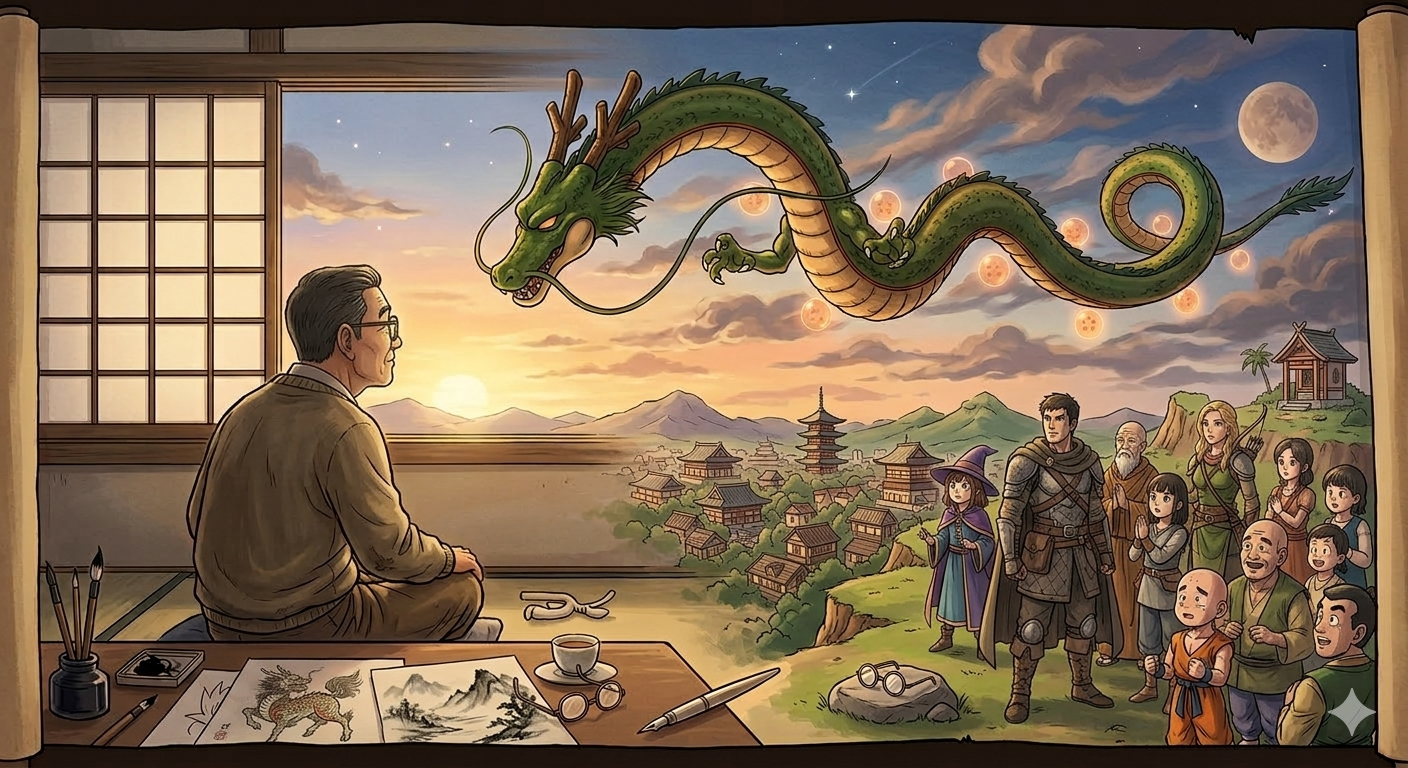
Japanese manga artist and Dragon Ball creator passes away on March 1, 2024, leaving behind an irreplaceable legacy in comics, anime, and global pop culture.
The World Mourns: Akira Toriyama Passes Away on March 1, 2024
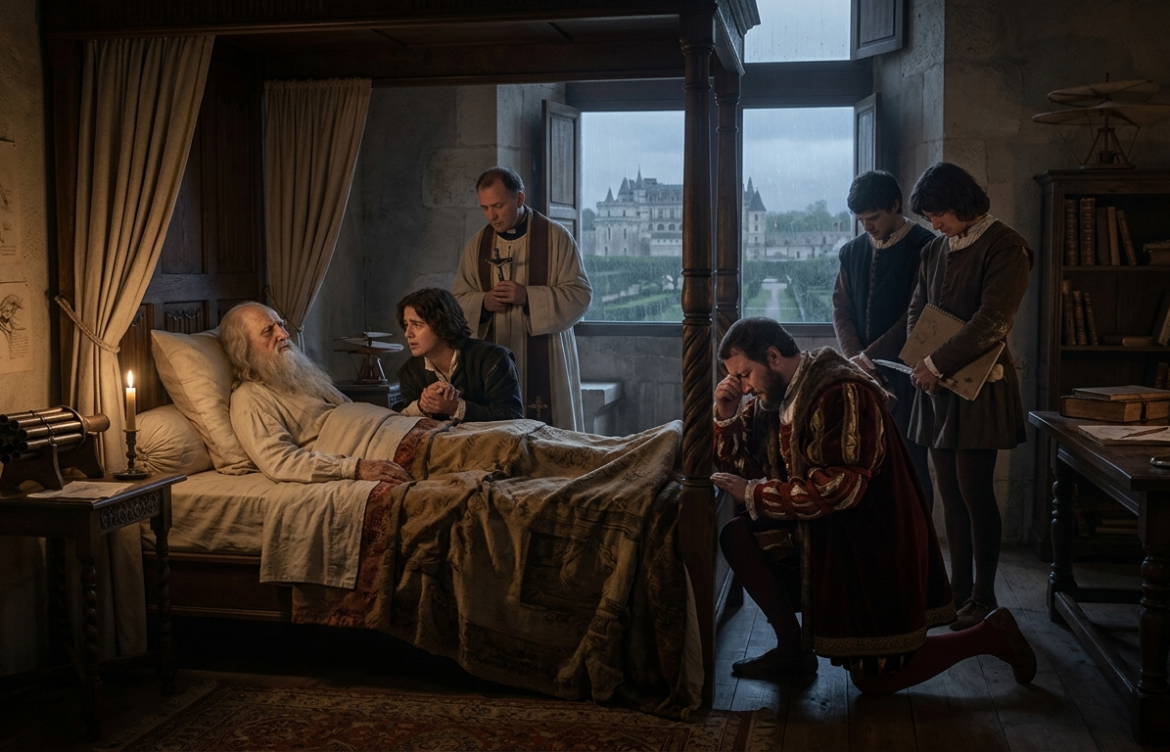
On March 1, 2024, the world of Manga, anime, and popular culture lost one of its most transformative voices. Akira Toriyama, the visionary Japanese manga artist and creator of the globally beloved Dragon Ball franchise, passed away at the age of 68. His death, caused by an acute subdural hematoma — a serious medical condition involving blood clots forming on the brain — marked the end of a creative journey that had spanned more than four and a half decades.
The news was not immediately made public. In keeping with Toriyama’s lifelong preference for privacy and tranquility, his production company Bird Studio and Capsule Corporation Tokyo waited a full week before making an official announcement. It was not until March 8, 2024 — one week after his death — that the world learned of his passing through a joint statement posted on the official Dragon Ball website. According to sources close to Toriyama, he had been preparing to undergo surgery for a brain tumor in February 2024, making the final weeks of his life a quiet and deeply personal battle that he faced far from the public eye.
A private funeral service had already taken place before the announcement, attended only by his immediate family and a very small number of relatives. The statement from Bird Studio and Capsule Corporation Tokyo was respectful and understated, much like the man himself. It read, in part, that it was their “deep regret that he still had several works in the middle of creation with great enthusiasm” and that “he would have many more things to achieve.” The company requested that no flowers, condolence gifts, or visits be sent, and asked the press to refrain from interviewing his family.
Early Life and the Making of a Manga Genius: Kiyosu, Aichi to Weekly Shonen Jump
Akira Toriyama was born on April 5, 1955, in the town of Kiyosu, Aichi Prefecture, Japan — a place he would call home for much of his life. From a very young age, Toriyama was drawn to the world of visual storytelling, spending his childhood sketching animals, vehicles, and scenes from the animated films that captivated him. He was particularly moved by Disney’s One Hundred and One Dalmatians when he saw it in 1961, a film he later credited with pulling him deeper into the world of illustration. He also grew up admiring the iconic manga of Osamu Tezuka, often referred to as the “God of Manga,” as well as popular tokusatsu television shows like Ultraman and Japanese kaiju films such as Gamera.
Toriyama attended a high school specializing in creative design, which gave him a foundational artistic education, but it was not until his mid-twenties that he pursued a professional career in manga. After graduating, he took a position as a poster designer at a small advertising agency in the city of Nagoya. He worked there for three years, but the constraints of commercial design left him restless. It was during this period that he began sketching manga pages in his spare time — not out of any grand ambition, but simply because he enjoyed it and could earn some extra money doing so.
In 1977, Toriyama submitted work to Weekly Shonen Jump, one of Japan’s most prestigious and widely-read manga magazines, published by Shueisha. An editor named Kazuhiko Torishima contacted him and offered guidance and encouragement, a relationship that would prove pivotal. Toriyama made his published debut in 1978 with Wonder Island, which appeared in Weekly Shonen Jump issue 52. The debut did not attract much attention, and several subsequent submissions were rejected, pushing Toriyama close to abandoning his dreams. However, the minor success of Tomato, Girl Detective in 1979 kept his ambitions alive just long enough for everything to change.
Dr. Slump: The Comic Series That Made Akira Toriyama a Household Name in Japan
In January 1980, everything changed for Akira Toriyama. The serialization of Dr. Slump began in Weekly Shonen Jump, and almost immediately, the series became a cultural sensation in Japan. Dr. Slump centered on the bumbling inventor Senbei Norimaki and his robotic creation Arale Norimaki, a little girl with glasses and superhuman strength who, despite being an android, experienced all the ordinary growing pains of childhood. The series blended slapstick comedy, clever wordplay, absurdist humor, and cultural satire in a way that appealed to both children and adults.
The response was extraordinary. Dr. Slump ran in Weekly Shonen Jump from January 1980 to August 1984, eventually spanning eighteen collected volumes known as tankobon. It sold over 35 million copies in Japan alone and won the prestigious 1981 Shogakukan Manga Award for best shonen or shojo series — one of the highest honors in the Japanese manga industry. The series was adapted into a television anime by Toei Animation that aired from 1981 to 1986, producing 243 episodes. A second anime adaptation was later created in 1997, more than a decade after the manga had concluded.
Dr. Slump also left a surprising cultural footprint beyond Japan’s borders. The character Turbo Norimaki, a child prodigy in the series, is widely credited as the direct inspiration for the famous “poop emoji” that became a global digital phenomenon in the smartphone era. Even this small detail speaks to the depth and reach of Toriyama’s creative influence across cultures and generations.
The Birth of Dragon Ball: How a Chinese Classic Became a Global Phenomenon
As the success of Dr. Slump began to wind down in 1983 and 1984, editor Kazuhiko Torishima encouraged Toriyama to explore a new direction. Aware of Toriyama’s love for martial arts films — particularly the kung-fu movies of Jackie Chan, including the 1978 film Drunken Master — Torishima suggested he create a kung-fu-themed shonen manga. The seed was planted, and Toriyama began developing ideas that drew deeply from his fascination with the 16th-century Chinese literary classic Journey to the West, written by Wu Cheng’en.
The result was first tested in a two-part short story called Dragon Boy, published in the August and October 1983 issues of Fresh Jump magazine. Dragon Boy followed a martial arts-skilled boy who escorted a princess on a journey home, and it was warmly received by readers. Building on this foundation, Toriyama launched the full serialization of Dragon Ball in Weekly Shonen Jump beginning in 1984. The series introduced the world to Son Goku, a young boy with a monkey tail and extraordinary physical abilities who embarks on a quest to find the seven mystical Dragon Balls — magical orbs that, when gathered together, summon a great dragon capable of granting any wish.
Dragon Ball ran continuously from 1984 to 1995 — eleven full years — during which Toriyama single-handedly wrote and illustrated every chapter. By the time the series concluded, it had produced 42 collected volumes, featured more than 148 distinct fight sequences, contained approximately 8,000 drawn panels, and introduced roughly 150 different characters. The Dragon Ball manga sold over 260 million copies worldwide, making it one of the best-selling manga series in history. The franchise as a whole, including anime adaptations, films, video games, merchandise, and licensing deals, is estimated to have generated well over three billion dollars in revenue.
Dragon Ball’s Anime Legacy: From Dragon Ball Z to Dragon Ball Super and Daima
The transition from manga to anime proved to be the moment Dragon Ball truly conquered the world. Toei Animation adapted the manga into the Dragon Ball anime series, which aired in Japan from 1986 to 1989. This was followed by Dragon Ball Z, which ran from 1989 to 1996 and became the defining anime of an entire generation of international viewers. Dragon Ball Z elevated the franchise into the realm of global pop culture, introducing audiences to the alien Saiyan race, legendary Super Saiyan transformations, and villains of cosmic scale such as Frieza, Cell, and Majin Buu.
Dragon Ball GT followed from 1996 to 1997. Unlike its predecessors, this series was not based on Toriyama’s original manga but was instead created independently by Toei Animation, making it a unique branch of the broader franchise. Toriyama remained involved in advisory capacities across these productions, attending production meetings and providing input on character designs and story direction. The franchise then entered a new chapter with Dragon Ball Super, which began as an anime series in 2015 and ran until 2018, and continued as a manga series that Toriyama scripted alongside artist Toyotarou.
Toriyama also returned to theatrical Dragon Ball storytelling in the 2010s with significant involvement. He received a screenplay credit on Dragon Ball Z: Battle of Gods in 2013, which was the franchise’s first new theatrical film in seventeen years. He followed this with Dragon Ball Z: Resurrection ‘F’ in 2015, Dragon Ball Super: Broly in 2018, and Dragon Ball Super: Super Hero in 2022. His final major contribution to the Dragon Ball universe was the story and character designs for Dragon Ball Daima, a new anime series that was in production at the time of his death. Remarkably, one of his very last acts as a creator was to instruct his artistic successor Toyotarou to redraw the final panel of Dragon Ball Super chapter 103, so that a departing character named Piccolo appears to wave farewell to the reader — a quietly poetic final gesture from an artist who spent his career saying everything through pictures.
Beyond Manga: Toriyama’s Landmark Contributions to Video Game Character Design
While Dragon Ball and Dr. Slump defined Toriyama’s public profile, his influence on the world of video games was equally profound. Beginning in 1986, Toriyama began a long-running creative partnership with game designer Yuji Horii and composer Koichi Sugiyama on the Dragon Quest series, published by Enix (later Square Enix). Toriyama served as the lead character designer for the Dragon Quest franchise, crafting the iconic visual identity of its monsters, heroes, and worlds. Dragon Quest became one of Japan’s most beloved and commercially successful video game franchises, and Toriyama’s instantly recognizable art style was central to its identity across decades of entries.
In 1995, Toriyama contributed character designs to Chrono Trigger, a role-playing game developed jointly by Square and Enix that has since been widely regarded as one of the greatest video games ever created. He also provided character design work for Blue Dragon, a 2006 Xbox 360 role-playing game developed by Mistwalker. Together, these contributions extended his creative vision into interactive entertainment and cemented his status as one of the most cross-disciplinary creative forces in Japanese popular culture. The gaming website IGN later ranked Toriyama at number 74 on their authoritative list of the Top 100 Game Creators of All Time.
Bird Studio, Personal Life, and the Reclusive Genius Behind the Art
Despite his colossal fame, Akira Toriyama remained one of the most private and reclusive figures in Japanese popular culture. In the early 1980s, he founded Bird Studio — a name derived from the Japanese word “tori” (鳥), meaning “bird,” which is the first character of his surname. Bird Studio served as his personal design and production company throughout his career, and it was through this organization that all official announcements about his work and, ultimately, his death were made.
In 1982, Toriyama married Yoshimi Kato, a fellow manga artist, and the two built a quiet life together in Kiyosu, Aichi Prefecture — the same small town where he was born. They had two children together. Toriyama rarely gave interviews, almost never attended public events, and turned down most requests for media appearances. He described himself as someone who preferred ordinary domestic life, and he famously stated that his greatest pleasure was spending time with his family. His hobbies included a deep passion for cars, motorcycles, and plastic model construction, interests that appeared repeatedly across his various creative works.
In a 2013 interview with Japan’s Asahi Shimbun newspaper, Toriyama revealed that his unwavering discipline around meeting deadlines was rooted in his early years at the advertising agency in Nagoya, where he had witnessed firsthand the professional chaos that resulted when deadlines were missed. This professional ethic, internalized early in his career, helped sustain his extraordinary output over more than four decades of uninterrupted creative work.
Awards, Honors, and Global Recognition: A Career of Extraordinary Achievement
Over the course of his career, Akira Toriyama received recognition from institutions and governments around the world. His first major industry award came in 1981, when Dr. Slump won the Shogakukan Manga Award for best shonen or shojo manga — one of the most prestigious honors in Japanese comics. In 2013, he was awarded the Shijuhosho Medal of Honor with Purple Ribbon by the Japanese government in recognition of his contributions to the arts.
On May 30, 2019, the French government honored Toriyama with one of its highest cultural distinctions, naming him a Chevalier — or Knight — of the Ordre des Arts et des Lettres, the Order of Arts and Letters, for his contributions to global culture and art. France’s recognition of a manga artist with this honor was a remarkable testament to the degree to which Dragon Ball had penetrated Western cultural consciousness.
In 2024, just weeks before his death, the Tokyo Anime Awards Festival announced that Toriyama would receive a Lifetime Achievement Award. He passed away before the ceremony could take place on March 8, 2024 — the very same day his death was publicly announced. In October 2024, the Harvey Awards, one of the most respected honors in the comics world, posthumously inducted Toriyama into their Hall of Fame at the 36th annual Harvey Awards ceremony held at New York Comic Con. Bird Studio and Capsule Corporation Tokyo issued a statement saying, “We are very honored to receive the news that Akira Toriyama has been selected for the prestigious Harvey Award Hall of Fame. As a creator, he had always said that his work says it all.”
Global Outpouring of Grief: How the World Reacted to the Death of Akira Toriyama
When the news of Toriyama’s death broke on March 8, 2024, the response from fans across the world was immediate, overwhelming, and deeply emotional. Within just six hours of the announcement, social media monitoring firm Visibrain reported that more than 2.5 million tribute messages had been posted on the platform X, formerly known as Twitter — a rate of approximately 267 postings per second. The trending topics of “Akira Toriyama” and “Dragon Ball” on Twitter surpassed even the United States President Joe Biden’s State of the Union address, which was being delivered at nearly the same moment the announcement went public.
The tributes from fellow manga and anime creators were particularly moving. Eiichiro Oda, the creator of the blockbuster manga One Piece, described Toriyama’s presence in the creative world as like that of a “big tree” that had sheltered and inspired generations of younger artists. Oda said that Toriyama had “showed us all these things manga can do, a dream of going to another world” and that his death had left a void too vast to fill. Masashi Kishimoto, the creator of Naruto, Tite Kubo of Bleach, Kohei Horikoshi of My Hero Academia, and Yoshihiro Togashi of Yu Yu Hakusho and Hunter x Hunter all issued heartfelt statements of mourning.
Yuji Horii, the prominent game designer and Toriyama’s longtime friend and collaborator on the Dragon Quest series, expressed disbelief on social media. “I can’t believe he’s gone,” Horii wrote on X, capturing the sentiments of millions. Fans from Latin America, Europe, North America, and Asia — regions where Dragon Ball had grown into a defining cultural touchstone — shared memories, artwork, and personal stories of how Toriyama’s work had shaped their childhoods and their lives.
Toriyama’s Other Notable Works: Sand Land, Jaco the Galactic Patrolman, and More
While Dragon Ball and Dr. Slump dominate Toriyama’s public legacy, his body of work extended far beyond these two flagship series. Throughout his career, he created numerous shorter manga works that demonstrated his versatility and range as a storyteller. Among these were Pink (1982), Go! Go! Ackman (1993-1994), Cowa! (1997-1998), Kajika (1998), Sand Land (2000), and Jaco the Galactic Patrolman (2013). Many of these shorter works were collected in his three-volume anthology series.
Sand Land, in particular, enjoyed a remarkable revival toward the end of Toriyama’s life. The original manga, set in a post-apocalyptic desert world, was adapted into an anime film that premiered in Japan in August 2023. An anime series adaptation was subsequently announced for a worldwide debut on March 20, 2024 — just weeks after Toriyama’s death — and a Sand Land video game was scheduled for release on April 26, 2024. These simultaneous launches ensured that even in the immediate aftermath of his death, audiences around the world were still encountering new dimensions of his creative universe.
In 2024, a German-born entomologist named Enio B. Cano named two newly discovered species of beetles in honor of Toriyama and his work. One was named Ogyges toriyamai after the artist himself, and another was named Ogyges mutenroshii after the beloved Dragon Ball character Muten Roshi — a tribute that speaks to the unexpectedly wide reach of Toriyama’s cultural footprint, even into the world of natural science.
The Lasting Legacy of Akira Toriyama: How Dragon Ball Reshaped Global Pop Culture
To understand Akira Toriyama’s legacy is to understand how a single creative vision can reshape the cultural landscape of the entire world. Dragon Ball did not merely entertain — it transformed the way manga and anime were perceived globally, playing a central role in bringing Japanese popular culture to mainstream audiences in Europe, Latin America, North America, and beyond. For many international viewers in the late 1980s and 1990s, Dragon Ball Z was not just an anime — it was their very first encounter with the medium, a gateway experience that introduced an entire generation to Japanese storytelling.
Kazuma Yoshimura, a manga studies professor at Kyoto Seika University, noted after Toriyama’s death that while Naruto and One Piece also achieved enormous international popularity, Dragon Ball stands apart in terms of the sheer number of countries where its anime adaptation was broadcast and embraced. Yoshimura also highlighted Toriyama’s meticulously detailed art style as a key factor in the franchise’s enduring commercial appeal, noting that his characters and landscapes were so richly depicted that they survived seamless transformation into three-dimensional mediums such as toy figurines, video game graphics, and film animations.
The narrative concepts Toriyama introduced through Dragon Ball — the escalating “power level” system, the Super Saiyan transformation, the concept of “powering up” through training and determination — became foundational tropes not just of manga and anime, but of video game design, internet culture, and competitive sports metaphor. Toriyama’s influence on subsequent generations of manga creators is immeasurable. Creators such as Eiichiro Oda, Masashi Kishimoto, and Kohei Horikoshi have all explicitly cited him as a primary inspiration for their own landmark works.
Toyotarou, the artist Toriyama personally selected to continue the Dragon Ball Super manga after its launch, now carries forward the artistic legacy of his mentor. In the statement released by Bird Studio following Toriyama’s death, the company expressed its hope that “Akira Toriyama’s unique world of creation continues to be loved by everyone for a long time to come.” Given the continued vitality of Dragon Ball across new anime series, theatrical releases, and a global fanbase that spans multiple generations, there is every reason to believe that wish will be fulfilled.
Conclusion: The Enduring Spirit of a Man Who Drew the World Into His Universe
Akira Toriyama was born on April 5, 1955, in a small town in central Japan, and he died on March 1, 2024, in the same corner of the world he had always called home. In the decades between those two dates, he created a body of work that changed the course of global popular culture. He gave the world Son Goku, a character who embodied courage, optimism, and the belief that any obstacle could be overcome through persistent effort. He gave children across every continent a reason to imagine themselves as capable of transformation, of surpassing their limits, of becoming something greater.
He is survived by his wife Yoshimi Kato and their two children. He leaves behind a world richer, more imaginative, and more deeply connected across its cultural boundaries than it was before he put pen to paper. Akira Toriyama’s work says it all — and it always will.