On October 31, 1512, All Hallows’ Eve, one of history’s greatest artistic achievements was revealed to the world when Pope Julius II officially unveiled Michelangelo Buonarroti’s masterpiece frescoes adorning the Sistine Chapel ceiling in Vatican City. This momentous occasion marked the completion of a four-year artistic journey that would forever transform the landscape of Renaissance art and establish Michelangelo as one of the most celebrated artists in human history. The unveiling ceremony, followed by public viewing on All Saints’ Day, November 1, 1512, allowed the world to witness over 300 magnificently painted figures that depicted the biblical narrative from Genesis, creating a visual symphony of divine creation, human fallibility, and spiritual redemption. The completed ceiling represented far more than mere decoration; it embodied the pinnacle of High Renaissance artistry, demonstrating unprecedented mastery of human anatomy, innovative fresco techniques, and theological complexity that would inspire artists, scholars, and believers for centuries to come. This extraordinary work, spanning approximately 5,000 square feet of vaulted ceiling, transformed the Sistine Chapel from a functional papal meeting space into one of the world’s most revered artistic treasures.
The Commission: Pope Julius II’s Ambitious Vision for Sacred Art
The story of the Sistine Chapel ceiling begins with Pope Julius II, known as the “Warrior Pope,” whose ambitious vision for papal grandeur and artistic excellence drove him to commission one of history’s most spectacular artistic undertakings. Born Giuliano della Rovere, Julius II ascended to the papal throne in 1503 with an unwavering determination to restore the temporal power and spiritual authority of the Catholic Church through magnificent architectural and artistic projects. His commissioning of Michelangelo to paint the Sistine Chapel ceiling in 1508 represented part of his broader cultural campaign that included laying the foundation stone for the new St. Peter’s Basilica in 1506 and attracting the most talented artists of the era to Rome.
The immediate catalyst for the ceiling project emerged from practical necessity when structural damage to the chapel created a diagonal crack in the vault during 1504, rendering the space temporarily unusable for papal functions. The original ceiling decoration by Pier Matteo d’Amelia, which depicted a simple starry night sky with golden stars against a blue background, had become damaged and required complete removal by Piero Roselli. This unfortunate circumstance provided Julius II with an unprecedented opportunity to transform the chapel’s ceiling into something far more magnificent and theologically significant than its previous incarnation.
Julius II’s initial conception for the ceiling decoration was relatively modest, proposing that Michelangelo paint the twelve apostles on the triangular pendentives that supported the vault. However, the pope’s confidence in Michelangelo’s artistic vision ultimately led him to grant the artist complete creative freedom over the project’s scope and content. This crucial decision would prove transformative, as Michelangelo convinced the pope that the apostles alone would constitute “a poor thing” and instead proposed a comprehensive biblical narrative that would encompass the creation of the world, humanity’s relationship with God, and the consequences of moral choices.
The formal contract for the ceiling project was signed on May 8, 1508, with Michelangelo receiving a promised fee of 3,000 ducats, equivalent to approximately $600,000 in contemporary value. This substantial commission reflected both the project’s ambitious scope and the pope’s recognition of Michelangelo’s exceptional artistic capabilities. The contractual arrangement also demonstrated Julius II’s willingness to invest significant papal resources in creating artistic works that would enhance the Church’s prestige and communicate religious messages through visual magnificence.
The selection of Michelangelo for this project was particularly significant given his primary reputation as a sculptor rather than a painter. His recent completion of the monumental statue of David in 1504 had established his mastery of human anatomy and sculptural form, qualities that Julius II believed would translate effectively to large-scale fresco painting. The pope’s intuitive recognition that Michelangelo’s sculptural sensibilities would bring unprecedented three-dimensional realism to ceiling painting proved prophetic, as the finished frescoes would demonstrate an understanding of human form and spatial relationships that surpassed contemporary painting standards.
The Reluctant Artist: Michelangelo’s Initial Hesitation and Acceptance
Michelangelo Buonarroti’s initial response to Pope Julius II’s commission reveals the complex artistic and personal considerations that influenced his eventual acceptance of what would become his most famous work. At thirty-three years old, Michelangelo had established himself primarily as a sculptor, with masterpieces like the Pietà and David demonstrating his unparalleled ability to transform marble into lifelike human forms. His expertise lay in three-dimensional art, making the prospect of painting an enormous ceiling fresco both technically challenging and artistically unfamiliar territory that initially caused considerable hesitation.
The artist’s reluctance to accept the ceiling commission stemmed partly from his lack of extensive fresco painting experience, a specialized technique that required different skills from sculpting or panel painting. Fresco painting demanded rapid execution while the plaster remained wet, leaving no opportunity for significant corrections or revisions. Additionally, the physical demands of painting overhead surfaces for extended periods presented health challenges that Michelangelo, as a sculptor accustomed to different working positions, had not previously encountered. These practical concerns were compounded by his awareness that failure in such a prominent commission could significantly damage his artistic reputation.
Political considerations also influenced Michelangelo’s initial hesitation, as he suspected that rivals, particularly the architect Donato Bramante, might have recommended him for the ceiling project hoping that his inexperience with large-scale fresco work would result in failure. Bramante, who was simultaneously working on the new St. Peter’s Basilica, may have viewed Michelangelo as competition for papal patronage and papal attention. This suspicion of court intrigue made Michelangelo wary of accepting a commission that might have been designed to undermine his artistic standing rather than showcase his talents.
Despite these concerns, several factors ultimately convinced Michelangelo to accept Julius II’s commission. The substantial financial compensation offered significant economic security, while the opportunity to work in the most important religious building in Catholicism provided unparalleled artistic prestige. Perhaps most importantly, Michelangelo recognized that the creative freedom granted by the pope would allow him to attempt something unprecedented in Renaissance art: a comprehensive visual narrative that would combine his sculptural understanding of human anatomy with innovative painting techniques to create a revolutionary artistic statement.
The artist’s eventual enthusiasm for the project became evident in his dramatic expansion of the original concept from twelve apostolic figures to over 300 individual figures arranged in a complex theological and artistic program. This transformation from reluctant acceptance to passionate engagement demonstrates Michelangelo’s recognition that the Sistine ceiling offered an opportunity to create something that would transcend conventional artistic categories and establish new standards for religious art. His decision to proceed without the assistance of other artists, despite initially seeking experienced fresco painters as collaborators, revealed his determination to maintain complete artistic control over this monumental undertaking.
The Artistic Challenge: Technical Innovations and Physical Demands
The execution of the Sistine Chapel ceiling presented unprecedented technical and physical challenges that required Michelangelo to develop innovative solutions while enduring extraordinary personal hardship during the four-year project. The sheer scale of the ceiling, measuring approximately 131 feet in length and 43 feet in width, demanded painting techniques and organizational strategies that had never before been attempted in Renaissance art. The complex barrel vault architecture created additional difficulties, as the curved surfaces and window interruptions required careful planning to ensure visual coherence when viewed from the chapel floor below.
Michelangelo’s first technical challenge involved constructing appropriate scaffolding that would provide stable platforms for painting while allowing continued use of the chapel for papal ceremonies. The initial scaffolding designed by Bramante suspended platforms from ropes threaded through holes drilled in the ceiling, a solution that Michelangelo rejected because it would force him to paint around permanent holes and compromise the artistic integrity of his design. Instead, he commissioned Piero Roselli to construct freestanding scaffolding that would support the weight of workers and materials without damaging the ceiling surface, demonstrating the artist’s insistence on technical solutions that served artistic rather than merely practical purposes.
The fresco technique itself presented formidable challenges that required mastery of complex chemical and artistic processes. Each section of ceiling had to be covered with fresh lime plaster that would remain workable for only a limited time, typically eight to ten hours, during which Michelangelo had to complete all painting for that area. This technique, known as buon fresco, created permanent chemical bonds between pigments and plaster but allowed no opportunity for significant corrections once the plaster dried. The artist’s success in maintaining consistent quality and artistic vision across hundreds of individual plaster sections demonstrates extraordinary technical skill and careful advance planning.
The physical demands of painting overhead surfaces for extended periods created severe health consequences that Michelangelo documented in both letters and a famous sonnet describing his suffering. The artist developed chronic neck and back pain from looking upward for hours while wielding heavy brushes loaded with paint and plaster. His poem vividly describes paint dripping into his eyes and beard while his neck cramped from the unnatural position required for ceiling work. These physical hardships were compounded by the constant pressure to maintain artistic quality while working rapidly enough to complete sections before the plaster dried.
Michelangelo’s decision to work essentially alone on the project, after dismissing the Florentine assistants he had initially brought to Rome, further intensified these physical and artistic challenges. Francesco Granacci, Giuliano Bugiardini, Jacopo di Sandro, and other experienced painters were sent away because Michelangelo judged their work inadequate for his artistic standards. This perfectionist approach meant that he personally painted virtually every figure and decorative element across the enormous ceiling surface, a feat of endurance and artistic consistency that remains unprecedented in Western art. The artist’s willingness to endure such hardships in pursuit of his artistic vision demonstrates the extraordinary dedication that transformed a reluctant commission into a transcendent masterpiece.
The Iconographic Program: Biblical Narrative and Theological Complexity
The iconographic program of the Sistine Chapel ceiling represents one of the most sophisticated theological and artistic statements in Renaissance art, combining biblical narrative, classical mythology, and Christian doctrine in a unified visual experience that operates on multiple interpretative levels. Michelangelo’s comprehensive design transforms the architectural space into a cosmic theater where divine creation, human choice, and spiritual redemption unfold across interconnected scenes that reward both casual observation and scholarly analysis. The ceiling’s central narrative spine depicts nine scenes from the Book of Genesis, arranged chronologically from the Creation of Light to the Drunkenness of Noah, providing a visual foundation for understanding humanity’s relationship with the divine.
The Genesis cycle begins at the altar end with three scenes of divine creation: the Separation of Light from Darkness, the Creation of the Sun and Moon, and the Separation of Land from Water. These opening scenes establish God as the supreme creative force whose will brings order from chaos and establishes the natural laws governing the universe. Michelangelo’s representation of the Creator as a powerful, dynamic figure whose gestures command cosmic forces reflects Renaissance humanist theology that emphasized God’s active involvement in creation rather than distant philosophical abstraction. The artist’s innovative decision to show God as a bearded patriarch whose physical presence dominates these scenes influenced religious art for centuries.
The central portion of the Genesis narrative focuses on humanity’s creation and fall, featuring the famous Creation of Adam scene that has become one of the most recognizable images in Western art. This sequence includes the Creation of Eve and the Temptation and Expulsion from Eden, establishing the theological foundation for understanding human nature as created in God’s image but corrupted by disobedience. Michelangelo’s depiction of Adam and Eve emphasizes their physical beauty and dignity while simultaneously showing the tragic consequences of moral choices that separate humanity from divine grace. The psychological complexity of these scenes transcends simple biblical illustration to explore fundamental questions about human nature and spiritual destiny.
The final three Genesis scenes depict Noah’s sacrifice, the flood, and his subsequent drunkenness, emphasizing themes of divine judgment, redemption, and continuing human weakness despite God’s mercy. These concluding episodes in the biblical narrative provide both hope and warning, showing that divine grace offers salvation but does not eliminate the ongoing struggle between spiritual aspiration and earthly temptation. The progression from cosmic creation to intimate human drama demonstrates Michelangelo’s understanding that theological truth emerges through personal experience rather than abstract doctrine alone.
Surrounding the central Genesis narrative, Michelangelo painted twelve prophetic figures representing both Hebrew prophets and classical sibyls who foretold the coming of Christ. These monumental figures, including Jonah above the altar and Zechariah at the opposite end, bridge Old Testament history with New Testament fulfillment while incorporating classical learning into Christian theology. The prophets and sibyls function as both decorative elements and theological commentaries, their scrolls and books identifying specific prophecies while their dramatic poses and expressions suggest divine inspiration transcending cultural and temporal boundaries. This integration of biblical and classical prophecy reflects Renaissance humanist efforts to demonstrate Christianity’s universal appeal and intellectual sophistication.
The First Unveiling: August 1511 Preview and Public Response
The first partial unveiling of Michelangelo’s Sistine Chapel ceiling occurred on August 14, 1511, when Pope Julius II held a papal mass to observe the Vigil of the Assumption and witness the progress of the monumental project for the first time. This preliminary viewing revealed approximately half of the completed ceiling, including the scenes from Noah through the Creation of Eve, allowing church officials and invited observers to assess the revolutionary artistic achievement that was taking shape above their heads. The August unveiling marked a crucial milestone in the project’s development, as it provided the first opportunity for public evaluation of Michelangelo’s innovative approach to large-scale fresco painting and biblical illustration.
The timing of this first viewing coincided with the feast of the Assumption of Mary, the Sistine Chapel’s patronal celebration, creating appropriate religious context for witnessing art designed to glorify divine creation and human salvation. Pope Julius II’s decision to celebrate mass beneath the partially completed frescoes demonstrated his confidence in Michelangelo’s work and his eagerness to incorporate the new artistic program into the chapel’s liturgical functions. The ceremonial context emphasized the ceiling’s religious purpose while allowing assessment of its artistic success in enhancing rather than overwhelming the chapel’s sacred atmosphere.
Contemporary accounts of the August 1511 viewing suggest that the revealed portions of the ceiling created immediate sensation among observers who recognized they were witnessing artistic achievement of unprecedented scope and quality. The revolutionary realism of Michelangelo’s figures, particularly their sculptural three-dimensionality and anatomical accuracy, exceeded contemporary expectations for ceiling decoration and established new standards for religious art. Viewers noted the dramatic emotional range expressed through the various figures, from the serene majesty of divine creation scenes to the anguished expressions of figures representing human fallibility and moral struggle.
The partial unveiling also revealed Michelangelo’s innovative integration of architectural elements with figurative painting, as his fictive marble framework created convincing illusions of structural support while simultaneously serving as compositional devices that unified the diverse narrative elements. The trompe-l’oeil architectural details, including the painted cornices, pilasters, and medallions, demonstrated the artist’s mastery of perspective and his ability to transform flat ceiling surfaces into convincing three-dimensional spaces. These architectural innovations influenced subsequent ceiling decoration throughout Europe and established principles of illusionistic painting that remained influential for centuries.
The enthusiastic response to the August 1511 preview encouraged Michelangelo to continue his ambitious artistic program despite the physical hardships and financial disputes that had temporarily halted work earlier that year. The positive reception validated his decision to expand beyond the original twelve apostles concept and pursue the comprehensive Genesis narrative that would ultimately encompass over 300 individual figures. This early recognition of the ceiling’s extraordinary artistic merit provided psychological encouragement during the challenging final phase of the project, when Michelangelo worked with renewed speed and confidence to complete his revolutionary masterpiece.
The Final Masterpiece: Completion and the October 31, 1512 Unveiling
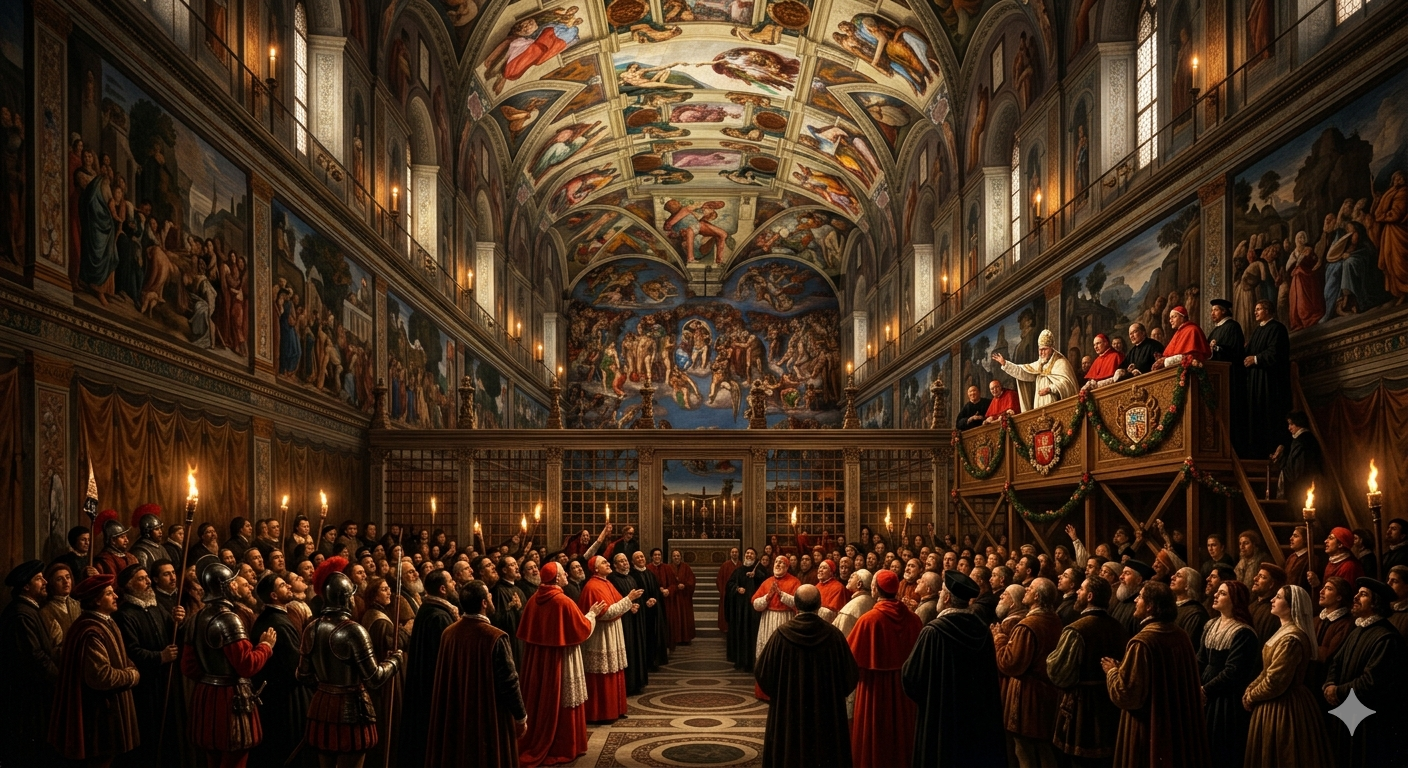
The completion of Michelangelo’s Sistine Chapel ceiling culminated in a grand unveiling ceremony on October 31, 1512, All Hallows’ Eve, when Pope Julius II officially revealed the finished masterpiece to assembled church officials and distinguished guests. This momentous occasion marked the end of four years of intensive artistic labor that had transformed the chapel’s simple starred ceiling into one of history’s most magnificent artistic achievements. The choice of All Hallows’ Eve for the unveiling created appropriate religious symbolism, as this Christian observance preceding All Saints’ Day emphasized themes of spiritual transformation and divine revelation that perfectly complemented the theological content of Michelangelo’s frescoes.
The completed ceiling revealed the full scope of Michelangelo’s artistic vision, displaying over 300 individual figures arranged across nine central Genesis scenes, twelve prophetic figures, numerous ignudi (nude youths), ancestral portraits, and elaborate architectural framework that created convincing three-dimensional illusions on the flat vault surface. The finished work measured approximately 5,000 square feet of painted surface, making it one of the largest single artistic undertakings in Renaissance history. Every element of this vast composition demonstrated Michelangelo’s unparalleled mastery of human anatomy, innovative painting techniques, and sophisticated understanding of theological symbolism.
The October 31 unveiling ceremony was followed by public viewing on All Saints’ Day, November 1, 1512, allowing broader audiences to witness the revolutionary artistic achievement that would influence Western art for centuries. Contemporary accounts describe the overwhelming impact of viewing the complete ceiling for the first time, as visitors craned their necks to absorb the vast panorama of biblical history unfolding overhead. The emotional response ranged from religious awe at the theological content to artistic admiration for technical innovations that had never before been attempted in ceiling decoration.
Giorgio Vasari, the Renaissance biographer and artist, later described the ceiling’s immediate impact on contemporary viewers, noting that people came from all parts of Rome to witness the marvel that Michelangelo had created. The finished work’s influence on other artists was instantaneous, as painters throughout Italy began incorporating Michelangelo’s innovations in anatomy, composition, and emotional expression into their own works. The ceiling established new standards for religious art while demonstrating that painting could achieve sculptural monumentality and psychological depth previously thought impossible in two-dimensional media.
The successful completion of the ceiling project under the original four-year timeline, despite temporary work stoppages due to payment disputes and scaffolding reconstruction, demonstrated Michelangelo’s exceptional project management skills alongside his artistic genius. The artist’s ability to maintain consistent quality and unified vision across such an enormous surface while working essentially alone represented an unprecedented achievement in Renaissance art production. The finished ceiling not only fulfilled Pope Julius II’s ambitious vision for papal artistic patronage but exceeded all expectations by creating a work that transcended its immediate religious and political purposes to become a universal symbol of human artistic achievement.
Artistic Innovations and Renaissance Revolution
Michelangelo’s Sistine Chapel ceiling introduced revolutionary artistic innovations that fundamentally transformed Renaissance painting and established new possibilities for monumental art throughout Europe. The most significant breakthrough involved his application of sculptural principles to large-scale fresco painting, creating figures with unprecedented three-dimensional presence and anatomical accuracy that seemed to inhabit real space rather than merely decorate flat surfaces. This sculptural approach to painting, known as disegno, demonstrated that two-dimensional art could achieve the monumentality and emotional impact previously associated only with sculpture and architecture.
The ceiling’s innovative use of trompe-l’oeil architectural elements created convincing illusions that transformed the chapel’s barrel vault into a complex multi-level structure populated by biblical figures existing in various spatial relationships. Michelangelo’s painted marble framework, including cornices, pilasters, pedestals, and medallions, provided organizational structure while creating depth and perspective that made the ceiling appear to open onto celestial realms. These architectural innovations influenced ceiling decoration throughout Europe and established principles of illusionistic painting that remained fundamental to Baroque and Neoclassical art.
The unprecedented scale and complexity of the human figures represented another revolutionary achievement that expanded artistic possibilities for depicting the human form in monumental contexts. The famous ignudi, twenty nude youths positioned around the central Genesis scenes, demonstrated Michelangelo’s mastery of human anatomy while showcasing his ability to create figures that function simultaneously as decorative elements and theological symbols. These figures, ranging from contemplative to dynamic in pose and expression, established new standards for depicting the human body that influenced artistic training and practice for centuries.
Michelangelo’s innovative approach to narrative painting created new possibilities for combining multiple story elements within unified compositions that could be read both as individual scenes and as components of larger theological programs. The Genesis cycle’s chronological arrangement from creation through human fall provided clear narrative progression while allowing each individual scene to function as an independent artistic statement. This balance between narrative coherence and compositional autonomy became a fundamental principle of history painting that influenced artistic production throughout the early modern period.
The ceiling’s emotional range and psychological complexity introduced unprecedented depth of human expression into religious art, moving beyond traditional iconographic conventions to explore fundamental questions about human nature, divine grace, and moral choice. Figures like the Cumaean Sibyl and the Prophet Ezekiel display psychological states ranging from mystical ecstasy to profound contemplation, demonstrating that religious art could explore complex emotional and spiritual experiences rather than simply illustrate biblical events. This psychological sophistication elevated religious painting to new intellectual and artistic levels that influenced subsequent developments in both religious and secular art throughout Europe.
Contemporary Impact and Immediate Recognition
The immediate impact of Michelangelo’s Sistine Chapel ceiling on contemporary art and culture was both profound and widespread, as news of the extraordinary achievement spread throughout Italy and beyond, attracting artists, scholars, and dignitaries from across Europe to witness firsthand this revolutionary artistic accomplishment. Within months of the October 1512 unveiling, the ceiling had become a pilgrimage destination for anyone interested in understanding the latest developments in Renaissance art. Artists made special journeys to Rome specifically to study Michelangelo’s innovations in anatomy, composition, and fresco technique, leading to immediate stylistic influences that appeared in works throughout the Italian peninsula.
The ceiling’s influence on contemporary artists was particularly evident in the work of Raphael, who was simultaneously painting the papal apartments in the Vatican Palace. Raphael’s response to Michelangelo’s achievement can be seen in his subsequent frescoes, particularly the School of Athens, which demonstrated increased attention to sculptural modeling and anatomical accuracy clearly inspired by the Sistine ceiling innovations. This artistic dialogue between the two masters, working in adjacent Vatican spaces, created a competitive environment that pushed both artists to achieve unprecedented levels of artistic excellence and innovation.
The technical innovations demonstrated in the ceiling painting immediately influenced fresco techniques throughout Italy, as artists sought to understand and replicate Michelangelo’s methods for achieving sculptural effects in painted media. Art workshops began modifying their teaching methods to incorporate the anatomical studies and three-dimensional modeling techniques that Michelangelo had perfected during the ceiling project. The impact extended beyond painting to influence sculpture and architecture, as artists recognized that the ceiling’s success demonstrated new possibilities for integrating different artistic media within unified decorative programs.
Contemporary writers and intellectuals responded to the ceiling with unprecedented praise that established Michelangelo’s reputation as a divine genius whose artistic achievements transcended normal human capabilities. Pietro Bembo, Cardinal Bibbiena, and other Renaissance humanists wrote extensively about the ceiling’s theological sophistication and artistic innovation, interpreting the work as evidence that contemporary Italian culture had achieved artistic levels equal or superior to classical antiquity. These written testimonies helped establish the intellectual framework for understanding Renaissance art as a cultural movement that combined classical learning with Christian faith through artistic excellence.
The ceiling’s immediate economic impact on Rome was also significant, as increased pilgrim and tourist traffic generated revenue for local businesses while enhancing the city’s reputation as a center of contemporary cultural achievement. Pope Julius II’s investment in the ceiling project produced returns that extended far beyond artistic satisfaction, as the work’s international fame enhanced papal prestige and demonstrated the Church’s commitment to cultural patronage. This economic success encouraged continued papal investment in artistic projects that would maintain Rome’s position as Europe’s leading artistic center throughout the 16th century.
Pope Julius II’s Final Triumph and Death
Pope Julius II’s witnessing of the completed Sistine Chapel ceiling represented the culmination of his ambitious cultural program and demonstrated the success of his strategy to enhance papal prestige through artistic patronage of unprecedented scale and quality. The Warrior Pope, who had commissioned the ceiling as part of his broader effort to restore papal authority and glorify the Catholic Church, lived to see his investment vindicated by the extraordinary public response to Michelangelo’s masterpiece. The ceiling’s completion in October 1512 marked one of Julius II’s greatest achievements, providing tangible evidence that his vision for papal grandeur could produce results that exceeded contemporary expectations and established lasting monuments to Church authority.
The pope’s relationship with Michelangelo during the ceiling project had been characterized by both mutual respect and frequent tension, as Julius II’s impatient personality often clashed with the artist’s perfectionist temperament and insistence on artistic autonomy. Their disagreements over payment schedules, work pace, and artistic decisions became legendary, with Vasari and other contemporary sources recording dramatic confrontations between the pontiff and the artist. Despite these conflicts, Julius II consistently supported Michelangelo’s artistic vision and provided the resources necessary for completing the ambitious project, demonstrating his recognition that great art required both generous patronage and artistic freedom.
The pope’s decision to grant Michelangelo complete creative control over the ceiling’s iconographic program proved crucial to the work’s ultimate success, as it allowed the artist to develop the comprehensive Genesis narrative that transformed a simple apostolic decoration into a sophisticated theological and artistic statement. Julius II’s willingness to accept Michelangelo’s expansion of the original concept from twelve apostolic figures to over 300 individual figures revealed his understanding that artistic greatness often requires abandoning conventional limitations in favor of visionary ambition. This collaborative relationship between patron and artist became a model for subsequent papal commissions throughout the Renaissance period.
The completion of the ceiling during the final year of Julius II’s papacy provided a fitting capstone to his ten-year reign, which had been marked by military campaigns to restore papal temporal authority and cultural initiatives to enhance Church prestige throughout Europe. The ceiling’s international recognition validated the pope’s belief that artistic excellence could serve political and religious objectives while creating lasting monuments that would influence European culture for centuries. Julius II’s death on February 21, 1513, just four months after the ceiling’s completion, meant that he barely survived to witness the immediate impact of his most successful artistic commission.
The pope’s legacy as a patron of the arts was secured by the ceiling’s enduring influence, which demonstrated that papal investment in cultural projects could produce returns that extended far beyond immediate political considerations. Julius II’s support for Michelangelo established precedents for papal artistic patronage that would continue throughout the 16th century, influencing subsequent commissions including the artist’s later work on The Last Judgment in the same chapel. The Warrior Pope’s vision of using artistic excellence to glorify the Church and enhance papal authority found its most perfect expression in the Sistine Chapel ceiling, ensuring his remembered as one of history’s most important artistic patrons.
The Enduring Legacy: Five Centuries of Artistic Influence
The enduring legacy of Michelangelo’s Sistine Chapel ceiling extends far beyond its immediate Renaissance context to influence virtually every subsequent development in Western monumental painting, establishing artistic principles and aesthetic standards that remain fundamental to understanding the relationship between art, religion, and human expression. Over the past five centuries, the ceiling has maintained its status as perhaps the most visited and studied artwork in the world, attracting millions of visitors annually while continuing to inspire artists, scholars, and religious believers who find in its images both artistic excellence and spiritual meaning that transcend cultural and temporal boundaries.
The ceiling’s influence on artistic education has been particularly profound, as art schools throughout Europe and the Americas have used Michelangelo’s figures as standard models for teaching human anatomy, composition, and expressive techniques. The famous Creation of Adam scene has become one of the most recognizable images in Western culture, appearing in countless reproductions, parodies, and artistic homages that demonstrate its continued relevance to contemporary visual culture. Art students continue to travel to Rome specifically to study the ceiling’s innovations in foreshortening, anatomical accuracy, and emotional expression, making it an essential component of artistic education worldwide.
The theological influence of the ceiling has been equally significant, as its visual interpretation of Genesis has shaped Christian artistic traditions and popular understanding of biblical narratives for over five hundred years. The ceiling’s depiction of God as a dynamic, physically present creator figure influenced religious art throughout Europe while providing visual models for understanding divine attributes and human-divine relationships. Contemporary religious art continues to reference Michelangelo’s iconographic innovations, particularly his representation of God’s creative power and humanity’s fallen but dignified condition.
The ceiling’s impact on architectural decoration established new standards for integrating painting with built environments, influencing palace, church, and public building decoration throughout the early modern period. Baroque ceiling painters like Pietro da Cortona and Giovanni Battista Tiepolo built directly upon Michelangelo’s innovations in illusionistic architecture and figure placement, while neoclassical artists like Jacques-Louis David incorporated his principles of sculptural modeling and heroic figure representation into their historical paintings. Even contemporary artists continue to reference the ceiling’s compositional innovations and technical achievements in works that span from traditional painting to digital media installations.
The ceiling’s restoration between 1980 and 1994 revealed the original brilliance of Michelangelo’s colors while sparking international debate about conservation ethics and the relationship between historical authenticity and contemporary accessibility. The restoration project, which removed centuries of accumulated candle smoke and overpainting to reveal the artist’s original palette of bright blues, pinks, and greens, transformed understanding of Renaissance color theory while raising questions about how historical artworks should be maintained for future generations. The restored ceiling’s enhanced visibility has allowed new generations of scholars and visitors to appreciate artistic subtleties that had been obscured for centuries, ensuring continued relevance for contemporary audiences while preserving Michelangelo’s original achievement for future centuries of admirers and students.