
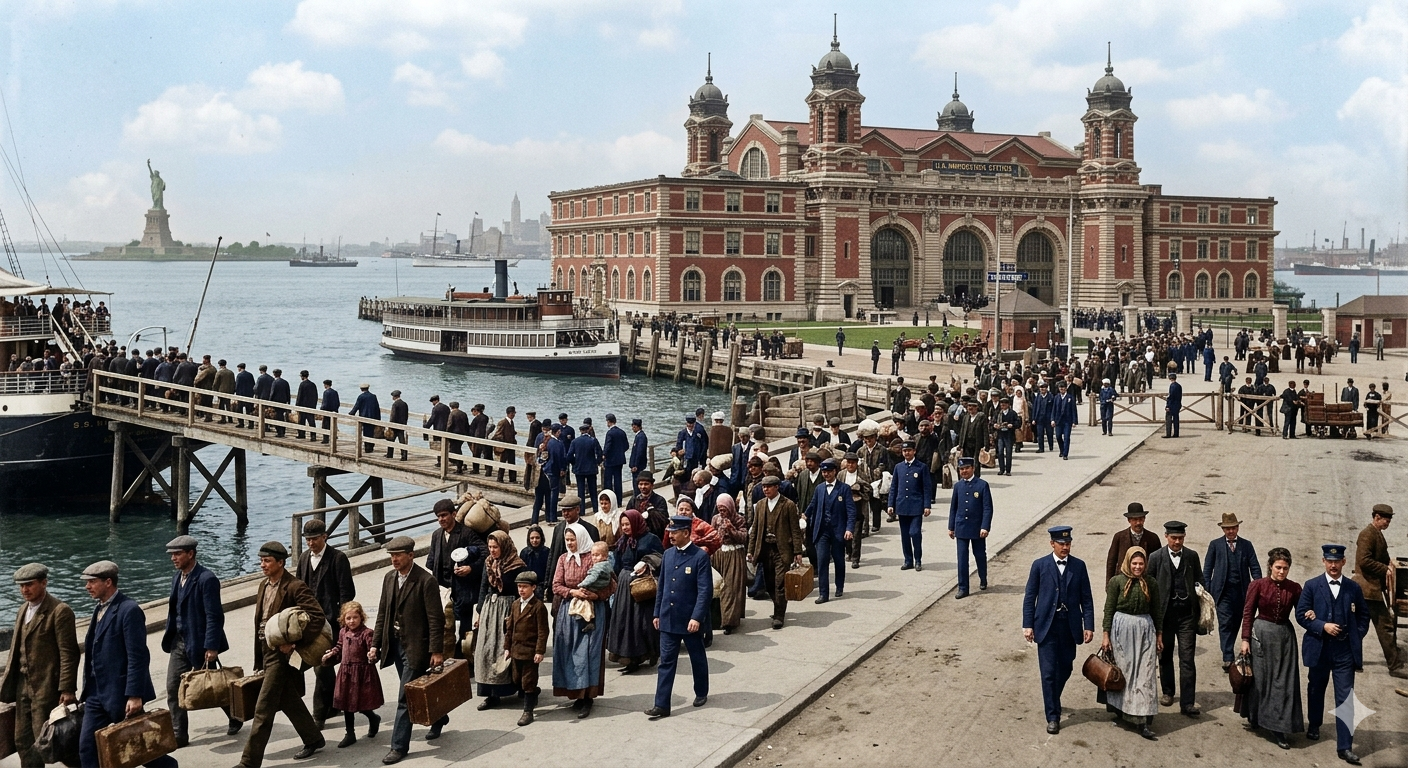
On January 1, 1892, Ellis Island officially opened its doors as the United States’ premier federal immigration station in New York Harbor, fundamentally transforming how America received and processed the millions of immigrants who would seek new lives on American shores over the subsequent six decades. This momentous occasion marked not only the beginning of the most famous immigration facility in American history but also represented a crucial shift in federal immigration policy from a largely unregulated system to a comprehensive, centralized process designed to manage the unprecedented waves of immigration that characterized the late 19th and early 20th centuries. The opening of Ellis Island coincided with dramatic changes in the character of American immigration, as millions of people from Southern and Eastern Europe, fleeing poverty, persecution, and political upheaval in their homelands, began arriving in numbers that dwarfed previous immigration patterns and challenged existing American assumptions about national identity, cultural assimilation, and economic opportunity. The facility’s inaugural day saw approximately 700 immigrants processed through its brand-new buildings and inspection procedures, beginning a legacy that would eventually encompass more than 12 million immigrants who would pass through Ellis Island’s facilities before its closure as an immigration station in 1954. The establishment of Ellis Island represented America’s attempt to balance its traditional openness to immigration with growing concerns about public health, national security, and economic competition, creating inspection procedures and facilities that would become the template for modern immigration processing while embodying both the promise and the challenges of American diversity and opportunity.
The Historical Context: America’s Need for Centralized Immigration Processing
The establishment of Ellis Island as a federal immigration station in 1892 represented the culmination of decades of evolving American immigration policy and the federal government’s growing recognition that the massive scale of late 19th-century immigration required centralized, professional processing facilities that could handle the complex medical, legal, and administrative challenges posed by unprecedented numbers of arriving immigrants. Prior to Ellis Island’s opening, immigration processing in New York had been handled by the state-run Castle Garden facility, which had operated from 1855 to 1890 but had become increasingly overwhelmed by the sheer volume of arrivals while also becoming associated with corruption, inefficiency, and inadequate medical screening that threatened public health and immigrant welfare.
The transition from state to federal control of immigration processing reflected broader changes in American governance during the late 19th century, as the federal government assumed greater responsibility for regulating interstate commerce, public health, and national security in response to the challenges of industrialization, urbanization, and international migration. The Immigration Act of 1891 had established federal authority over immigration matters and mandated the creation of comprehensive inspection procedures that would ensure that only immigrants who met specific health, legal, and economic criteria would be admitted to the United States.
The selection of Ellis Island as the site for the new federal immigration station was influenced by its strategic location in New York Harbor, where it could efficiently process immigrants arriving on the trans-Atlantic steamships that had become the primary means of transportation for European immigrants seeking passage to America. The island’s position allowed federal officials to intercept and inspect immigrants before they reached the American mainland, creating a controlled environment where thorough medical and legal examinations could be conducted without disrupting the broader operations of New York City’s busy port facilities.
The design and construction of Ellis Island’s facilities represented a significant investment in immigration infrastructure, with the federal government commissioning elaborate buildings designed by the architectural firm of Boring and Tilton that would provide both the functional space necessary for efficient immigration processing and the dignified, welcoming atmosphere that federal officials believed was appropriate for America’s principal gateway to freedom and opportunity. The main immigration building, with its distinctive red brick facade and imposing towers, was designed to impress arriving immigrants with the grandeur and permanence of American institutions while also providing the practical facilities necessary for medical examinations, legal interviews, and administrative processing.
Annie Moore: The First Immigrant and Symbol of Hope
The honor of being the first immigrant to pass through the newly opened Ellis Island facility fell to fifteen-year-old Annie Moore, a young Irish girl from County Cork who had traveled to America aboard the steamship Nevada with her two younger brothers, Anthony and Philip, to reunite with their parents who had previously immigrated to New York City. Annie’s status as the first Ellis Island immigrant was both a matter of chance, as she happened to be at the front of the line when the facility opened at 8:00 AM on January 1, 1892, and a symbolic choice, as her Irish heritage, youth, and family reunification story embodied many of the characteristics that Americans associated with deserving and assimilable immigrants.
The ceremony surrounding Annie Moore’s passage through Ellis Island reflected the federal government’s desire to present the new facility as a welcoming and dignified gateway to American opportunity, as Superintendent John C. Weber personally greeted the young immigrant and presented her with a $10 gold piece in recognition of her historic status as the facility’s first arrival. This ceremonial presentation was carefully orchestrated to generate positive publicity for the new immigration station while demonstrating federal commitment to treating immigrants with respect and dignity throughout the inspection process.
Annie Moore’s background and circumstances illustrated many of the typical patterns that characterized late 19th-century immigration to America, as she represented the thousands of young people who made the dangerous trans-Atlantic voyage to reunite with family members who had previously established themselves in American communities. Her Irish heritage connected her to one of the largest and most established immigrant communities in American cities, while her youth and gender made her particularly sympathetic to American audiences who were becoming increasingly concerned about the character and assimilability of the newer immigrant populations arriving from Southern and Eastern Europe.
The media attention focused on Annie Moore’s arrival helped establish Ellis Island’s reputation as both a symbol of American opportunity and a carefully managed federal facility that would ensure orderly and fair processing of immigrants seeking admission to the United States. Newspaper accounts of her experience emphasized both the efficiency of the new inspection procedures and the humane treatment that immigrants could expect to receive from federal officials who were committed to upholding America’s traditional hospitality to newcomers while also protecting American interests and security.
Annie Moore’s subsequent life in America, though marked by the typical struggles and modest achievements of working-class immigrant families, became part of the larger narrative about Ellis Island’s role in facilitating successful immigrant integration into American society. Her marriage, children, and residence in New York City’s Lower East Side provided evidence that the immigrants processed through Ellis Island could indeed become productive and patriotic American citizens who contributed to the nation’s economic growth and cultural diversity.
The Architecture and Design: Building America’s Gateway
The architectural design of Ellis Island’s main immigration building represented a careful balance between functional efficiency and symbolic grandeur, as the federal government sought to create facilities that would process large numbers of immigrants quickly and thoroughly while also impressing arrivals with the dignity and permanence of American institutions. The architectural firm of Boring and Tilton, selected through a competitive design process, created a distinctive Beaux-Arts style complex that combined red brick facades with limestone trim and impressive towers that would make Ellis Island one of the most recognizable landmarks in New York Harbor.
The main building’s design incorporated the latest thinking about public health and administrative efficiency, with carefully planned circulation patterns that would move immigrants through the inspection process in an orderly sequence while minimizing confusion and delays that might create overcrowding or sanitary problems. The building’s famous Registry Room, with its soaring vaulted ceiling and elegant tile work, was designed to accommodate large numbers of people while maintaining an atmosphere of dignity and welcome that would make a positive first impression on immigrants entering American territory for the first time.
The incorporation of advanced ventilation and lighting systems reflected contemporary understanding of public health principles and the importance of creating healthy environments for both immigrants and the federal employees who would be working in the facility on a daily basis. The building’s design included extensive natural lighting through large windows and skylights, while carefully planned ventilation systems would help prevent the spread of contagious diseases that were a major concern in any facility processing large numbers of people in close quarters.
The architectural symbolism of Ellis Island’s design was carefully considered to convey messages about American values and aspirations, with the building’s imposing scale and refined details suggesting both the power and the welcoming nature of the American republic. The use of red brick and limestone created visual connections to important American civic buildings while the towers and decorative elements provided distinctive identity that would make Ellis Island immediately recognizable to immigrants and visitors approaching New York Harbor.
The practical layout of Ellis Island’s facilities reflected extensive planning and consultation with immigration officials who understood the specific requirements of immigrant processing, including medical examination rooms, legal interview spaces, detention areas for immigrants requiring additional scrutiny, and dormitories for those whose cases required extended review. The building’s design accommodated the complex workflow of immigration processing while providing appropriate facilities for the various federal agencies and private organizations that would be involved in immigrant reception and assistance services.
John C. Weber: The First Superintendent and Immigration Pioneer
John C. Weber’s appointment as the first superintendent of Ellis Island reflected the federal government’s commitment to establishing professional, efficient management of the new immigration facility under the leadership of an experienced administrator who understood both the practical challenges of large-scale immigrant processing and the political sensitivities surrounding American immigration policy. Weber’s background in federal service and his experience with administrative management made him well-suited to oversee the complex transition from state to federal control of immigration processing while establishing the procedures and standards that would govern Ellis Island operations for decades to come.
Weber’s leadership during Ellis Island’s opening phase was crucial for establishing the facility’s reputation for fair and efficient immigrant processing, as his personal involvement in greeting arriving immigrants and overseeing inspection procedures helped demonstrate federal commitment to treating newcomers with dignity and respect while maintaining appropriate security and health standards. His decision to personally present Annie Moore with a commemorative gold piece reflected his understanding that Ellis Island’s success would depend not only on efficient administration but also on public perception and immigrant satisfaction with their treatment at America’s principal gateway.
The administrative challenges facing Weber during Ellis Island’s early operations were enormous, as he needed to coordinate the activities of multiple federal agencies, train large numbers of new employees in immigration procedures, and establish working relationships with steamship companies, immigrant aid societies, and local government officials who were all involved in various aspects of the immigration process. Weber’s success in managing these complex relationships while maintaining smooth facility operations helped establish Ellis Island as a model for federal immigration processing that would influence immigration policy and administration throughout the United States.
Weber’s approach to immigrant processing emphasized both efficiency and humanity, as he sought to develop procedures that would handle large volumes of arrivals quickly while ensuring that each immigrant received fair and thorough consideration of their case. His establishment of interpreter services, medical screening protocols, and appeals procedures reflected his understanding that effective immigration processing required attention to individual circumstances and needs rather than simply applying standardized procedures without regard for personal situations or special requirements.
The precedents established by Weber during his tenure as superintendent had lasting influence on American immigration administration, as his emphasis on professional standards, consistent procedures, and respectful treatment of immigrants became the foundation for federal immigration policy that would continue to evolve throughout the 20th century. His leadership during Ellis Island’s formative years helped ensure that America’s principal immigration facility would develop a reputation for fairness and efficiency that would enhance America’s appeal to immigrants seeking opportunities for better lives while maintaining appropriate controls to protect American interests and security.
The Medical Inspection Process: Protecting Public Health
The medical inspection procedures implemented at Ellis Island represented one of the most comprehensive public health screening systems ever established, reflecting contemporary understanding of infectious disease transmission and the federal government’s determination to prevent the introduction of communicable diseases that might threaten American public health. The medical inspection process was designed by federal health officials working in collaboration with leading physicians and public health experts who understood both the specific disease risks associated with trans-Atlantic immigration and the practical challenges of examining large numbers of people in an efficient and humane manner.
The famous “six-second physical” that became synonymous with Ellis Island medical inspections involved trained Public Health Service physicians observing immigrants as they climbed the stairs to the Registry Room, looking for signs of physical disabilities, respiratory problems, or other health conditions that might indicate serious medical issues requiring further examination. This initial screening was followed by more detailed examinations for immigrants who showed signs of potential health problems, including eye examinations using buttonhooks to detect trachoma, a contagious eye disease that was common among immigrants from certain regions and could lead to blindness if left untreated.
The medical inspection process reflected contemporary understanding of eugenics and public health theories that influenced immigration policy throughout the early 20th century, as federal physicians were instructed to identify not only communicable diseases but also mental disabilities, chronic illnesses, and physical conditions that might prevent immigrants from becoming self-supporting members of American society. These medical standards reflected broader social attitudes about the types of immigrants who would be most likely to assimilate successfully into American society while contributing to national economic growth and social stability.
The detention facilities at Ellis Island were designed to accommodate immigrants whose medical examinations revealed conditions requiring further observation, treatment, or evaluation before final admission decisions could be made. The island’s hospital facilities, which were expanded several times during the facility’s operational years, provided medical care for immigrants with treatable conditions while also serving as quarantine facilities for those with communicable diseases that posed public health risks. These medical facilities represented significant federal investment in immigration infrastructure and demonstrated official commitment to balancing humanitarian concerns with public health protection.
The psychological impact of medical inspections on arriving immigrants was profound, as the examination process often represented their first direct contact with American authority and could determine whether their dreams of American opportunity would be realized or crushed by medical rejection and forced return to their countries of origin. The stress and anxiety associated with medical inspections became part of the collective immigrant experience at Ellis Island, creating shared memories and narratives that would influence how immigrant communities understood and remembered their introduction to American society.
Legal Inspection and Documentation: Gateway to American Citizenship
The legal inspection process at Ellis Island represented the federal government’s attempt to implement comprehensive screening procedures that would ensure admitted immigrants met specific legal criteria while also providing fair and consistent evaluation of individual cases that took into account personal circumstances and potential for successful integration into American society. The legal inspection involved detailed questioning about immigrants’ backgrounds, destinations, financial resources, and intentions in America, with federal inspectors trained to identify potential security risks, economic liabilities, or legal problems that might disqualify applicants for admission to the United States.
The immigration inspectors who conducted legal examinations at Ellis Island were federal employees who received specialized training in immigration law, interviewing techniques, and cultural sensitivity designed to help them make fair and accurate assessments of immigrant applications while maintaining appropriate security standards and legal requirements. These inspectors often developed expertise in particular languages or cultural groups, allowing them to conduct more effective interviews and better understand the circumstances and motivations of immigrants from specific regions or backgrounds.
The documentation requirements for Ellis Island admission reflected federal efforts to create systematic records of immigrant arrivals while also providing immigrants with official documentation of their legal status in the United States. The ship manifests that served as the primary source of information about arriving immigrants contained detailed information about passengers’ names, ages, occupations, destinations, and financial resources, providing federal officials with standardized data that could be used to evaluate admission applications and track immigrant settlement patterns throughout the United States.
The appeals process established at Ellis Island provided immigrants with opportunities to challenge negative admission decisions while also ensuring that federal standards and procedures were applied consistently and fairly across all cases. Immigrants who were initially rejected for admission could request additional hearings, provide additional documentation, or seek assistance from immigrant aid societies and legal representatives who were familiar with federal immigration requirements and procedures. This appeals process reflected American legal traditions emphasizing due process and fair treatment while also recognizing the high stakes involved in immigration decisions that could permanently affect individuals’ and families’ futures.
The legal precedents established through Ellis Island operations had lasting influence on American immigration law and policy, as the procedures and standards developed at the facility became the foundation for federal immigration administration throughout the United States. The emphasis on systematic documentation, consistent application of legal standards, and fair consideration of individual circumstances established principles that would continue to influence American immigration policy throughout the 20th century and beyond, even as specific requirements and procedures evolved in response to changing national circumstances and policy priorities.
Immigration Patterns and Demographics: Changing Faces of America
The opening of Ellis Island in 1892 coincided with a dramatic transformation in the character of American immigration, as the facility processed unprecedented numbers of immigrants from Southern and Eastern Europe who differed significantly in language, religion, and cultural background from the earlier waves of Northern and Western European immigrants who had dominated American immigration during the mid-19th century. This “new immigration” brought millions of Italians, Jews from the Russian Empire, Poles, Hungarians, Greeks, and other groups whose Catholic, Orthodox, and Jewish religious traditions, along with their different languages and cultural practices, challenged existing American assumptions about national identity and immigrant assimilation.
The statistical records maintained at Ellis Island provide detailed documentation of immigration patterns and trends that shaped American demographic development during the late 19th and early 20th centuries, revealing the complex economic, political, and social factors that motivated millions of people to abandon their ancestral homes and seek new opportunities in America. The peak immigration years between 1900 and 1914 saw more than a million immigrants per year processed through Ellis Island, with individual years recording arrivals that exceeded the entire population of many American states and territories.
The geographic origins of Ellis Island immigrants reflected the broader patterns of European economic development and political upheaval that characterized the period between 1892 and 1924, when restrictive immigration legislation significantly reduced the numbers of immigrants eligible for admission to the United States. The predominance of Italian immigrants during certain periods reflected economic conditions in Southern Italy and Sicily, while the large numbers of Jewish immigrants corresponded to persecution and economic restrictions in the Russian Empire that made emigration an attractive or necessary option for hundreds of thousands of families.
The occupational characteristics of Ellis Island immigrants revealed the economic motivations that drove much of the immigration during this period, as most arrivals were skilled or semi-skilled workers seeking better economic opportunities in America’s rapidly expanding industrial economy. The facility processed large numbers of immigrants with experience in textile work, construction, agriculture, and other trades that were in high demand in American cities and rural areas, providing evidence that immigration was responding to legitimate labor market needs rather than simply representing unwanted population pressure from Europe.
The family reunification patterns documented at Ellis Island illustrated the importance of kinship networks and community connections in facilitating immigration and immigrant settlement, as many arrivals were joining family members who had previously established themselves in American communities. These family networks provided crucial assistance with housing, employment, and cultural adaptation that helped ease immigrants’ transition to American society while also creating the foundation for ethnic communities that would preserve important cultural traditions and mutual assistance networks throughout the immigrant experience.
Daily Operations and Procedures: Inside America’s Busiest Gateway
The daily operations at Ellis Island during its peak years required the coordination of hundreds of federal employees, medical personnel, interpreters, and support staff who worked together to process thousands of immigrants efficiently while maintaining appropriate standards for medical examination, legal review, and administrative documentation. The facility operated on a carefully choreographed schedule that began before dawn with the arrival of steamships in New York Harbor and continued throughout the day as immigrants moved through the various stages of inspection and evaluation that would determine their eligibility for admission to the United States.
The typical immigrant experience at Ellis Island began with disembarkation from steamships at the facility’s dock, where immigrants carrying their personal possessions and often exhausted from weeks of trans-Atlantic travel would join processing lines that could include hundreds or thousands of other arrivals depending on the number and size of ships arriving on any particular day. The initial registration process involved checking immigrants’ names against ship manifests and assigning identification numbers that would track their progress through the various inspection procedures while ensuring that no individuals were overlooked or processed incorrectly.
The Registry Room, Ellis Island’s most famous space, served as the central hub for immigrant processing during the facility’s busiest periods, with hundreds of immigrants and their families waiting for medical examinations, legal interviews, and final admission decisions in an atmosphere that could be simultaneously exciting, terrifying, and overwhelming depending on individual circumstances and expectations. The room’s impressive architecture and scale were designed to convey American grandeur and welcome, but for many immigrants the space represented an anxiety-filled waiting period during which their American dreams hung in the balance.
The interpretation services provided at Ellis Island were crucial for facilitating communication between immigrants and federal officials, as the facility regularly processed people speaking dozens of different languages and dialects who had little or no English language ability. The federal government employed interpreters with expertise in major immigrant languages while also developing procedures for handling less common languages and regional dialects that required special linguistic expertise or creative communication strategies to ensure fair and accurate processing of all arrivals.
The food service and overnight accommodation facilities at Ellis Island reflected federal recognition that immigrant processing might require extended periods of detention for medical observation, legal review, or documentation verification that could not always be completed during single-day visits. The facility’s dining halls, dormitories, and recreation areas were designed to provide basic comfort and dignity for immigrants whose cases required additional time while also maintaining appropriate security and health standards for temporary residential facilities processing large numbers of people from diverse backgrounds.
The Immigration Act of 1891 and Federal Oversight
The Immigration Act of 1891 provided the crucial legal foundation for Ellis Island’s establishment and operation by transferring immigration control from state to federal authority while establishing comprehensive procedures for immigrant inspection, exclusion, and appeals that would govern American immigration policy for decades to come. This legislation reflected growing federal concern about the quality and character of immigration during a period of unprecedented arrivals from regions that many Americans viewed with suspicion or hostility, creating legal mechanisms for excluding immigrants deemed undesirable while maintaining America’s traditional openness to legitimate settlement and opportunity-seeking.
The federal bureaucracy created by the 1891 Act established the Bureau of Immigration within the Treasury Department, providing Ellis Island with institutional support and oversight from Washington while ensuring that immigration policies would be implemented consistently across all American ports of entry. This centralized administration represented a significant expansion of federal authority over matters that had previously been handled by state and local governments, reflecting broader changes in American governance during the late 19th century as the federal government assumed greater responsibility for regulating interstate commerce and national security.
The specific exclusion criteria established by the 1891 Act provided Ellis Island inspectors with legal authority to reject immigrants who fell into various prohibited categories, including individuals with contagious diseases, mental disabilities, criminal records, or anarchist political beliefs that were viewed as threats to American security or social order. These exclusion provisions reflected contemporary social attitudes about the types of immigrants who would be most likely to assimilate successfully into American society while contributing to national economic growth and political stability.
The appeals and review procedures mandated by the 1891 Act ensured that Ellis Island operations would include mechanisms for reconsidering negative admission decisions while providing immigrants with opportunities to challenge inspector rulings that they believed were unfair or incorrect. These procedural safeguards reflected American legal traditions emphasizing due process and individual rights while also recognizing the high stakes involved in immigration decisions that could permanently separate families or force individuals to return to dangerous or impoverished conditions in their countries of origin.
The enforcement mechanisms created by the 1891 Act gave Ellis Island officials authority to detain, exclude, or deport immigrants who violated federal immigration requirements while also providing legal frameworks for cooperation with steamship companies, immigrant aid societies, and foreign governments that were involved in various aspects of the immigration process. These enforcement provisions established the legal foundation for comprehensive immigration control that would continue to evolve throughout the 20th century as America grappled with changing immigration patterns and national security concerns.
Cultural Impact and Immigrant Experiences: Stories of Hope and Hardship
The cultural significance of Ellis Island extended far beyond its administrative function as an immigration processing facility, as the island became a powerful symbol of American opportunity and immigrant aspiration that shaped how generations of Americans understood their national identity and family histories. For millions of American families, Ellis Island represented the beginning of their American story, creating shared narratives and collective memories about courage, sacrifice, and determination that became central to American immigrant mythology and cultural identity throughout the 20th century and beyond.
The individual immigrant experiences documented at Ellis Island reveal the enormous diversity of motivations, circumstances, and outcomes that characterized the immigration process during the facility’s operational years, with stories ranging from triumphant reunions and successful integration to tragic separations and disappointed dreams that illustrated both the promise and the challenges of American immigration policy. These personal narratives, preserved in family histories, oral traditions, and documentary records, provide intimate perspectives on the larger historical processes that shaped American society during the peak immigration years.
The emotional impact of Ellis Island processing on immigrant families was often profound and lasting, as the facility represented both the culmination of long-planned journeys to America and the beginning of uncertain new lives in an unfamiliar country with different language, customs, and social expectations. The anxiety and hope associated with Ellis Island examinations created intense emotional experiences that many immigrants would remember and discuss for the rest of their lives, contributing to family traditions and community narratives about the immigration experience that would influence subsequent generations’ understanding of their heritage and identity.
The community formation patterns that began at Ellis Island often continued in American cities and towns where immigrants settled, as the shared experiences of immigration processing and the mutual assistance networks developed during the journey to America provided foundations for ethnic communities that would preserve important cultural traditions while facilitating adaptation to American society. These community connections helped immigrants navigate the challenges of employment, housing, education, and cultural adjustment while maintaining important links to their countries of origin and cultural heritage.
The intergenerational transmission of Ellis Island memories and stories became an important aspect of American immigrant culture, as first-generation immigrants shared their experiences with their children and grandchildren who often viewed these narratives as foundational family histories that connected them to their ethnic heritage while affirming their American identity. These family stories about Ellis Island became part of the broader American immigrant narrative that emphasized themes of courage, perseverance, and ultimate success that reinforced national mythology about America as a land of opportunity and freedom.
Technological Innovations and Administrative Efficiency
The technological innovations implemented at Ellis Island during its operational years reflected the federal government’s commitment to developing efficient, systematic procedures for handling unprecedented volumes of immigrant arrivals while maintaining appropriate standards for medical examination, legal review, and administrative documentation. The facility incorporated cutting-edge communication systems, record-keeping procedures, and transportation technologies that enabled rapid processing of large numbers of immigrants while minimizing delays, errors, and administrative complications that could create problems for both immigrants and federal officials.
The telegraphic communication systems installed at Ellis Island provided rapid connections between the facility and federal immigration headquarters in Washington, steamship companies, immigrant aid societies, and other organizations involved in various aspects of immigration processing and immigrant assistance. These communication networks enabled real-time coordination of immigration operations while providing mechanisms for resolving complex cases, obtaining additional documentation, and managing the logistics of immigrant transportation and settlement throughout the United States.
The record-keeping systems developed at Ellis Island represented pioneering efforts to create comprehensive databases of immigrant arrivals that could track settlement patterns, facilitate family reunifications, and provide statistical information about immigration trends and demographic changes that were transforming American society. These administrative innovations established precedents for systematic data collection and analysis that would influence federal bureaucracy development throughout the 20th century as the government assumed greater responsibility for managing complex social and economic programs.
The transportation coordination systems implemented at Ellis Island facilitated efficient movement of immigrants from steamships to processing facilities and subsequently to their final destinations throughout the United States, involving cooperation with railroad companies, immigrant aid societies, and local government officials who were involved in immigrant reception and settlement services. These transportation networks represented crucial infrastructure for managing the logistics of mass immigration while ensuring that immigrants could reach their intended destinations safely and efficiently.
The medical technology and diagnostic procedures employed at Ellis Island incorporated the latest scientific understanding of infectious disease detection and public health protection, including specialized equipment for eye examinations, laboratory facilities for disease testing, and quarantine procedures that balanced humanitarian concerns with public health protection. These technological innovations demonstrated federal commitment to applying scientific methods to immigration administration while maintaining appropriate standards for protecting both immigrant welfare and American public health interests.
Economic Impact and Labor Market Effects
The economic significance of Ellis Island’s role in American immigration extended far beyond the immediate costs and benefits of facility operations, as the millions of immigrants processed through the island made enormous contributions to American economic development during the peak years of industrialization and urban growth that characterized the late 19th and early 20th centuries. The facility served as the primary gateway for workers who would staff America’s expanding factories, build the country’s transportation infrastructure, and develop the agricultural resources that supported rapid economic growth and rising living standards for American families throughout this crucial period of national development.
The labor market analysis of Ellis Island immigration reveals the close relationship between immigration patterns and American economic needs, as arrivals often corresponded to specific labor shortages in particular industries or regions that required additional workers to maintain production and support continued economic expansion. The facility processed large numbers of immigrants with skills in construction, manufacturing, agriculture, and other sectors that were essential for American economic growth, providing evidence that immigration was responding to legitimate market demands rather than creating unwanted competition for American workers.
The regional economic development patterns influenced by Ellis Island immigration demonstrate the facility’s role in supporting population growth and economic diversification throughout the United States, as immigrants processed through the island settled in communities from coast to coast where they established businesses, developed new industries, and contributed to local economic growth that benefited both immigrant and native-born populations. These settlement patterns helped distribute the benefits of immigration throughout American society while reducing the regional concentration that might have created economic disruption or social tension.
The entrepreneurial activities of Ellis Island immigrants contributed significantly to American business development and innovation during the early 20th century, as many arrivals eventually established their own enterprises that created employment opportunities for other immigrants and native-born Americans while contributing to economic diversification and competitive market development. The facility processed future business leaders who would build major American corporations while also serving as the gateway for millions of workers who would support these enterprises through their labor and consumption.
The fiscal impact of Ellis Island operations on federal and local government budgets reflected both the costs of comprehensive immigration processing and the long-term benefits of successful immigrant integration into American society, as the taxes and economic contributions of immigrants generally exceeded the public expenditures required for their initial processing and settlement services. This positive fiscal balance provided economic justification for continued federal investment in immigration infrastructure while demonstrating that well-managed immigration could contribute to national prosperity rather than imposing unwanted burdens on American taxpayers.
International Relations and Diplomatic Considerations
The establishment and operation of Ellis Island had significant implications for American international relations and diplomatic policy, as the facility’s immigration procedures and standards became subjects of discussion and sometimes controversy with European governments whose citizens were seeking immigration to the United States. The federal government’s immigration policies, as implemented at Ellis Island, needed to balance domestic concerns about immigrant quality and national security with international considerations about maintaining friendly relations with countries that were important sources of immigration, trade partners, or diplomatic allies.
The diplomatic complications that occasionally arose from Ellis Island operations typically involved disputes over the treatment of particular immigrants, the application of medical or legal exclusion criteria, or disagreements about documentation and identification requirements that affected citizens of specific countries. These issues required careful diplomatic management to avoid creating international incidents while maintaining the integrity of American immigration standards and the authority of federal officials to enforce established policies and procedures.
The international reputation of Ellis Island as a fair and efficient immigration facility became an important aspect of American soft power and international appeal, as the facility’s operations demonstrated American commitment to treating immigrants with dignity and respect while maintaining appropriate security and health standards. This reputation helped enhance America’s attractiveness to potential immigrants while reinforcing international perceptions of the United States as a country that welcomed newcomers and provided opportunities for advancement and prosperity.
The information sharing and cooperation arrangements developed between Ellis Island officials and foreign governments facilitated more efficient immigration processing while helping to prevent fraud, document forgery, and other problems that could complicate immigration administration or create security risks. These diplomatic relationships required ongoing communication and coordination to ensure that immigration procedures remained current and effective while accommodating the legitimate concerns and interests of both American officials and foreign governments.
The precedents established through Ellis Island operations influenced American immigration policy and international relations throughout the 20th century, as the procedures and standards developed at the facility became the foundation for subsequent immigration legislation and diplomatic agreements that would continue to shape America’s relationship with the international community. The facility’s legacy in this area reflected successful American efforts to develop immigration policies that served national interests while maintaining constructive international relationships and upholding humanitarian values that enhanced America’s global reputation and influence.
Legacy and Historical Significance: Ellis Island’s Enduring Impact on America
The historical significance of Ellis Island’s opening in 1892 extends far beyond the immediate practical accomplishments of efficient immigration processing, as the facility became a powerful symbol of American values and aspirations that continues to influence how Americans understand their national identity, immigration heritage, and cultural diversity more than a century after the facility ceased operations as an immigration station. The island’s transformation from an active immigration facility to a National Museum of Immigration reflects its enduring importance as a site of memory and meaning for millions of American families whose ancestors passed through its doors in search of better lives and greater opportunities.
The demographic transformation of American society that occurred during Ellis Island’s operational years represents one of the most significant chapters in the nation’s social and cultural development, as the millions of immigrants processed through the facility fundamentally altered the ethnic, religious, and linguistic composition of American communities while contributing to the economic growth and cultural richness that characterized American society during the early 20th century. This transformation established precedents and patterns that would continue to influence American immigration policy and social development throughout subsequent decades as the nation grappled with questions about national identity, cultural assimilation, and economic opportunity.
The institutional innovations developed at Ellis Island influenced the evolution of federal bureaucracy and administrative procedures throughout the American government system, as the facility’s systematic approaches to record-keeping, case management, and public service delivery provided models for other federal agencies dealing with large-scale public programs and complex administrative challenges. These administrative precedents contributed to the development of modern American government capacity while establishing principles of efficiency, fairness, and professional service that would become hallmarks of effective federal administration.
The cultural narratives and collective memories associated with Ellis Island became integral parts of American immigrant mythology and national identity, providing shared stories and symbols that helped bind together a diverse population while reinforcing national values of opportunity, perseverance, and ultimate success through hard work and determination. These cultural contributions enhanced American social cohesion while providing inspiration and guidance for subsequent generations of immigrants who would continue to seek opportunities and freedom in America throughout the 20th and 21st centuries.
The preservation and interpretation of Ellis Island as a National Historic Landmark and Museum ensures that future generations will have opportunities to learn about and understand the immigration experiences that shaped American society while honoring the courage and contributions of the millions of immigrants who passed through the facility in pursuit of their American dreams. This continuing educational mission reflects the enduring relevance of Ellis Island’s history for contemporary discussions about immigration policy, national identity, and American values in an increasingly interconnected and diverse world.