The Acts of Union of 1707 represent one of the most significant political transformations in European history, permanently uniting the separate kingdoms of England and Scotland under the single name of Great Britain. This monumental legislation, which took effect on May 1, 1707, dissolved centuries of independence and rivalry between the two nations, creating a unified kingdom that would emerge as a dominant global power. The union was achieved through careful negotiation, political maneuvering, and mutual compromise, establishing a constitutional framework that continues to influence British governance more than three centuries later.
The Constitutional Background and Monarchical Foundation
The foundation for the 1707 union had been established over a century earlier through the Union of the Crowns in 1603, when James VI of Scotland ascended to the English throne as James I following the death of Elizabeth I. This personal union created a situation where both kingdoms shared the same monarch while maintaining separate parliaments, legal systems, and governing institutions. The arrangement worked reasonably well during times of political stability but created significant complications when succession issues or conflicting national interests arose.
The constitutional complexity of this dual monarchy became particularly evident during the reign of Queen Anne, who ascended to the thrones of both England and Scotland in 1702 following the death of William III. Anne’s reign would prove pivotal in the union negotiations, not only because of her personal support for closer integration between the kingdoms, but also because of the succession crisis that emerged from her tragic inability to produce surviving heirs. Despite seventeen pregnancies, all of Queen Anne’s children predeceased her, creating an unprecedented constitutional challenge that would ultimately drive both nations toward political union.
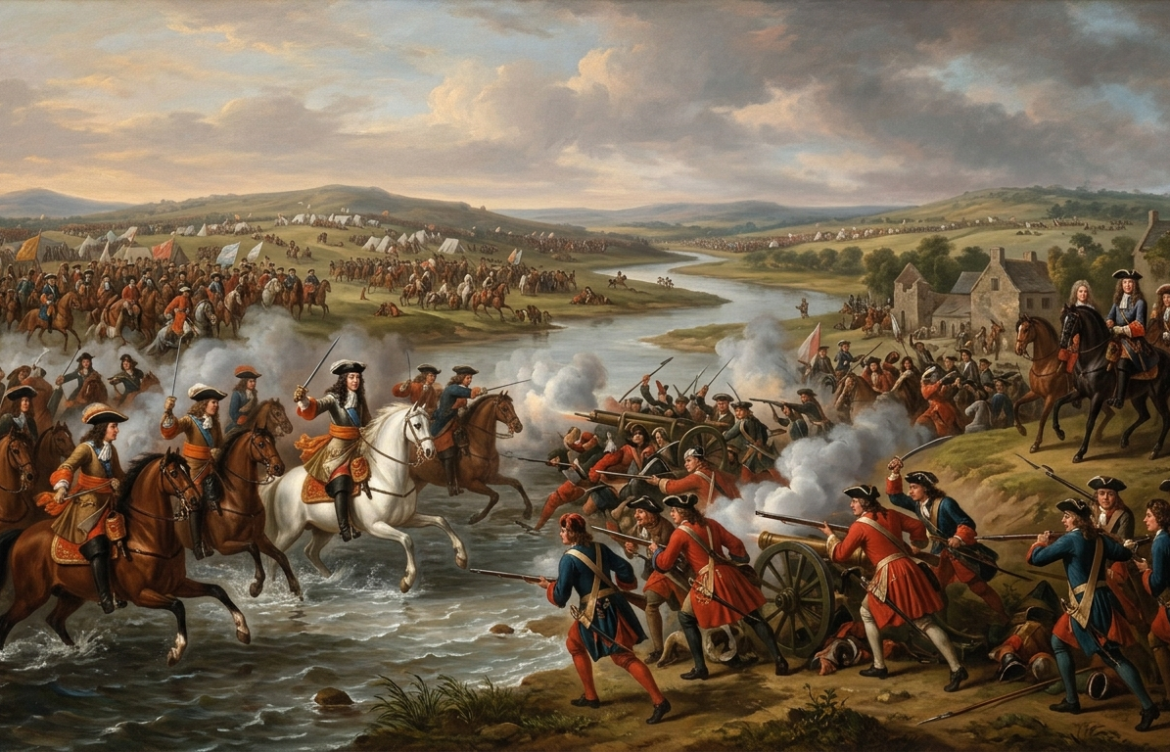
The succession issue was further complicated by the broader European political context of the early 18th century. The War of the Spanish Succession was raging across Europe, with England deeply committed to preventing French hegemony under Louis XIV. The possibility of Scotland choosing a different successor than England raised the terrifying prospect of French influence extending to England’s northern border, potentially creating a strategic nightmare for English military planners and diplomatic officials.
The Act of Settlement and English Succession Planning
In 1701, the English Parliament passed the Act of Settlement, a crucial piece of legislation that attempted to resolve the succession crisis by establishing a clear Protestant line of inheritance. The act stipulated that following Queen Anne’s death, the crown would pass to Electress Sophia of Hanover, a granddaughter of James VI and I, and her Protestant heirs. This legislation reflected England’s determination to prevent any return of Catholic monarchy and ensure continued Protestant rule following the religious upheavals of the 17th century.
The Act of Settlement represented more than simply a succession plan; it embodied England’s commitment to Protestant political principles and opposition to Catholic absolutism as exemplified by Louis XIV’s France. The legislation explicitly excluded Catholic claimants from the succession, including James Francis Edward Stuart, the Catholic son of the deposed James VII and II, who maintained his claim to both thrones from exile in France. English political leaders understood that ensuring Protestant succession was essential for maintaining their constitutional monarchy and preventing any restoration of the absolute monarchy that had been rejected during the Glorious Revolution of 1688.
However, the Act of Settlement created a significant constitutional problem: it was passed by the English Parliament without consultation with Scotland, despite the fact that it would determine the succession to the Scottish throne as well. This unilateral action violated the principle of joint decision-making that had governed succession issues since 1603 and demonstrated English assumptions about their dominance in the personal union. Scottish political leaders resented this presumption and recognized an opportunity to leverage the succession issue to secure concessions from England.
Scottish Parliamentary Response and the Act of Security
The Scottish Parliament’s response to the English Act of Settlement was swift and provocative. In 1704, they passed the Act of Security, a bold piece of legislation that directly challenged English assumptions about automatic Scottish acceptance of the Hanoverian succession. The act declared that Scotland was not bound to accept England’s choice of successor to Queen Anne unless Scottish religious, political, and economic freedoms were guaranteed. This legislation represented a direct assertion of Scottish parliamentary sovereignty and a rejection of English dominance in succession matters.
The Act of Security contained several provisions that caused alarm in England. Most significantly, it reserved Scotland’s right to choose a different successor from England, potentially breaking the Union of the Crowns that had existed since 1603. The legislation also demanded guarantees for the Presbyterian Church of Scotland, protection of Scottish legal and political institutions, and assurances of expanded trading rights. These demands reflected Scottish frustrations with the economic and political disadvantages they had experienced under the personal union.
Accompanying the Act of Security, the Scottish Parliament also passed the Act anent Peace and War, which declared that following Queen Anne’s death, Scotland would resume control over its own foreign policy and would no longer automatically support English military ventures. This legislation directly threatened English strategic interests by raising the possibility that Scotland might pursue independent diplomatic relationships, potentially including renewed ties with France. The combination of these two acts represented the most serious challenge to Anglo-Scottish relations since the Union of the Crowns.
The English Response: The Alien Act and Economic Pressure
England’s response to Scottish legislative defiance came in the form of the Alien Act of 1705, a piece of economic warfare disguised as immigration legislation. The act declared that unless Scotland agreed to either accept the Hanoverian succession or begin formal union negotiations by Christmas 1705, all Scots would be treated as aliens within England. This designation would prohibit Scottish trade with England and its colonies, exclude Scots from English property ownership, and effectively sever the economic relationships that had developed between the two kingdoms over the previous century.
The Alien Act represented a calculated application of economic pressure designed to force Scottish compliance with English political objectives. English political leaders understood that Scotland’s economy was heavily dependent on trade with England and access to English colonial markets. The threat of economic isolation was particularly potent because Scotland was still recovering from the devastating financial losses of the Darien Scheme, a failed colonial venture in Panama that had bankrupted many Scottish investors and depleted the nation’s financial resources.
The effectiveness of the English economic threat demonstrated the fundamental asymmetry in Anglo-Scottish relations. While England could survive without Scottish trade, Scotland’s economy would be severely damaged by exclusion from English markets. This economic reality provided England with substantial leverage in any negotiations and helped convince many Scottish politicians that accommodation with English demands was preferable to economic isolation and potential impoverishment.
The Commission Negotiations: Crafting the Union Treaty
The threat posed by the Alien Act convinced Scottish political leaders to enter formal union negotiations, and in February 1706, Queen Anne appointed commissioners from both kingdoms to develop a comprehensive union proposal. The commission consisted of thirty-one representatives from each country, carefully selected to represent different political factions and regional interests. The English delegation was led by prominent figures including Sidney Godolphin, the Lord High Treasurer, and other members of Queen Anne’s ministry who were committed to achieving union on terms favorable to English interests.
The Scottish commissioners included influential nobles such as the Duke of Queensberry, who served as the Queen’s Commissioner to the Scottish Parliament, and the Duke of Argyll, a powerful Highland chief with extensive political connections. The delegation also included representatives of different political factions, from supporters of union like the Earl of Seafield to more skeptical figures who demanded significant concessions in exchange for Scottish agreement to political integration.
The negotiations proceeded with remarkable speed and efficiency, lasting from April to July 1706. Both sides understood the urgency of reaching agreement, as the political and economic pressures driving the talks would only intensify with delay. The commissioners developed a detailed treaty addressing the major concerns of both kingdoms: succession, trade, taxation, representation, and institutional arrangements. The final treaty contained twenty-five articles that would fundamentally reshape the constitutional structure of both nations.
The Treaty Articles: Constitutional Framework for Union
Article I of the Union Treaty established the fundamental principle that would govern the new state: the two kingdoms of Scotland and England would be “united into one Kingdom by the name of Great Britain” effective May 1, 1707. This article also addressed symbolic concerns by stipulating that the flag of the new kingdom would combine the crosses of Saint Andrew and Saint George, creating the foundation for what would eventually become the Union Jack. The symbolic unity represented by the combined flag was intended to demonstrate that the union was a merger of equals rather than a conquest of one nation by another.
Article II addressed the succession issue that had precipitated the crisis, requiring Scotland to accept the Hanoverian succession as established by the English Act of Settlement. This provision guaranteed that Great Britain would remain committed to Protestant monarchy and opposition to Catholic absolutism. For England, this article represented the achievement of their primary objective: ensuring that Scotland could not choose a different monarch who might threaten English security or align with France.
Article III established the structure of the new British Parliament, declaring that Great Britain would be represented by “one and the same Parliament, to be styled the Parliament of Great Britain.” However, the detailed arrangements for this parliament revealed the unequal nature of the union. Scotland would be represented by only forty-five members in the House of Commons, compared to England’s 513 members, and by sixteen elected peers in the House of Lords, compared to England’s hereditary representation. This disparity reflected Scotland’s smaller population and weaker economic position but ensured that Scottish interests would always be subordinated to English preferences in the united parliament.
Article IV provided Scotland with the economic concessions that made union politically acceptable: “all the subjects of the United Kingdom of Great Britain shall have full freedom and intercourse of trade and navigation to and from any port or place within the said United Kingdom and the dominions and plantations thereunto belonging.” This provision granted Scots access to English colonial markets that had previously been restricted, offering the prospect of economic growth and commercial opportunity that could compensate for the loss of political independence.
Financial Arrangements and the Equivalent Payment
The union treaty included complex financial provisions designed to address the economic disparities between the two kingdoms and ensure equitable distribution of both benefits and burdens. Most significantly, Article XV established the “Equivalent,” a payment of £398,085 10 shillings that England would provide to Scotland as compensation for assuming responsibility for England’s substantially larger national debt. This payment represented recognition that Scotland was entering into a union with a kingdom that had accumulated massive debts through military expenditures and would be required to service those debts through future taxation.
The Equivalent payment served multiple political purposes beyond simple financial compensation. A portion of the money was designated to reimburse investors who had lost money in the Darien Scheme, helping to address one of the major sources of Scottish resentment against England. Additional funds were allocated for promoting Scottish economic development, particularly in industries that could benefit from access to English and colonial markets. The payment also included money for encouraging Scottish fisheries, manufacturing, and other economic activities that could help reduce the economic gap between the two kingdoms.
The financial provisions also addressed taxation arrangements in the united kingdom. The treaty stipulated that taxation would be uniform throughout Great Britain, but acknowledged Scottish poverty by providing temporary exemptions and reduced rates for certain Scottish taxes. Most notably, Scotland received a seven-year exemption from the English malt tax, which was particularly important for Scottish brewing and distilling industries. These tax concessions demonstrated English recognition that immediate tax equalization would impose unacceptable burdens on Scotland’s weaker economy.
Religious Protections and Institutional Preservation
One of the most contentious aspects of the union negotiations involved religious arrangements, as both kingdoms were determined to protect their established churches from interference or alteration. The Presbyterian Church of Scotland had been established during the Reformation and represented a fundamental aspect of Scottish national identity. Scottish commissioners insisted on absolute guarantees that union would not threaten Presbyterian church government or doctrine, particularly given England’s Episcopal church structure.
The treaty addressed these concerns through separate acts that were annexed to the main union agreement. The Act for Securing the Church of Scotland guaranteed that the Presbyterian church would remain “the only government of the Church within the Kingdom of Scotland” and that university appointments and other church-related positions would continue to be filled according to Presbyterian principles. These protections were made permanent and unalterable, demonstrating the importance both sides placed on religious arrangements.
Similarly, the English Parliament passed complementary legislation protecting the Church of England and ensuring that union would not threaten Episcopal church government south of the border. These mutual religious guarantees helped address concerns among both Scottish Presbyterians and English Anglicans that union might lead to religious uniformity imposed by the dominant partner. The preservation of separate church establishments became one of the most successful aspects of the union, as both churches maintained their distinct identities and governance structures throughout the subsequent centuries.
The treaty also preserved Scotland’s separate legal system, recognizing that Scots law differed fundamentally from English common law in its procedures, principles, and institutional arrangements. Article XVIII guaranteed that “the Laws which concern publick Right Policy and Civil Government may be made the same throughout the whole United Kingdom” but that private law, including property rights, contracts, and civil procedures, would continue to be governed by Scots law in Scotland. This preservation of legal distinctiveness helped maintain Scottish institutional identity within the united kingdom.
Parliamentary Ratification and Political Opposition
The ratification process in both kingdoms revealed the controversial nature of the union proposal and the political challenges facing its supporters. In Scotland, opposition to union was widespread and vocal, encompassing diverse groups from Highland chiefs concerned about losing traditional privileges to merchants worried about increased English competition. Anti-union sentiment was particularly strong in Edinburgh, where crowds regularly demonstrated against the proposal and occasionally threatened violence against union supporters.
The Scottish Parliament debated the union treaty extensively between October 1706 and January 1707, with opponents raising numerous objections to specific articles and challenging the fundamental wisdom of surrendering Scottish independence. Critics argued that Scotland was being sold into English dominance for short-term economic benefits and that future generations would regret the loss of national sovereignty. The Duke of Hamilton led much of the opposition, arguing that union would reduce Scotland to the status of an English province.
Despite vocal opposition, the Scottish Parliament ultimately approved the union treaty by substantial margins, with the crucial vote on January 16, 1707, passing by 110 votes to 67. Several factors contributed to this success, including English financial pressure, bribes and inducements offered to key Scottish politicians, and genuine belief among some supporters that union offered Scotland’s best hope for economic development and political security. The final vote represented a complex mixture of calculation, coercion, and conviction among Scottish parliamentary members.
The English Parliament faced less opposition to the union treaty, as it clearly served English strategic and economic interests. The main concerns among English politicians involved the cost of the Equivalent payment and worries about potential Scottish influence in English affairs. However, these concerns were overshadowed by satisfaction with achieving their primary objectives: ensuring Protestant succession and eliminating the threat of Scottish independence or French alliance. The English Parliament passed the union legislation with comfortable majorities in both houses.
Implementation and the Birth of Great Britain
The union officially took effect on May 1, 1707, when the separate kingdoms of England and Scotland ceased to exist and were replaced by the single Kingdom of Great Britain. The transition involved complex administrative arrangements as separate governmental institutions were merged or abolished and new British institutions were established. The Scottish Parliament held its final session on March 25, 1707, formally dissolving itself and transferring its authority to the new British Parliament.
The implementation process revealed both the opportunities and challenges created by political union. Scottish members of Parliament traveled to London to take their seats in the British Parliament, where they found themselves a small minority within a much larger English-dominated institution. The forty-five Scottish members of the House of Commons represented less than eight percent of the total membership, while the sixteen Scottish peers in the House of Lords were similarly outnumbered. This numerical disadvantage would characterize Scottish representation throughout the subsequent history of the union.
The immediate practical effects of union included the adoption of common coinage, weights and measures, and trading standards throughout the new kingdom. Scottish merchants gained access to English colonial markets in America and the Caribbean, while English goods could be sold freely throughout Scotland without customs duties. These economic changes began to demonstrate the potential benefits of union, although the full economic impact would not be realized for several decades.
The symbolic aspects of union were also carefully managed, with the new Union flag combining Scottish and English heraldic elements and the royal arms incorporating both Scottish and English symbols. The official title of the new kingdom, “Great Britain,” was chosen to emphasize the unity of the British Isles while avoiding the impression that one nation had simply absorbed the other. These symbolic elements helped establish the identity of the new state and provide a foundation for developing British rather than purely English or Scottish loyalties.
Early Challenges and Opposition to Union
The early years following union revealed significant challenges in implementing the new constitutional arrangements and widespread Scottish dissatisfaction with the results. Many Scots felt that the promised economic benefits were slow to materialize, while new taxes and regulations imposed additional burdens on Scottish businesses and consumers. The continuation of English administrative practices and the dominance of English officials in key government positions reinforced Scottish perceptions that union had created subordination rather than genuine partnership.
Scottish opposition to union found expression in various forms of resistance, from parliamentary criticism to popular demonstrations and even consideration of dissolution. In 1713, just six years after union, the Earl of Seafield and the Duke of Argyll introduced a motion in the House of Lords to repeal the Act of Union entirely. The motion was defeated by only four votes, demonstrating how close Scotland came to attempting to withdraw from the union during its early years. This near-success encouraged union opponents and contributed to growing support for the Jacobite cause.
The 1715 Jacobite Rising represented the most serious early challenge to the union settlement, as supporters of the exiled Stuart claimant James Francis Edward Stuart attempted to restore the Catholic monarchy and potentially dissolve the union with England. While the rising was ultimately unsuccessful, it demonstrated the continuing instability created by the union and the persistence of alternative visions for Scottish political development. The Jacobite threat would continue to influence British politics for decades, requiring substantial military expenditures and political attention.
Economic grievances also fueled early opposition to union, as many Scottish industries struggled to compete with more established English producers following the elimination of trade barriers. Scottish manufacturing, particularly in textiles and other goods, faced increased competition from English imports while Scottish exports to Europe faced new restrictions imposed by English foreign policy. The promised access to colonial markets proved beneficial primarily to Glasgow merchants involved in tobacco and sugar trades, while other regions of Scotland experienced economic disruption.
Long-term Consequences and Historical Assessment
The Acts of Union of 1707 created constitutional and political arrangements that profoundly influenced the subsequent development of both Scotland and England while establishing the foundation for British global expansion. The union provided the political stability and economic resources necessary for Great Britain to emerge as a dominant world power during the 18th and 19th centuries. The combination of English financial resources, Scottish military recruitment, and shared access to global markets created unprecedented opportunities for imperial expansion and commercial development.
The preservation of distinct Scottish institutions within the union framework established a model of asymmetric devolution that would influence constitutional arrangements throughout the subsequent centuries. The survival of separate Scottish legal, educational, and religious systems demonstrated that political union could accommodate significant institutional diversity while maintaining overall unity. This flexibility would prove crucial for maintaining Scottish acceptance of the union during periods of political tension and cultural change.
The union also fundamentally altered the nature of English identity and governance, as England ceased to exist as an independent kingdom and became the dominant component of a larger British state. English political leaders were required to consider Scottish interests and accommodate Scottish representatives within British institutions, although the numerical dominance of English members ensured that English preferences generally prevailed. The gradual development of British rather than purely English imperial and foreign policies reflected this constitutional evolution.
The economic consequences of union were ultimately positive for both former kingdoms, although the benefits were unevenly distributed across different regions and social groups. Scotland experienced significant economic growth during the 18th century, particularly in industries like tobacco processing, textile manufacturing, and shipping that benefited from access to colonial markets. England gained access to Scottish military recruitment and administrative talent while eliminating the security threat posed by potential Scottish independence or French alliance.
The Enduring Legacy of the 1707 Union
The Acts of Union of 1707 established constitutional principles and political arrangements that continue to influence British governance more than three centuries later. The tension between unity and diversity that characterized the original union settlement remains central to contemporary debates about Scottish independence, devolution, and the future of the United Kingdom. The success of the union in accommodating Scottish distinctiveness while maintaining overall political unity provides both precedents and challenges for modern constitutional arrangements.
The union also established precedents for subsequent British constitutional developments, including the later unions with Ireland and the evolution of the Commonwealth. The model of preserving local institutions within a larger political framework influenced British approaches to imperial governance and helped explain both the successes and limitations of British imperial administration. The flexibility demonstrated in the Scottish union contributed to Britain’s ability to maintain complex imperial relationships across diverse cultures and continents.
Contemporary assessments of the 1707 union continue to evolve as historians gain access to new sources and develop fresh perspectives on the motivations and consequences of the settlement. Recent scholarship has emphasized the role of economic pressures, political calculation, and mutual necessity in driving the union negotiations while questioning romanticized accounts of either Scottish betrayal or English conquest. The union emerges from this research as a complex political arrangement that served the interests of both kingdoms while creating new challenges and opportunities.
The Acts of Union of 1707 thus represent one of the most significant constitutional developments in European history, creating a unified British state that would dominate global affairs for more than two centuries. The careful balance between unity and diversity achieved in the original settlement provided the foundation for a remarkably durable political arrangement that continues to shape British governance and identity. Understanding this historic achievement provides essential context for contemporary debates about the future of the United Kingdom and the continuing evolution of British constitutional arrangements.