On August 12, 30 BC, one of history’s most powerful and iconic rulers drew her final breath in a mausoleum in Alexandria, bringing to a close not only her own remarkable life but also three centuries of Ptolemaic rule over Egypt. Cleopatra VII Thea Philopator, the last active pharaoh of Ancient Egypt, chose death over the humiliation of being paraded through Rome as a captive in Octavian’s triumphal procession. Her suicide marked the end of the Hellenistic period that had begun with Alexander the Great’s conquests and transformed Egypt from an independent kingdom into a Roman province. This dramatic conclusion to one of antiquity’s greatest love stories and political alliances was the inevitable result of a complex web of military defeats, political miscalculations, and the inexorable rise of what would become the Roman Empire under Augustus Caesar.
The Road to Disaster: Political Alliance and Military Catastrophe
The events leading to Cleopatra’s suicide began with her fateful political and romantic alliance with Mark Antony, one of the three members of the Second Triumvirate that ruled Rome after Julius Caesar’s assassination in 44 BC. Cleopatra, who had previously secured her throne and Egypt’s independence through her relationship with Julius Caesar, recognized that her kingdom’s survival depended on maintaining strong ties with Rome’s most powerful leaders. When she aligned herself with Mark Antony around 41 BC, she was making a calculated political decision that would ultimately determine not only her personal fate but the destiny of the ancient world’s last independent Hellenistic kingdom.
The relationship between Cleopatra and Mark Antony evolved from political necessity into genuine partnership and love, but it also created the conditions for their mutual destruction. Their union produced three children and represented a powerful alliance that controlled vast territories stretching from Egypt through much of the eastern Mediterranean. However, this partnership also posed an existential threat to Octavian, Julius Caesar’s adopted heir and Antony’s fellow triumvir, who was systematically consolidating power in Rome and eliminating potential rivals to his supremacy.
The political crisis that would doom both lovers reached its peak in 32 BC when Antony formally divorced Octavia Minor, Octavian’s sister, whom he had married as part of an earlier political arrangement. This divorce, combined with Antony’s public acknowledgment of his marriage to Cleopatra and his recognition of Caesarion as Julius Caesar’s legitimate son, provided Octavian with the pretext he needed to declare war. The Roman Senate, under Octavian’s influence, formally declared war not on Antony, who remained a Roman citizen, but specifically on Cleopatra, framing the conflict as a foreign war against an Egyptian queen who threatened Roman sovereignty.
The Donations of Alexandria in 34 BC had further inflamed Roman opinion against the couple by appearing to grant Roman territories to Cleopatra’s children and positioning them as heirs to eastern kingdoms. This ceremony, intended to demonstrate the power and legitimacy of the Antony-Cleopatra alliance, instead provided Octavian’s propaganda machine with evidence that Antony had betrayed Roman interests in favor of foreign ambitions. The psychological and political warfare that preceded the military conflict proved as important as the battles themselves in determining the ultimate outcome of this struggle for control of the Mediterranean world.
The Battle of Actium: Naval Defeat and Strategic Collapse
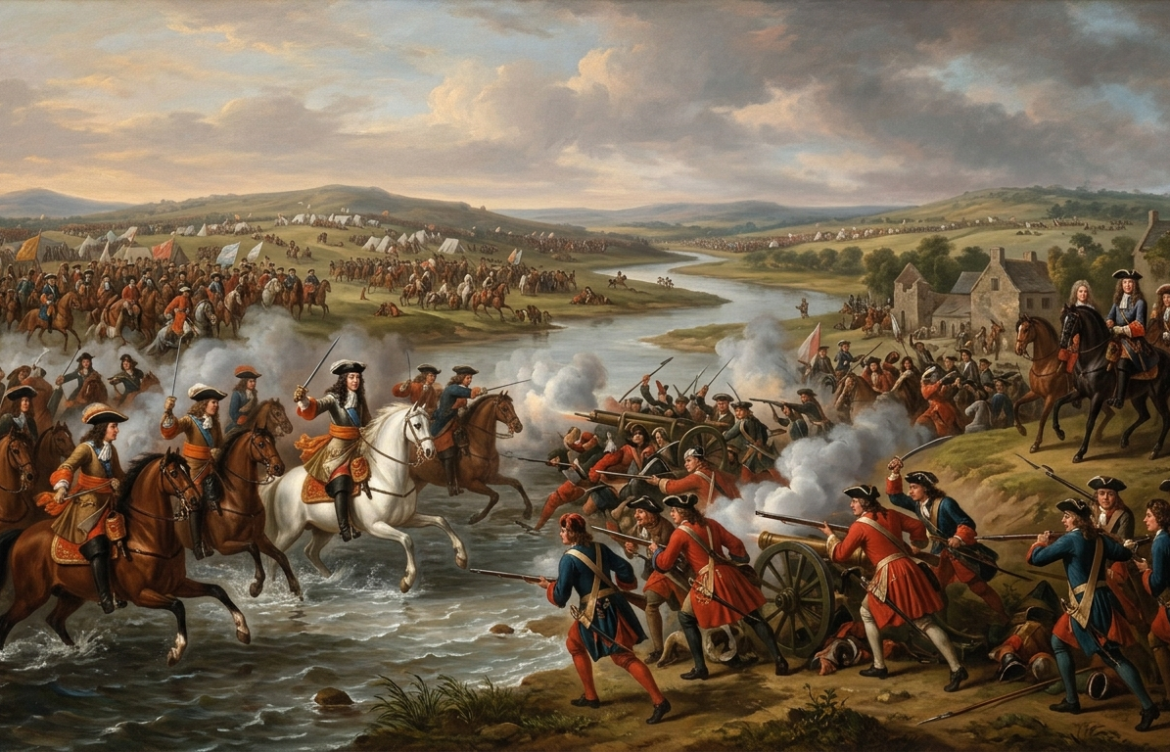
The decisive confrontation between the forces of Octavian and the combined armies of Antony and Cleopatra took place on September 2, 31 BC, in the waters near Actium on the western coast of Greece. This naval battle would prove to be one of the most consequential military engagements in ancient history, effectively determining the future political structure of the Roman world and sealing the fate of Egypt’s independence. The battle represented the culmination of months of strategic maneuvering as both sides assembled massive fleets and armies for what all participants recognized would be a winner-take-all confrontation.
Antony and Cleopatra had positioned their combined fleet of approximately 500 warships in the Ambracian Gulf, where they hoped to use their numerical advantage and the fighting qualities of Egyptian and eastern Mediterranean sailors to overcome Octavian’s forces. However, their strategic position gradually deteriorated as Octavian’s admiral, Marcus Vipsanius Agrippa, implemented a blockade that cut off supplies and reinforcements while allowing defections to erode the loyalty of Antony’s forces. Many of Antony’s supporters, recognizing the shifting balance of power, began abandoning his cause in favor of accommodation with the likely victor.
The battle itself began when Antony attempted to break out of the gulf with his fleet, hoping to either defeat Octavian’s forces in decisive combat or escape to Egypt with enough ships to continue the fight from a more favorable position. Cleopatra commanded a squadron of sixty Egyptian ships that formed part of the combined fleet, and her presence in the battle reflected both her personal commitment to the alliance and her recognition that Egypt’s independence hung in the balance. The fighting was fierce but relatively brief, as the superior seamanship and tactics of Octavian’s forces, combined with continued defections from Antony’s ranks, gradually tilted the engagement in favor of the future emperor.
The turning point came when Cleopatra, observing that the battle was going poorly for their forces, made the crucial decision to withdraw her squadron from the fighting and sail for Egypt. Whether this retreat was part of a pre-planned escape route or a spontaneous response to battlefield developments remains debated by historians, but its impact was immediate and devastating. Antony, seeing Cleopatra’s ships departing, abandoned his own fleet and followed her with a small escort, effectively ending organized resistance and handing victory to Octavian. This decision would haunt both lovers during their final months, as it appeared to confirm Roman propaganda about their priorities and loyalties.
The Retreat to Egypt: Last Days of Independent Pharaonic Rule
The aftermath of Actium saw Antony and Cleopatra return to Alexandria as defeated fugitives rather than triumphant rulers, their military forces scattered and their political options rapidly diminishing. The couple’s retreat to Egypt marked the beginning of a desperate ten-month period during which they attempted to negotiate with Octavian, rally new forces, and prepare for what they increasingly recognized would be their final stand. This period revealed both the depth of their relationship and the impossibility of their position as Octavian methodically eliminated their remaining options for survival or escape.
Cleopatra immediately began exploring various strategies for preserving her dynasty and kingdom, even if she could not save herself. She sent envoys to Octavian offering to abdicate in favor of her children, attempted to secure safe passage for Caesarion to India or Ethiopia, and even considered relocating her entire court to a distant kingdom beyond Roman reach. These diplomatic overtures were accompanied by frantic military preparations, as she and Antony worked to assemble new armies from Egyptian recruits and remaining loyal forces while attempting to coordinate resistance with allies throughout the eastern Mediterranean.
The psychological toll of defeat and isolation weighed heavily on both leaders during this period. Antony, described by ancient sources as falling into deep depression and self-recrimination, withdrew from active leadership and spent much of his time in philosophical contemplation of his failures. Cleopatra, meanwhile, demonstrated the political acumen that had sustained her reign for nearly two decades by continuing to function as an effective ruler even as she prepared for the worst possible outcomes. Her actions during this period reveal a remarkable combination of desperate hope and realistic preparation for death that would characterize her final months.
As 30 BC progressed, the couple’s situation became increasingly hopeless as former allies either joined Octavian or declared neutrality. The loyalty that had sustained Antony’s eastern coalition evaporated as local rulers calculated their odds of survival under Roman rule versus the risks of continued resistance. Egypt itself remained largely loyal to Cleopatra, but the kingdom’s military resources were insufficient to resist the massive Roman invasion that was clearly being prepared. By early 30 BC, both Antony and Cleopatra recognized that military victory was impossible and began focusing on how they might die with dignity rather than how they might live in defeat.
Octavian’s Egyptian Campaign: The Inevitable Conquest
Octavian’s invasion of Egypt in 30 BC proceeded with methodical efficiency that reflected both superior Roman military organization and the collapse of effective resistance following Actium. The future emperor had spent the winter months consolidating his victory, securing the loyalty of former Antonian territories, and assembling the massive expeditionary force needed to complete his conquest of the Mediterranean world. His approach to the Egyptian campaign demonstrated the strategic brilliance that would characterize his long reign as Augustus, combining overwhelming military force with sophisticated psychological warfare designed to minimize resistance and maximize the propaganda value of his ultimate victory.
The Roman invasion began in the spring of 30 BC with simultaneous attacks from both east and west, as Octavian led the main force overland through Palestine and Syria while a separate army under Cornelius Gallus advanced from Cyrenaica in the west. This two-pronged assault stretched Egyptian defenses beyond their capabilities while demonstrating the futility of resistance against Roman military superiority. The speed and coordination of these attacks reflected months of careful planning and illustrated Octavian’s determination to end the conflict quickly before any remaining pro-Antonian forces could organize effective opposition.
Egyptian resistance to the Roman invasion was sporadic and ineffective, hampered by the defection of key military leaders who recognized the hopelessness of continued fighting. Several of Antony’s remaining generals surrendered with their forces intact, while others simply abandoned their positions and sought accommodation with the invaders. This collapse of military morale reflected not only the overwhelming odds against successful resistance but also the growing recognition that Octavian offered better prospects for survival and advancement than continued loyalty to the doomed alliance of Antony and Cleopatra.
As Roman forces approached Alexandria, the ancient capital that had served as the center of Hellenistic civilization for three centuries, Antony made a final desperate attempt to organize effective resistance. On July 31, 30 BC, he achieved a minor tactical victory against advance elements of Octavian’s army, briefly raising hopes that sustained resistance might still be possible. However, this success proved illusory as more of his troops defected during the night, leaving him with insufficient forces to continue fighting. The collapse of this final defense effort marked the end of organized military resistance and set the stage for the tragic final act of the drama that had begun at Actium.
The Final Deception: Antony’s Suicide and Cleopatra’s Desperation
The final crisis began on August 1, 30 BC, when Cleopatra, recognizing the impossibility of continued resistance, made the fateful decision to send a false message to Antony claiming that she had already committed suicide. This desperate deception was intended to spare her lover the humiliation of capture while potentially providing her with additional time to negotiate with Octavian or arrange for the escape of her children. However, the psychological impact on Antony was immediate and devastating, as he interpreted her reported death as confirmation that all hope was lost and that honor demanded he follow her example.
Antony’s response to the news of Cleopatra’s supposed death revealed both the depth of his love and the extent of his despair. Rather than attempting to verify the report or explore alternatives, he immediately ordered his faithful slave Eros to kill him with a sword. When Eros instead chose to take his own life rather than harm his master, Antony grabbed the weapon and stabbed himself in the abdomen, inflicting what he hoped would be a fatal wound. However, the self-inflicted injury, while serious, did not bring the quick death he sought, leaving him wounded and dying when the truth about Cleopatra’s deception was revealed.
The discovery that Cleopatra was still alive created a final tragic reunion as the dying Antony was carried to her mausoleum, where she had barricaded herself with her most trusted servants, Iras and Charmion, along with a substantial portion of Egypt’s royal treasure. Plutarch’s account of their final moments together describes Antony using his last breaths to counsel Cleopatra about which of Octavian’s representatives she might trust, while she lamented the cruel irony that had led to his unnecessary death. This scene, played out in the shadow of approaching Roman soldiers, represented the end of one of history’s most famous love affairs and the final collapse of the last independent Hellenistic kingdom.
The immediate aftermath of Antony’s death saw Octavian’s forces surround Cleopatra’s mausoleum while the Roman commander considered his options for dealing with the last significant obstacle to his complete victory. Gaius Proculeius, one of Octavian’s most trusted officers, managed to enter the mausoleum through a window and prevent Cleopatra from immediately following Antony’s example by destroying herself and Egypt’s treasures. This intervention saved Octavian’s prize but also initiated a psychological battle of wills that would determine whether the last pharaoh would die on her own terms or be preserved for public humiliation in Rome.
The Mausoleum Siege: Psychological Warfare and Royal Pride
Cleopatra’s confinement in her own mausoleum became the setting for an extraordinary psychological duel between the last pharaoh of Egypt and the future first emperor of Rome. Octavian understood that simply capturing Cleopatra was insufficient for his purposes; he needed her alive and cooperative for the triumphal procession that would celebrate his victory and legitimize his power before the Roman people. The propaganda value of parading the famous Egyptian queen through Rome’s streets would far exceed any benefit from her immediate execution, but achieving this goal required breaking her will to die while maintaining the fiction that she was being treated with appropriate dignity.
The physical circumstances of Cleopatra’s captivity were carefully designed to prevent suicide while avoiding the appearance of excessive brutality that might generate sympathy for her plight. Octavian stationed guards both inside and outside the mausoleum with specific instructions to prevent any attempt at self-harm while maintaining a respectful demeanor appropriate to her royal status. These precautions reflected Roman understanding of Cleopatra’s psychological profile and determination to die rather than suffer public humiliation, as well as practical recognition that a dead captive would provide none of the propaganda benefits that motivated Octavian’s entire strategy.
During the several days of her confinement, Cleopatra engaged in subtle negotiations with Octavian while simultaneously preparing for suicide if peaceful resolution proved impossible. Her conversations with Roman representatives revealed both her political sophistication and her determination to secure the best possible treatment for her surviving children, even at the cost of her own life. These discussions also provided her with crucial intelligence about Octavian’s intentions, confirming her worst fears about being displayed as a captive in Rome while revealing the limited options available for avoiding this fate.
The psychological pressure on Cleopatra during this period was immense, as she faced not only the prospect of personal humiliation but also concerns about the fate of her kingdom and children. Octavian’s representatives alternately offered vague promises of clemency and made subtle threats about the consequences of continued resistance, while Cleopatra attempted to extract concrete guarantees about her children’s safety and Egypt’s treatment under Roman rule. This delicate dance of negotiation and intimidation revealed the complex calculations underlying both participants’ strategies as they maneuvered for advantage in an inherently unequal situation.
The Fatal Decision: Choosing Death Over Dishonor
The moment of final crisis came when Cleopatra received confirmation through reliable sources that Octavian intended to transport her to Rome within days for display in his triumphal procession. This intelligence, reportedly delivered by a loyal servant who had infiltrated Octavian’s entourage, eliminated any remaining hope that she might negotiate acceptable terms for survival and convinced her that immediate suicide was preferable to the alternative of public degradation. The decision represented not just personal despair but a calculated political choice designed to deny Octavian his ultimate prize while preserving her dignity and legacy.
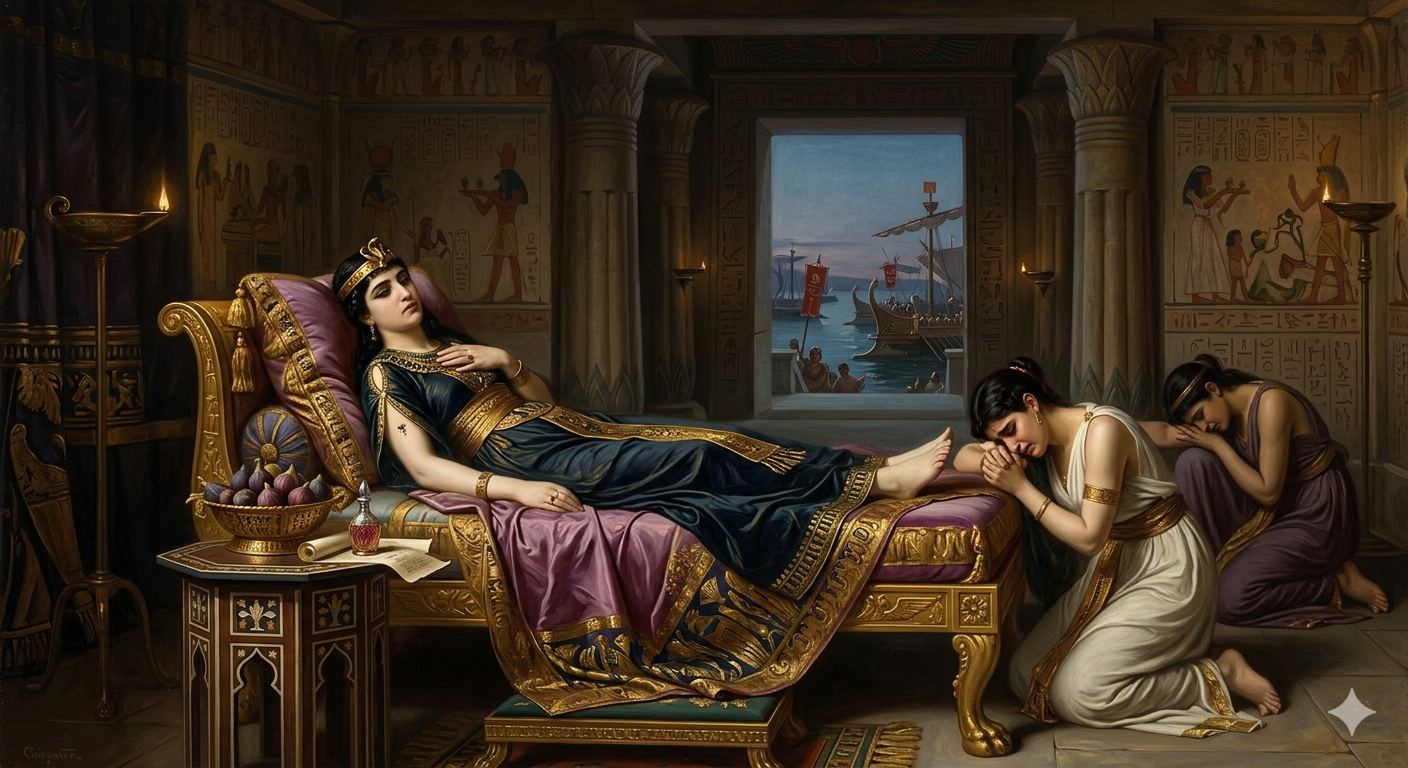
Cleopatra’s preparation for suicide was conducted with the ritualistic attention to detail that had characterized her entire reign, reflecting both her royal breeding and her understanding of the symbolic importance of her death. Ancient sources describe her bathing carefully, dressing in her finest royal robes, and arranging her appearance to present the most dignified possible image in death. These preparations were accompanied by practical arrangements for her tomb and funeral rites, as well as final instructions for her surviving children and loyal servants who would outlive her.
The method of Cleopatra’s suicide has been debated by historians for over two millennia, with ancient sources offering several different accounts of how she achieved her death. The most famous version involves an asp or Egyptian cobra hidden in a basket of figs, chosen both for its symbolic connection to Egyptian royal iconography and for its reputation as providing a relatively painless death. However, other contemporary accounts suggest she used poison applied through a hairpin or similar implement, while some modern scholars argue for a cocktail of drugs that would have provided more reliable results than depending on a snake bite.
Regardless of the specific method, Cleopatra’s death was clearly planned and executed with the cooperation of her most loyal servants, Iras and Charmion, who chose to die alongside their queen rather than survive as witnesses to her defeat. This shared suicide reflected both the depth of personal loyalty within Cleopatra’s inner circle and the broader understanding that the end of Ptolemaic rule represented a fundamental transformation that would eliminate their roles and status. The dramatic scene of three women dying together in royal splendor provided a powerful final image that would influence artistic and literary representations for centuries to come.
The Discovery: Octavian’s Frustrated Victory
The discovery of Cleopatra’s death created an immediate crisis for Octavian, who had invested enormous political capital in the expectation of displaying his royal captive before the Roman people. When guards broke down the door of the mausoleum chamber in response to her final message requesting burial beside Antony, they found a scene that was both magnificent and devastating to Roman plans. Cleopatra lay dead in her royal regalia, with Iras already deceased at her feet and Charmion still alive but dying as she adjusted her mistress’s diadem in a final act of service.
Octavian’s immediate response to news of the suicide revealed both his political sophistication and his genuine frustration at being denied the ultimate symbol of his victory. According to Cassius Dio, he was “robbed of the full splendor of his victory” and immediately summoned snake charmers from Libya in a desperate attempt to revive Cleopatra if her death had indeed been caused by snake venom. This futile effort demonstrated both the high stakes involved in Cleopatra’s survival and the limited understanding of toxicology available to ancient physicians, but it also showed Octavian’s willingness to explore any possibility for salvaging his propaganda triumph.
The political implications of Cleopatra’s successful suicide extended far beyond the immediate disappointment of missing a spectacular triumphal procession. Her death eliminated a potential source of ongoing resistance and rebellion while simultaneously denying Octavian the opportunity to demonstrate Roman mercy and magnanimity through the prominent display of a defeated but living enemy. Instead of appearing as a generous victor who had overcome a dangerous foe, Octavian now faced the challenge of explaining how his prized captive had managed to escape Roman custody through suicide.
Despite his frustration, Octavian demonstrated considerable political wisdom in his handling of the immediate aftermath of Cleopatra’s death. Rather than attempting to minimize the event or expressing public anger at his subordinates’ failure to prevent the suicide, he chose to emphasize the dignity and courage that Cleopatra had shown in her final moments. This approach allowed him to appear magnanimous while avoiding any suggestion that Roman security had been incompetent or that Cleopatra’s death represented a victory for Egypt over Rome.
The Immediate Aftermath: Securing the Victory
In the immediate aftermath of discovering Cleopatra’s suicide, Octavian moved swiftly to secure the benefits of his victory while minimizing the propaganda damage from losing his most valuable captive. His first priority was ensuring the capture or elimination of any remaining threats to Roman control, particularly Caesarion, whose claim to be Julius Caesar’s son made him a potentially dangerous rival for Octavian’s own position as Caesar’s heir. The young man was hunted down and executed within weeks of his mother’s death, eliminating the last direct challenge to Octavian’s legitimacy as Caesar’s successor.
Octavian’s treatment of Cleopatra’s other children demonstrated both political calculation and genuine clemency, as he brought them to Rome to be raised in his household rather than executing them as potential threats. Alexander Helios, Cleopatra Selene, and Ptolemy Philadelphus, Cleopatra’s children with Antony, were incorporated into the Roman imperial family and provided with appropriate education and status. This decision reflected Octavian’s confidence in his ability to control potential opposition while generating goodwill through the visible display of mercy toward defeated enemies’ families.
The disposition of Egypt’s vast treasures provided Octavian with the resources needed to pay his armies, reward his supporters, and fund the massive public works projects that would characterize his reign as Augustus. Contemporary sources suggest that the wealth seized from Cleopatra’s mausoleum and the royal treasuries was sufficient to transform Roman public finances while providing the foundation for unprecedented prosperity throughout the Mediterranean world. This economic windfall validated the strategic wisdom of Octavian’s Egyptian campaign while providing tangible benefits that justified the costs of the civil war.
The formal organization of Egypt as a Roman province required careful attention to local sensibilities and administrative structures that had evolved over three centuries of Ptolemaic rule. Octavian chose to maintain many existing governmental forms while ensuring that ultimate authority rested with Roman officials accountable to him personally. This approach minimized disruption to Egyptian society while establishing clear Roman control and preventing the emergence of independence movements that might threaten future stability.
The End of an Era: Historical and Cultural Impact
Cleopatra’s suicide marked not only the end of her personal story but also the conclusion of the Hellenistic period that had defined eastern Mediterranean civilization since Alexander the Great’s conquests. The Ptolemaic dynasty that she represented had ruled Egypt for nearly three hundred years, creating a unique blend of Greek, Egyptian, and Roman cultural influences that had made Alexandria one of the ancient world’s greatest centers of learning and commerce. Her death effectively ended this cosmopolitan tradition and marked Egypt’s integration into the emerging Roman imperial system.
The broader historical significance of Cleopatra’s suicide extended to its impact on Roman politics and the development of imperial government. Octavian’s victory over Antony and Cleopatra eliminated the last serious opposition to his consolidation of power and paved the way for his transformation from triumvir to emperor. The wealth seized from Egypt provided the financial foundation for the Augustan settlement that would bring peace and prosperity to the Roman world for generations, while the elimination of eastern independence movements ensured that Roman authority would be unchallenged throughout the Mediterranean basin.
The cultural impact of Cleopatra’s death resonated through literature, art, and popular imagination for centuries, as writers and artists found in her story themes of love, power, and tragic destiny that continue to fascinate audiences today. From Plutarch’s biographical account through Shakespeare’s dramatic interpretation to modern films and novels, Cleopatra’s suicide has provided a powerful conclusion to one of history’s most compelling personal and political dramas. The image of the proud queen choosing death over dishonor has become an enduring symbol of royal dignity and feminine strength in the face of impossible circumstances.
The immediate political consequences of Cleopatra’s death also influenced Roman imperial policy for generations, as subsequent emperors learned both positive and negative lessons from Octavian’s handling of the Egyptian crisis. The successful integration of Egypt into the imperial system provided a model for incorporating other wealthy territories, while the dramatic nature of Cleopatra’s resistance demonstrated the importance of careful psychological warfare in dealing with charismatic opponents. These lessons would influence Roman approaches to conquest and administration throughout the imperial period.
Legacy and Historical Interpretation
Modern historical scholarship has increasingly recognized Cleopatra’s suicide as a rational political decision rather than merely an emotional response to personal and military defeat. Contemporary historians emphasize her sophisticated understanding of Roman political culture and her recognition that death on her own terms was preferable to the alternative of public humiliation followed by probable execution. This interpretation portrays her final act as consistent with the political acumen and strategic thinking that had sustained her reign for nearly two decades despite enormous challenges.
The debate over the specific method of Cleopatra’s suicide continues to engage both professional historians and popular audiences, reflecting broader questions about the reliability of ancient sources and the intersection of historical fact with literary and artistic interpretation. While the iconic image of death by asp bite has dominated popular culture, scholarly analysis increasingly favors poison as the more likely cause, based on practical considerations about the reliability and timing of different methods of suicide available to ancient rulers.
The psychological dimensions of Cleopatra’s final decision have also attracted significant scholarly attention, as historians seek to understand the mental and emotional pressures that influenced her choice between life and death. Her sophisticated understanding of Roman triumphal traditions and her accurate assessment of Octavian’s intentions demonstrate remarkable clarity of thought under extreme stress, while her careful preparation for death reveals both practical intelligence and deep commitment to preserving her dignity and legacy.
The broader question of whether Cleopatra might have been murdered rather than permitted to commit suicide has generated considerable debate among modern scholars, with some arguing that Octavian had both motive and opportunity to eliminate a dangerous captive while avoiding responsibility for her death. However, the weight of ancient evidence supports the suicide interpretation, while the practical benefits to Octavian of keeping Cleopatra alive for his triumph make murder less likely than the official account suggests.
The enduring fascination with Cleopatra’s death reflects not only the dramatic circumstances of her final days but also the broader significance of her story as a symbol of the collision between East and West, tradition and change, personal ambition and historical inevitability. Her suicide serves as a powerful conclusion to the narrative of Hellenistic civilization’s encounter with Roman imperialism, while providing insights into the personal costs of political failure in the ancient world. The last pharaoh’s choice to die rather than submit continues to resonate as an example of courage, dignity, and determination that transcends the specific circumstances of her historical moment.