The Morning of March 13, 1996: What Happened at Dunblane Primary School
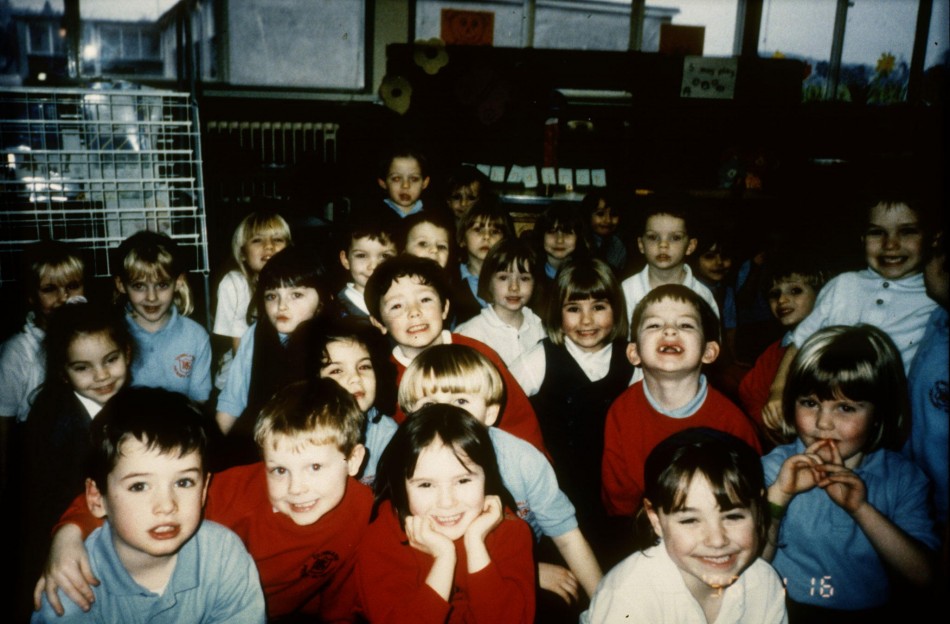
Wednesday, March 13, 1996 began as a normal school day in the small Scottish town of Dunblane, situated about seven miles north of Stirling in central Scotland. Children walked to school through the early spring morning, some wrapped against the lingering March chill. Teachers prepared their classrooms. The day’s first lessons were getting under way. In the gymnasium of Dunblane Primary School, class teacher Gwen Mayor, aged 43, had brought her twenty-eight Primary 1 pupils — children aged five and six years old — for their morning physical education lesson. It was approximately 9:30 in the morning.
At that moment, a 43-year-old local man named Thomas Watt Hamilton entered the school from a side door near the gymnasium, carrying four legally held handguns and 743 rounds of ammunition. He was wearing shooting earmuffs. He had cut the telephone cables to nearby houses in the car park before entering the building, a deliberate act of preparation that indicated planning. Hamilton had fired two shots as he moved through the school — one into the assembly hall and one into the girls’ bathroom — before pushing open the door of the gymnasium. What followed took less than five minutes. Within that time, Hamilton fired 105 shots. He killed sixteen children and Gwen Mayor, their teacher. He wounded fifteen others, including two teachers. He then placed one of his revolvers against his head and killed himself. The gymnasium fell silent. Outside, in corridors and classrooms, children and teachers had heard the shots and screamed and hidden under tables, not yet knowing what had happened.
By the time emergency services arrived at Dunblane Primary School, the deadliest mass shooting in British history was over. The victims were five- and six-year-old children, most of them in their first year of formal schooling, and their class teacher who had died trying to protect them. The shooting lasted between three and five minutes from the moment Hamilton entered the gymnasium to the moment he died. In the weeks, months, and years that followed, the name Dunblane became inseparable from grief, from outrage, and from a national determination that what had happened there would never happen again. The gun laws that resulted from the massacre transformed British firearms legislation more fundamentally than any event since the First World War. And the sixteen children and one teacher who died on that March morning have never been forgotten.
Dunblane: The Town, the School, and the Community That Was Changed Forever
Dunblane is a small cathedral town in the council area of Stirling, in the historic county of Perthshire. In 1996 it had a population of approximately 8,000 people, making it one of the larger towns in the area but still a tight-knit community where residents knew one another, where children walked to school in safety, and where the rhythms of daily life proceeded with the unhurried predictability of a place insulated from the violence associated with larger urban centres. The town is dominated architecturally by Dunblane Cathedral, a medieval church that has served the community since the twelfth century. It sits on the banks of the Allan Water, surrounded by the gently rolling farmland and wooded hills of central Scotland. In 1996, Dunblane had no particular public reputation beyond its cathedral and its role as a comfortable commuter and market town for the surrounding region.
Dunblane Primary School occupied a site on the eastern edge of the town centre. It was a large primary school by Scottish standards, serving children from nursery through Primary 7, equivalent to the early years of secondary school in the English system. Primary 1, the class in which the massacre victims were enrolled, takes children in the year they turn five or six — the earliest stage of formal schooling in Scotland. The children in Gwen Mayor’s Primary 1 class had been at school for only a few months when Thomas Hamilton walked into their gymnasium. Many of them had barely learned to write their names.
The school’s gymnasium was a separate building connected to the main school body by a corridor. It had its own external door — the door Hamilton used to enter — and was somewhat separated from the main flow of school traffic in the morning. This physical arrangement meant that the shooting was initially heard as distant bangs by staff in the main building, producing confusion about its source. Headmaster Ronald Taylor, who was on the telephone in his office when the shooting began, was told by his secretary Mrs Awlson, who entered the office in a crouched position, that there was a man in the school with a gun. Taylor cut short his call and dialled emergency services at 9:41 am. By the time the call was received, Hamilton was already dead.
Thomas Watt Hamilton: The Gunman’s Background, Obsessions, and Escalating Warning Signs
Thomas Watt Hamilton was born in Glasgow on May 10, 1952, the son of parents who separated shortly after his birth. His mother, Agnes, moved with him to live with her own parents — her adoptive parents — in the Cranhill area of Glasgow. When Hamilton was four years old, he was formally adopted by his maternal grandparents and his name was changed to Thomas Watt Hamilton, taking his grandfather’s surname. Crucially, he was raised to believe that his natural mother was his sister rather than his parent, a deception that he did not discover until adulthood and that those who later analysed his psychology regarded as a significant source of the profound identity confusion and deep sense of rejection that characterised his adult personality. The family moved to Stirling in 1963, and Hamilton spent the remainder of his life in the Stirling and Dunblane area. His adoptive mother died in 1987. By 1996 he was living alone at 7 Kent Road, Stirling, estranged from virtually all social contact with adults of either sex.
Hamilton was, by the accounts of everyone who knew him, deeply uncomfortable in adult company and incapable of forming normal social relationships. Neighbours described him as strange in the way he walked and talked: he crept, was very head-down, and spoke very softly, slowly, and precisely but with no expression in his voice. Others noted that he was too polite, never laughed or joked, and seemed odd and effeminate. Those who engaged him in conversation found him interesting enough to talk to but fundamentally weird — a man who gave the impression of inhabiting his own inner world rather than the shared social reality of those around him. He was described in clinical assessments later obtained by the Cullen Inquiry as having a paranoid personality with a desire to control others, as deceitful and intolerant, and as suffering from delusions of grandeur. He was anti-establishment, harboured a profound persecution complex, and used attack as his default form of defence whenever he felt challenged or threatened.
In his early twenties, Hamilton became a Boy Scout assistant leader, a role that gave him access to young boys in a supervised setting. His tenure as a Scout leader was brief and troubled. In 1974, complaints were made about two weekend camps he had conducted in Aviemore, during which boys had been kept cold, wet, and hungry, and had been required to sleep in the back of Hamilton’s van rather than the hostel he had promised. He was dismissed from the Scout movement following these complaints. The dismissal enraged him, and he spent years attempting to be reinstated, writing increasingly agitated letters of protest to Scout authorities, to local government officials, and ultimately to Queen Elizabeth II herself, asserting that he had been unfairly treated and that a conspiracy was being conducted against him.
Despite his expulsion from the Scouts, Hamilton continued his pursuit of access to young boys through a succession of self-organised youth clubs. Between 1981 and 1996, he organised and ran approximately fifteen such clubs across the Stirling and Dunblane area, including the Dunblane Rovers, the Dunblane Boys Club, and the Bannockburn Boys Club. The clubs offered gymnastics, sports, and shooting instruction, and were initially popular with parents who saw them as constructive activities for their sons. However, Hamilton’s behaviour at the clubs grew progressively more disturbing. He insisted that the boys wear particularly revealing swimwear — scanty swimsuits that focused attention on their bodies — and he took large numbers of photographs and video footage of the boys, many of the images focusing on the groin area. He also gave massages to boys before and after exercise sessions. Parents began withdrawing their sons. Complaints were made to police. The clubs declined and eventually collapsed.
Hamilton’s response to each complaint and withdrawal was characteristic: he counter-complained, he wrote letters accusing his accusers of persecution, he contacted the families of boys who had spoken against him in attempts to discourage further attendance, and he maintained with apparent sincerity that he had done nothing wrong and was the victim of a coordinated conspiracy by the local police, the Scout movement, and community opinion. In the six months before the massacre, he stepped up his visits to gun clubs, working specifically on his shooting accuracy. An anonymous nine-year-old boy later told police that Hamilton had been questioning him weekly for two years about the layout of the school gymnasium and the daily routine of the pupils at Dunblane Primary School — questions that stopped exactly one week before the attack. Hamilton had also applied to work as a volunteer at Dunblane Primary School and had been refused.
The Failure to Act: How Hamilton Kept His Firearms Certificate Despite Repeated Police Warnings
The most troubling aspect of the Dunblane massacre — beyond the crime itself — is the extent to which the available evidence suggests that it might have been prevented. Thomas Hamilton had held a firearms certificate since the mid-1970s, having first obtained one around 1974 and progressively adding weapons and ammunition to his legally licensed collection over the following two decades. By 1996 his licensed arsenal included two 9mm Browning HP semi-automatic pistols and two Smith and Wesson Model 19 .357 Magnum revolvers — the four handguns he used at Dunblane. He was a registered member of the Dunblane Rifle Club and had applied for membership at the Clyde Valley Pistol Club. None of this, taken alone, was unusual: approximately 340 firearms licence renewals were processed by Central Scotland Police in 1995, and all were approved.
What made Hamilton’s case different was the paper trail of concern that had accumulated around him. In 1991, following a detailed police investigation into his boys’ clubs and summer camps, Detective Sergeant Paul Hughes, then head of Central Scotland Police’s Child Protection Unit, compiled a formal report recommending that Hamilton’s firearms certificate be revoked. Hughes described Hamilton as an individual of unsavoury character and unstable personality who was unsuitable to own firearms. He wrote: I would contend that Hamilton will be a risk to children whenever he has access to them and he appears to me to be an unsuitable person to possess a firearms certificate. The report was seen by senior officers, including Deputy Chief Constable Douglas McMurdo. No action was taken. McMurdo later justified the decision on the grounds that Hamilton had not been convicted of any criminal offence and that the report therefore did not provide sufficient legal grounds for revocation.
The Cullen Inquiry, which examined the firearms licensing issue in detail, concluded that on balance there had been a case for revocation which should have been acted upon, and that the same considerations should in any event have led to the refusal of Hamilton’s subsequent applications for renewal. Lord Cullen found that Central Scotland Police had taken an unduly narrow view of the grounds for revocation and that McMurdo should have made further enquiries. McMurdo resigned in 1996 following the publication of the Cullen Report, breaking down under intensive questioning at the inquiry when accused of failing to act on Hughes’s 1991 recommendation. Colin Campbell QC, who represented the victims’ families at the inquiry, stated bluntly: But for the culpable failure by Central Scotland Police, it is probable that the events of 13 March at Dunblane Primary School would not have occurred. The year before the massacre, Hamilton’s firearms certificate had been renewed in a batch exercise that approved every single one of the 340 applications processed. The warnings of Detective Sergeant Paul Hughes had been filed and ignored.
Inside the Gymnasium: The Attack in Detail and the Heroism of Gwen Mayor and the Teachers
At approximately 9:30 on the morning of March 13, 1996, Gwen Mayor’s Primary 1 class was assembled in the gymnasium of Dunblane Primary School, preparing to begin their physical education lesson. Twenty-eight children were present, ranging in age from five to six years old. Along with Mayor, physical education teacher Eileen Harrild and teaching assistant Mary Blake were also in or near the gymnasium. Thomas Hamilton entered through the side door of the gymnasium armed with his four handguns and wearing shooting earmuffs to protect his own hearing from the sound of the gunfire he was about to unleash.
Hamilton opened fire immediately and without hesitation. His first shots struck Eileen Harrild and Mary Blake, wounding both of them. The two women stumbled into a storage area connected to the gymnasium, and Harrild managed to take several children with her, shielding them from the continued gunfire. Hamilton advanced into the gymnasium and began firing at the children and at Gwen Mayor. The government inquiry later found that Hamilton fired indiscriminately and in rapid succession, creating immediate carnage among the five- and six-year-olds who had no comprehension of what was happening and no ability to escape. He then, in a detail of almost unbearable deliberateness, walked in a semicircle, systematically firing sixteen shots at close range — shooting at each child of his choosing and firing one round into each at point-blank range. One teacher and fifteen children lay dead on the gymnasium floor. The sixteenth child who died — Victoria Clydesdale — died on the way to hospital.
Gwen Mayor died in the gymnasium. The evidence presented at the Cullen Inquiry and in subsequent accounts describes her as having been killed while attempting to protect her pupils, placing herself between Hamilton and the children in an act of instinctive and ultimately fatal courage. She was a 43-year-old mother of two children, and she had taught at Dunblane Primary School for many years. She is remembered as a devoted and compassionate teacher who loved her pupils. Her name has been commemorated in multiple ways since the massacre: Newton Primary School awards the Gwen Mayor Rosebowl to a pupil each year, and the Gwen Mayor Trust, set up by the Educational Institute of Scotland, provides funding for projects in Scottish primary schools.
After killing the children and Mayor in the gymnasium, Hamilton left the building and fired into a mobile classroom in the school grounds where a teacher and her class were hiding under tables — all of them survived without injury. He then returned to the gymnasium, where he placed a Smith and Wesson revolver against his right temple and fired. The entire attack lasted approximately three to five minutes, during which Hamilton fired 105 of his 743 rounds. The gymnasium, which had contained twenty-eight children and three adults at the start of the PE lesson, was left with seventeen dead and multiple wounded. It was the worst loss of life in a British school in the twentieth century and the deadliest mass shooting in British history.
The Sixteen Children and Their Teacher: The Names That Must Never Be Forgotten
The sixteen children who died in the gymnasium of Dunblane Primary School on March 13, 1996 were: Victoria Elizabeth Clydesdale, aged five; Emma Elizabeth Crozier, aged five; Melissa Helen Currie, aged five; Charlotte Louise Dunn, aged five; Kevin Allan Hasell, aged five; Ross William Irvine, aged five; David Charles Kerr, aged five; Mhairi Isabel MacBeath, aged five; Brett McKinnon, aged six; Abigail Joanna McLennan, aged five; Emily Morton, aged five; Sophie Jane North, aged five; John Paul Petrie, aged five; Joanna Caroline Ross, aged five; Hannah Louise Scott, aged five; and Megan Turner, aged five. Victoria Clydesdale survived the initial shooting but died on her way to hospital. The remaining fifteen children died in the gymnasium.
Gwen Mayor, born in 1952, was the class teacher who died in the gymnasium alongside her pupils. She had taught at Dunblane Primary School for years and was known throughout the school community as an exceptionally caring and dedicated teacher. She was married and had two children of her own. In addition to the seventeen who died, fifteen others were wounded, including Eileen Harrild, the physical education teacher, and Mary Blake, the teaching assistant, both of whom survived their wounds. Twelve children were wounded and survived. Sophie North was the daughter of Mick North, who became one of the most prominent campaigners for gun control in the aftermath of the massacre and who wrote the book Dunblane: Never Forget about his experience of losing his daughter and his subsequent advocacy work.
The ages of the victims — predominantly five years old, at the very beginning of their formal education — constituted a particular dimension of the outrage that gripped Britain and the world in the days following the massacre. These were children who had barely begun to experience life. They had learned their letters, made their first school friendships, taken their first steps in reading and writing. Their brief lives, and the grief of their families, became the moral core around which the subsequent public and political debate about gun control organised itself. The Snowdrop Campaign, whose thousands of volunteers gathered signatures for a petition demanding a handgun ban, drew its moral force directly and explicitly from the innocence and defencelessness of the sixteen children who had died.
The Nation’s Reaction: Grief, Vigils, and the Immediate Response Across Britain and the World
The news of the massacre spread across Britain and internationally within hours of the shooting. Television networks broke into regular programming with reports from Dunblane. The BBC interrupted its morning schedule. Across the country, people stopped what they were doing, sat down, and wept. The images from Dunblane — parents arriving at the school gates, emergency services on the playground, the look of incomprehension on the faces of everyone present — communicated the scale of the catastrophe with an immediacy that made abstract horror concrete. This had happened not in a far-off city but in a small Scottish town of the kind that millions of people across Britain recognised: familiar, safe, ordinary. The sense that it could have happened anywhere, to anyone’s children, intensified the national grief to a pitch that few events in British peacetime history had matched.
Two days after the shooting, on March 15, a vigil and prayer session was held at Dunblane Cathedral, attended by people of all faiths from across the region. The following Sunday, March 17, Queen Elizabeth II and her daughter Anne, the Princess Royal, attended a memorial service at the Cathedral. The service was one of the first moments in which the Queen’s visible, personal grief communicated something about the national mood that formal statements could not. On March 17 — Mothering Sunday in 1996 — the particular cruelty of the timing was keenly felt by the grieving mothers of Dunblane and by mothers across the country. Seven months after the massacre, in October 1996, the families of the victims organised their own memorial service at Dunblane Cathedral, attended by more than 600 people including Prince Charles and broadcast live on BBC1. The service was conducted by James Whyte, a former Moderator of the General Assembly of the Church of Scotland.
Prime Minister John Major visited Dunblane and spoke of his own sense of shock and grief. His government committed immediately to a public inquiry. The political response was relatively swift by the standards of governmental processes: within eight days of the massacre, Lord Cullen had been appointed to lead the inquiry, a pace that reflected the enormous public pressure for accountability and reform. The European Parliament sent expressions of condolence. Condolence messages arrived from governments and institutions around the world. International media coverage was extensive and sustained, with the massacre registered in newspaper front pages from New York to Tokyo as an event of global significance. Andy Murray, then eight years old and a pupil at Dunblane Primary School, was in the school when the massacre occurred, having taken cover in a classroom. His older brother Jamie was also at the school. Murray has spoken sparingly about the experience in the decades since, acknowledging its profound personal impact while being generally reluctant to elaborate publicly on what he witnessed as a child.
The Cullen Inquiry: Lord Cullen’s Investigation and the 1996 Report That Demanded Change
Eight days after the massacre, Lord Cullen—William Douglas Cullen, a senior Scottish judge who had previously chaired the inquiry into the 1988 Piper Alpha oil platform disaster — was appointed by the UK Government to lead the public inquiry into the shootings. The appointment was a signal that the government intended the investigation to be thorough, independent, and authoritative. Lord Cullen had established his reputation for rigorous and impartial inquiry work through the Piper Alpha investigation, which had produced sweeping reforms of North Sea oil safety regulations. His mandate at Dunblane was similarly comprehensive: to investigate the full circumstances of the massacre, the background of Thomas Hamilton, the operation of the firearms licensing system, and the appropriateness of existing gun laws.
The inquiry sat for twenty-six days of oral evidence, during which it received testimony from police officers, firearms licensing officials, school administrators, teachers, parents, government officials, and forensic experts. It also received more than 15,000 written submissions from members of the public, the majority of them either associated with the Snowdrop Petition for a handgun ban or responding to the inquiry’s invitation for evidence about the firearms licensing system. The inquiry examined in exhaustive detail the history of Thomas Hamilton’s relationship with Central Scotland Police, his repeated applications for firearms certificate renewals, the 1991 report of Detective Sergeant Paul Hughes recommending revocation of his licence, and the decision by senior officers not to act on that recommendation.
The Cullen Report, published in October 1996, reached damning conclusions about the failure of Central Scotland Police’s firearms licensing system. It found that an unduly narrow view had been taken of the grounds for revoking Hamilton’s certificate and that senior officers — specifically Deputy Chief Constable Douglas McMurdo — should have made further enquiries after Hughes’s 1991 report. McMurdo had resigned from Central Scotland Police immediately upon the report’s publication. The inquiry also recommended changes to school security protocols, including the introduction of secure perimeter access controls and visitor management systems that would prevent an unchallenged entry of the kind Hamilton had made. These school security recommendations were implemented across Britain’s education system in the years following Dunblane, fundamentally changing the open-door culture that had characterised primary schools before 1996. A generation of British schoolchildren grew up in schools with locked main entrances, intercom systems, and sign-in requirements for visitors — a direct consequence of what happened at Dunblane Primary School.
The inquiry also examined the question of whether a ban on private handgun ownership was warranted. While Cullen stopped short of recommending an outright ban in his initial report, he did recommend significantly tighter controls on handgun ownership and called on the government to consider whether a full ban was in the public interest. The Home Affairs Select Committee agreed on the need for restrictions but initially declined to support a complete ban. This position became politically untenable in the face of the Snowdrop Campaign’s mobilisation of public opinion.
The Snowdrop Campaign: How Dunblane’s Grieving Families Changed Britain’s Gun Laws
The Snowdrop Campaign — named for the snowdrop, the small white spring flower that was in bloom in Dunblane on the day of the massacre — was one of the most effective single-issue public advocacy campaigns in modern British political history. It was initiated by residents of Dunblane, including many families directly affected by the massacre, within weeks of the shooting, and its central demand was straightforward: a complete ban on the private ownership of handguns in the United Kingdom. The campaign gathered 750,000 signatures to its petition within six weeks. By the end of 1996, some accounts place the total signature count at more than one million. On July 3, 1996, parents of the victims appeared outside the House of Commons to present the petition to Parliament, carrying photographs of their children and the weight of the nation’s grief.
The Snowdrop Campaign operated at multiple levels simultaneously. Locally, it organised community meetings in Dunblane and the surrounding area. Nationally, it generated media coverage and political pressure that made the question of handgun ownership a live political issue in the months before the 1997 general election. A letter written by the mother of one of the slain children was printed in two national newspapers and reached millions of readers who had been following the case. The Gun Control Network, a six-member advocacy organisation founded in the aftermath of the massacre and supported by parents of victims from both the Dunblane and the 1987 Hungerford massacres, provided a sustained organisational focus for the campaign’s objectives beyond the immediate period of public emotion.
Mick North, whose daughter Sophie Jane North was among the sixteen children killed, became one of the most prominent and effective advocates for gun control in the UK. His book Dunblane: Never Forget, published in 2000, gave a detailed account of Sophie’s life, the massacre, and the campaign for gun reform from the perspective of a bereaved parent who had transformed grief into action. North has continued to speak publicly about Dunblane in subsequent years, including in response to mass shootings in the United States, drawing explicit contrasts between the British response to Dunblane and the American legislative paralysis in the face of repeated school massacres. His comparison of casualty statistics — England, Scotland, and Wales combined having approximately thirty gun deaths per year in the years following the handgun ban, compared to nearly 20,000 gun murders in the United States in 2020 — has become one of the most-cited pieces of evidence in international debates about firearms regulation.
The Firearms Acts of 1997: John Major, Tony Blair, and the Political Response to Dunblane
The legislative response to the Dunblane massacre came in two stages, each shaped by the political circumstances of the period. In February 1997, the Conservative government of Prime Minister John Major — which had initially committed to implementing Cullen’s recommendations but had resisted calls for a complete handgun ban — introduced the Firearms (Amendment) Act 1997. This legislation banned private ownership of all handguns with cartridge ammunition above .22 calibre in England, Scotland, and Wales. It exempted .22 calibre rimfire weapons, on the grounds that these were used in Olympic shooting competitions and were arguably less powerful than larger calibre weapons. The legislation also tightened security requirements for gun clubs and expanded the criteria for refusing or revoking firearms certificates. The UK Government simultaneously instituted a buyback programme that provided financial compensation to licensed owners who surrendered their weapons under the new restrictions.
The Conservatives’ partial ban did not satisfy the Snowdrop Campaign or the bereaved families, who had demanded a total ban on handguns. The issue became part of the debate leading into the May 1997 general election, at which the Labour Party under Tony Blair won a landslide majority. Following the election, the new Labour government of Tony Blair, under Home Secretary Jack Straw, introduced the Firearms (Amendment) (No. 2) Act 1997. This second act extended the ban to all remaining handguns, including .22 calibre rimfire weapons, with narrow exceptions for weapons of historic or aesthetic value, starting pistols, and certain sporting firearms that fell outside the definition of handguns under the Firearms Act 1968. The combined effect of the two 1997 Firearms Acts was to prohibit the private ownership of virtually all handguns in Great Britain. It was the most sweeping restriction on civilian firearms ownership in British history.
Shadow Home Secretary Jack Straw, commenting on the partial ban introduced by the Conservatives in February 1997, stated pointedly that the changes should have been made nine years previously, after the 1987 Hungerford massacre in which Michael Ryan had killed sixteen people in the Berkshire town with legally held firearms, including a Beretta pistol that remained lawful even after the post-Hungerford legislation. The observation encapsulated a recurring dynamic in the British response to mass shootings: legislation passed after one atrocity leaves gaps that are exploited in the next. Dunblane closed those gaps definitively, and in the three decades since 1997, no comparable mass shooting with a handgun has occurred in the United Kingdom. The legislative consensus that emerged from Dunblane has remained intact across successive governments of different political compositions, a testament to the durability of the public commitment that the Snowdrop Campaign helped to create.
Dunblane and Gun Control: The Comparison with the United States and the Global Legacy
The Dunblane massacre has occupied a distinctive place in global debates about gun control since 1996, particularly in the context of the United States, where repeated mass shootings at schools — Columbine in 1999, Sandy Hook in 2012, Uvalde in 2022, and many others — have produced grief and outrage but not the legislative transformation that Dunblane produced in Britain. The comparison is regularly drawn by advocates, journalists, and politicians on both sides of the Atlantic as a case study in the relationship between political will, institutional capacity, and the outcome of mass shooting events.
The differences between the British and American contexts are substantial and are acknowledged by those who make the comparison. The United States has a constitutional amendment — the Second Amendment — that explicitly recognises the right of citizens to bear arms, a constitutional protection that does not exist in British law. American gun ownership culture is deeply rooted in the country’s frontier history, its political traditions of individual liberty and distrust of government, and the sheer scale of the existing firearms stock — an estimated 400 million civilian guns in a country of 330 million people. Mick North, the Dunblane parent who became a gun control advocate and who has spoken extensively about the comparison, has himself acknowledged these differences while arguing that other countries with similar frontier traditions — Australia, Canada — have nonetheless enacted meaningful gun restrictions following mass shootings.
Australia’s response to the Port Arthur massacre of April 28, 1996 — in which Martin Bryant killed 35 people in Tasmania just six weeks after Dunblane — provides a parallel case. Prime Minister John Howard’s government introduced the National Firearms Agreement within twelve days of the shooting, banning all semi-automatic and pump-action rifles and shotguns, introducing a mandatory buyback that collected and destroyed approximately 650,000 weapons, and establishing uniform national gun licensing standards. Australia, like Britain, has not experienced a comparable mass shooting since. The British and Australian examples are frequently cited in the United States as evidence that the argument that no legislative response to mass shootings can be effective is simply not supported by the empirical record of other comparable democracies.
In the UK itself, the post-Dunblane settlement has produced a measurable result. Gun homicide rates in England, Scotland, and Wales fell substantially after 1997 and have remained low by international standards. The political consensus on handgun control has not been seriously challenged by any mainstream party in the quarter-century since the acts were passed. Public support for the ban has remained consistently high. The 1996 Cullen Report on Dunblane and the 1996 Snowdrop Campaign are regularly cited in criminology and public health literature as examples of effective post-atrocity policy reform, studied not only for their substantive outcomes but for the process by which public grief was converted, with relative speed, into durable legislative change.
The Memorial Garden, the Anniversary, and the Community of Dunblane’s Long Road
On April 11, 1996, less than a month after the massacre, the gymnasium of Dunblane Primary School was demolished. In its place, a memorial garden was created on the school grounds. The garden became a site of quiet reflection for the school community and for visitors to Dunblane who came to pay their respects. Two years after the massacre, on March 14, 1998, a memorial garden was opened at Dunblane Cemetery, where Gwen Mayor and twelve of the sixteen children who were killed are buried. The garden features a fountain and a plaque bearing the names of all seventeen victims. Stained glass windows in memory of the victims were placed in three local churches — St Blane’s Church, the Church of the Holy Family in Dunblane, and the nearby Lecropt Kirk — as well as at the Dunblane Youth and Community Centre. A sculpture, Flame for Dunblane, created by Walter Bailey from a single yew tree and commissioned by the National Association of Primary Education, was placed in the National Forest near Moira in Leicestershire.
In the horticultural world, two rose cultivars and a snowdrop cultivar were named in memory of the victims. The Gwen Mayor rose and the Innocence rose were developed by Cockers Roses of Aberdeen, one in honour of the murdered teacher and the other in memory of the children. A snowdrop cultivar found growing in a Dunblane garden in the 1970s was renamed Sophie North in memory of Sophie Jane North, the daughter of Mick North. These acts of botanical commemoration — quiet, enduring, regenerative — captured something of the community’s determination to mark its grief with beauty as well as sorrow.
The town of Dunblane has consistently sought to manage its public memory of the massacre with an ethical seriousness that reflects the wishes of the survivors and the bereaved families. This has meant, in practice, a deliberate refusal to give prominence to the name or image of Thomas Hamilton, a policy consistent with the principle — increasingly recognised in the study of mass violence — that the perpetrator’s desire for notoriety should not be rewarded by posthumous fame. It has also meant being protective of the privacy of survivors, particularly the children who were present in the gymnasium and who survived. In 2009, the Sunday Express published an article about Dunblane survivors that was widely condemned as intrusive and inappropriate, provoking a significant public backlash and a formal apology from the newspaper.
Andy Murray, Public Memory, and the Survivors Who Carried Dunblane Into the World
Andy Murray and his brother Jamie were both pupils at Dunblane Primary School on the morning of March 13, 1996. Andy was eight years old. He was not in the gymnasium when the shooting occurred but was elsewhere in the school, having taken cover in a classroom. Jamie was also in the building. The Murray brothers are the most publicly visible survivors of the Dunblane massacre, having gone on to achieve world-class distinction in tennis — Andy becoming one of the most successful British tennis players in history, winning three Grand Slam titles and two Olympic gold medals, and Jamie becoming a world-class doubles specialist. Both have consistently declined to discuss the massacre in detail, with Andy explaining that he had been too young to fully understand what was happening at the time and that he is generally reluctant to speak about it in interviews.
Andy Murray’s reluctance to speak publicly about Dunblane is widely respected in the United Kingdom, where it is understood to reflect the reality that the experience of being a child survivor of a mass shooting is not a narrative to be offered for public consumption on demand. At the same time, his very existence as a public figure — his name, his birthplace, his school — means that Dunblane is woven permanently into his public biography. Every profile of Andy Murray mentions Dunblane. This is a dimension of what it means to have grown up in a place defined by a tragedy of that magnitude: the tragedy becomes a part of your public identity whether you choose it or not, and the difficulty of navigating that reality is part of the ongoing cost borne by survivors who did nothing to earn their particular historical burden.
The broader community of Dunblane survivors — the children who were in the gymnasium and were wounded but survived, those who were elsewhere in the school, the teachers and staff who responded to the horror, the parents who received the news at the school gates — has lived with the aftermath of March 13, 1996 in ways that the external world can only partially comprehend. Many survivors have spoken in the decades since about the difficulty of growing up with Dunblane as a fact everyone around them knew and that shaped others’ perceptions of them from childhood. The trauma of the event, for those directly affected, did not end with the last news cycle or the passage of the Firearms Acts. It has persisted, in the ways that trauma does, into adult lives that have been shaped by what happened in a primary school gymnasium before many of them were old enough to understand it.
The Secret Documents and the Cullen Restriction: Controversy Over What the Public Was Not Told
One of the most controversial legacies of the Dunblane inquiry was Lord Cullen’s decision to restrict access to a significant body of evidence for one hundred years — meaning that the sealed documents could not be made public until 2096. The restriction applied to a police report on Hamilton compiled five years before the massacre, as well as to other sensitive evidence heard by the inquiry. The official justification for the restriction was the protection of the privacy of individuals — particularly children — who had given evidence to the inquiry about their contact with Hamilton. This explanation was widely accepted at face value in the immediate aftermath of the inquiry.
However, in subsequent years, the restriction became the subject of growing controversy, with some journalists, politicians, and campaigners alleging that it was not primarily motivated by child protection concerns but by the desire to conceal embarrassing information about Hamilton’s connections to individuals in positions of authority. In December 1996, Frank Cook MP presented an Early Day Motion to the House of Commons raising questions about Hamilton’s membership of a Masonic lodge, his connections to senior police officers, and the alleged deletion of computer records relating to him from Central Scotland Police’s databases. These allegations were not substantiated by evidence that met any journalistic standard of verification, but they persisted in public discussion for years. In 2003, the Lord Advocate Colin Boyd announced that he would push for publication of a key sealed police report, the Hughes report of 1991, that formed one of the central pieces of evidence about the failure to act on warnings about Hamilton. The extent to which the sealed documents, when they are eventually released, will contain material of significance beyond what is already known remains a matter of speculation.
What is established beyond doubt is that the Cullen Report itself identified systemic failures in the firearms licensing process and that those failures had fatal consequences. Whether additional institutional failures — of a political or personal nature beyond those publicly acknowledged — contributed to Hamilton’s ability to maintain his weapons licence is a question that the hundred-year restriction has left formally unanswered. For the families of the victims, the partial transparency of the inquiry process has been a source of ongoing frustration that has compounded the fundamental grief of their loss. The restriction remains in place, and the sealed documents are scheduled for release in 2096.
The Enduring Legacy of Dunblane: What Sixteen Children and One Teacher Changed Forever
Dunblane is remembered, first and foremost, as a community of people — a town that loved its children, lost sixteen of them and their teacher in a matter of minutes, and then had to find a way to carry on. The memorial services, the garden of remembrance, the named roses and the renamed snowdrop cultivar, the annual anniversaries observed at Dunblane Cathedral, the decision to rebuild the gymnasium as a garden rather than continue to use the physical space in which the massacre occurred — all of these are expressions of a community’s determination to honour its dead without being defined only by their deaths. The names Victoria, Emma, Melissa, Charlotte, Kevin, Ross, David, Mhairi, Brett, Abigail, Emily, Sophie, John Paul, Joanna, Hannah, and Megan, and the name Gwen Mayor, belong to the town and to the families who loved them, not to the history books or the policy debates, however important those debates have been.
The policy legacy of Dunblane is nonetheless extraordinary. The near-total ban on private handgun ownership in Great Britain, enacted within a year of the massacre through the combined effect of the Firearms (Amendment) Act 1997 and the Firearms (Amendment) (No. 2) Act 1997, represents one of the most significant changes in British domestic policy in the modern era. The changes to school security that followed — locked entrances, visitor sign-in systems, staff identification procedures — are now so normalised in British schools that those who attended school after 1997 find it difficult to imagine the open-door culture that preceded them. The Cullen Report’s influence on firearms licensing procedures, and on the broader principle that a firearms certificate should be refused or revoked wherever there is a substantiated pattern of concerning behaviour even without a criminal conviction, has shaped regulatory practice in the UK for three decades.
The Snowdrop Campaign remains a reference point in discussions of civic advocacy and the conversion of grief into political action. Its success — the gathering of hundreds of thousands of signatures and the passage of comprehensive legislation within approximately eighteen months of the massacre — is studied in political science and public health literature as a model for how organised, emotionally compelling, and clearly focused campaigns can achieve legislative change even against the resistance of entrenched interests. The contrast with the American experience of repeated school massacres without comparable legislative outcomes is drawn not to diminish the complexity of the American situation but to affirm that legislative change after mass shooting events is achievable where the political will to achieve it exists.
The children who were killed at Dunblane Primary School on March 13, 1996 were five and six years old. They were learning to read. They were playing with their friends. They had their whole lives ahead of them. Gwen Mayor was forty-three years old, a teacher and a mother, who died in a school gymnasium alongside the children she had been entrusted to teach. Their deaths — unnecessary, preventable, the consequence of systemic failures as well as individual evil — changed Britain. The scale of what changed, and the depth of the commitment that the Snowdrop Campaign and the bereaved families and the broader public made to ensuring those deaths would mean something lasting and real, is the most complete answer that a democracy can give to an act of mass violence against children. It is not sufficient to undo the grief. Nothing could be. But it is, perhaps, the best that human beings and their institutions can do in the face of the worst.