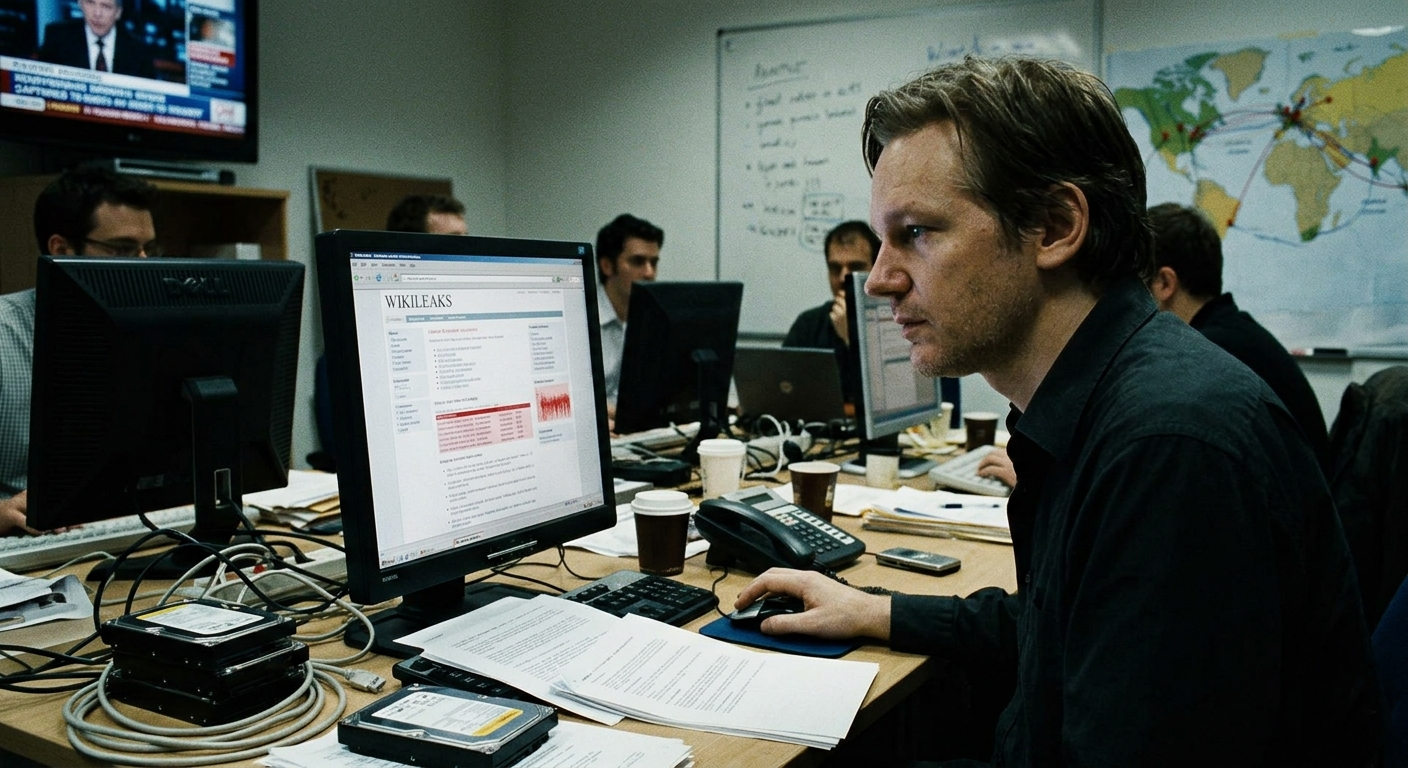
In October 2006, a website went live under the address wikileaks.org that its creators described as a clearinghouse for classified, censored, or otherwise suppressed material from governments and corporations around the world. The site was designed by Julian Assange, an Australian computer programmer and activist, working initially on a computer in Australia before the site migrated to servers in Sweden, a country chosen specifically for its robust legal protections for press freedom. The site published its first document in December 2006, a Somali rebel communication that was uncertain in its authenticity but unambiguous in its ambition: WikiLeaks intended to publish what the powerful wanted hidden.
Over the following years, WikiLeaks would release some of the most consequential secret documents in the history of investigative journalism. It would publish video footage of a United States military helicopter killing civilians in Baghdad. It would release hundreds of thousands of classified military logs from the wars in Afghanistan and Iraq. It would publish a quarter of a million diplomatic cables that exposed the private assessments of American diplomats about foreign governments worldwide. It would play a significant role in the 2016 American presidential election by releasing hacked Democratic Party emails. And its founder would spend years in a London embassy, then in a British prison, fighting extradition to the United States on charges that he considered political persecution and that the US government considered serious violations of the Espionage Act.
Who Was Julian Assange and What Led Him to Create WikiLeaks?
Julian Paul Assange was born on July 3, 1971, in Townsville, Queensland, Australia. His family moved frequently during his childhood, and he was educated through a combination of homeschooling and correspondence courses, developing from an early age an exceptional facility with computers. Using the hacking alias “Mendax,” Latin for “liar,” Assange became one of Australia’s most accomplished computer hackers as a teenager, infiltrating systems including those of NASA and the Pentagon. He described his personal code as avoiding damage to systems or data and sharing what he discovered, what he characterized as ethical hacking. In 1991, he was charged with multiple computer crimes in Australia. The court imposed only a fine of approximately $2,100 and a good behavior bond, acknowledging his youth and the absence of malicious intent.
Assange later described his 1991 trial and the experience of the Australian legal system as a formative intellectual moment that set him on the path to founding WikiLeaks. He identified with Daniel Ellsberg, the American military analyst who had leaked the Pentagon Papers to the New York Times in 1971, the explosive classified history of American involvement in Vietnam that had demonstrated how systematically a government could deceive its citizens about matters of life and death. Assange observed that two years had elapsed between Ellsberg’s obtaining the Pentagon Papers and their eventual publication. WikiLeaks was designed to eliminate that gap: to create a direct, rapid, anonymous, and technically secure channel between those who possessed secret information and the world that deserved to know it.
In December 2006, Assange published a five-page essay that articulated the intellectual framework behind the WikiLeaks strategy. He argued that secretive or corrupt organizations require extensive internal communications to function but that the fear of leaks forces them to reduce those communications, creating what he called a “cognitive secrecy tax.” The more an organization fears leaks, he argued, the less efficiently it can function, ultimately diminishing its ability to hold power. Leaking was therefore, in Assange’s framework, not merely journalism but a form of systemic attack on institutional abuse.
How Was WikiLeaks Founded and Who Were Its Early Members?
WikiLeaks described its founding membership as a mixture of Asian dissidents, journalists, mathematicians, and technology specialists from the United States, Taiwan, Europe, Australia, and South Africa. The initial tranche of documents the site had available did not come from a traditional whistleblower but from an activist who ran a node on Tor, The Onion Router, an anonymous communication network. Chinese hackers had been using the Tor network to collect information from foreign governments, and the activist had been recording this traffic. The material this activist provided allowed Assange to demonstrate to potential contributors that WikiLeaks was genuine, operational, and had already received documents from multiple countries.
Assange assembled an informal advisory board in the early days of the organization. Its members included Phillip Adams, an Australian broadcaster and journalist; Wang Dan and Wang Youcai, prominent Chinese dissident leaders who had participated in the Tiananmen Square protests of 1989; Suelette Dreyfus, an Australian journalist who had co-authored a book with Assange called “Underground,” documenting the culture of Australian hacking; Ben Laurie, a British computer security expert; Xiao Qiang, a Chinese-American human rights scholar; and John Young, the founder of Cryptome, the earlier intelligence document website that WikiLeaks built upon.
The organization was technically non-hierarchical, operating as a distributed network with no fixed headquarters, but in practice Assange functioned as its editorial center and its most important decision-maker, holding final approval over all published documents and describing himself as the website’s editor in chief. The technical architecture of the site was designed to allow sources to submit documents anonymously through an encrypted drop box, making it extremely difficult for governments or organizations to trace submissions back to their origins.
The first document WikiLeaks actually published was a document purportedly from the Islamic Courts Union in Somalia, calling for the assassination of Somali government officials. The document’s authenticity was disputed and was never confirmed. WikiLeaks itself attached a disclaimer acknowledging that it might be a disinformation operation by United States intelligence services. The choice to publish an unverified document was itself a statement of editorial philosophy: WikiLeaks would put documents into the public domain and allow public scrutiny rather than making traditional editorial judgments about authenticity before publication.
The Wikipedia article on WikiLeaks provides the comprehensive history of the organization’s founding, its technical architecture, its major publications, and the extensive legal battles that have defined its existence since 2010.
The Early Major Leaks: Kenya, Guantánamo, and the First International Impact
In its first years, WikiLeaks built its reputation through publications that were significant but did not yet attract the worldwide attention that later releases would generate. In August 2007, the British newspaper The Guardian published a story based on WikiLeaks material about the family of former Kenyan president Daniel arap Moi, documenting an extraordinary network of corruption and looted wealth. The story won the Guardian the Newspaper of the Year award at the British Press Awards in 2008.
In 2008, WikiLeaks published a report by the Kenya National Commission on Human Rights documenting extrajudicial killings and forced disappearances by the Kenyan police. The report, titled “The Cry of Blood,” described in specific detail how police units operated death squads that killed hundreds of people annually. The publication sparked a national debate in Kenya and contributed to calls for accountability that the Kenyan government was obliged to address.
WikiLeaks also published internal documents from the Church of Scientology, details about the United States military’s detention facility at Guantánamo Bay including the list of rules the prison operated under, and the membership roster of the British National Party, a far-right political organization. In 2009, it published the Minton Report, a suppressed scientific document about the toxic waste dump in the Ivory Coast caused by the oil trading firm Trafigura, a publication that proved enormously significant because a British court had already granted Trafigura an injunction preventing a major newspaper from reporting on it. WikiLeaks’s publication of the report, from servers outside British jurisdiction, rendered the injunction effectively meaningless.
The 2010 Publications: Collateral Murder, the Afghan War Diary, and Cablegate
The year 2010 was WikiLeaks’s most consequential and most controversial year. Three major releases transformed it from a significant but specialized media operation into one of the most debated institutions in the world.
In April 2010, WikiLeaks published a classified United States military video from 2007, which it titled “Collateral Murder.” The video showed a United States Army AH-64 Apache helicopter crew in Baghdad engaging a group of people in a street, killing twelve of them, including two journalists from the Reuters news agency, Namir Noor-Eldeen and Saeed Chmagh. The crew could be heard on the audio track expressing enthusiasm for the engagement, apparently unaware that several of the men they were about to kill were carrying cameras rather than weapons, and continuing to fire after the initial engagement when a van stopped to assist the wounded. The video had been provided to WikiLeaks by Chelsea Manning, at that point a United States Army intelligence analyst then known as Bradley Manning, who had accessed it through the SIPRNet military intelligence network.
The Collateral Murder video generated worldwide attention and fierce debate about the rules of engagement in the Iraq War, the behavior of American military forces, and the ethics of WikiLeaks’s decision to give the footage a provocative title rather than presenting it as raw evidence. Critics argued that the context of a complex urban counterinsurgency was missing from the edited presentation. Supporters argued that the video exposed behavior the military had deliberately concealed.
In July 2010, WikiLeaks released the Afghan War Diary, approximately 91,000 classified United States military documents covering the war in Afghanistan from 2004 to 2009. The documents were published in partnership with Der Spiegel, The Guardian, and the New York Times, the first major cooperation between WikiLeaks and established mainstream media organizations. The documents revealed, among much else, detailed accounts of civilian deaths that had not been publicly reported, evidence of direct coordination between Pakistani intelligence and Taliban fighters, and indications of task forces conducting targeted killings beyond publicly acknowledged programs.
In November 2010, WikiLeaks began releasing approximately 250,000 United States diplomatic cables obtained from the State Department’s classified network through Chelsea Manning, in what became known as Cablegate. The cables covered the period from 1996 to February 2010, representing the private assessments of American diplomats from over 270 embassies and consulates worldwide. Among the revelations were American diplomats’ candid characterizations of foreign leaders, documentation of instructions to American diplomats to collect intelligence on United Nations officials including biometric data, evidence of American pressure on other governments in various policy areas, and assessments of political situations in countries from Saudi Arabia to China to Germany. The diplomatic consequences were severe: several foreign governments summoned American ambassadors to explain embarrassing revelations, and diplomatic relationships in several cases were damaged or required significant repair.
The Britannica article on WikiLeaks covers the full scope of WikiLeaks’s major publications, the controversy surrounding the ethics of its methods, and the legal consequences for Chelsea Manning and Julian Assange that followed the 2010 releases.
Chelsea Manning: The Whistleblower Behind the Most Consequential Leaks
The individual whose disclosures made WikiLeaks’s 2010 releases possible was Chelsea Elizabeth Manning, born Bradley Edward Manning on December 17, 1987, in Oklahoma City, Oklahoma. Manning had enlisted in the United States Army and was serving as an intelligence analyst when she copied hundreds of thousands of classified military and diplomatic documents from the SIPRNet network and transmitted them to WikiLeaks. Manning later described her motivations as a profound discomfort with what the documents revealed about American conduct in Iraq and Afghanistan and a belief that the American public deserved to know the reality of those wars.
Manning was arrested in May 2010 after she disclosed her activities to Adrian Lamo, a former hacker who had achieved notoriety for infiltrating the New York Times’s internal network. Lamo informed military authorities. Manning was charged under the Espionage Act of 1917 and other statutes. After a lengthy trial, she was convicted in July 2013 on multiple counts of violating the Espionage Act and was sentenced to thirty-five years in prison. She served approximately seven years before President Barack Obama commuted her sentence in January 2017, one of his last acts before leaving office. Manning was later re-imprisoned for months in 2019 for refusing to testify before a grand jury convened to investigate WikiLeaks, a decision she maintained to the end of her detention.
The Assange Legal Saga: Sweden, Ecuador, and the United States Extradition Battle
Shortly after the Cablegate release, Assange was named in sexual offense allegations filed by two Swedish women. Assange denied the allegations. Sweden issued an international arrest warrant. Assange surrendered to British police in December 2010 and was placed in custody while fighting extradition to Sweden. He was released on bail but in June 2012, facing the exhaustion of his legal appeals in British courts, he entered the Embassy of Ecuador in London and claimed asylum.
Ecuador, under President Rafael Correa, granted him asylum in August 2012, accepting his argument that extradition to Sweden could lead to eventual extradition to the United States, where he feared prosecution for WikiLeaks’s publications. He remained in the Ecuadorian Embassy for nearly seven years, a legally unprecedented situation in which a foreign embassy on British soil provided indefinite refuge to a person whom British courts had found should be extradited.
In April 2019, Ecuador revoked his asylum and Assange was arrested by British police immediately upon removal. The United States government filed an indictment charging him with eighteen counts, seventeen of them under the Espionage Act, for his role in receiving and publishing Manning’s documents. Assange fought extradition from Belmarsh prison in London for five years, through a series of hearings and appeals in the British court system. On June 24, 2024, Assange reached a plea agreement with the United States Department of Justice, pleading guilty to a single count of conspiracy to obtain and disclose national defense information. He was sentenced to time served, the five years he had already spent in British custody, and was released to return to Australia. He landed in Canberra on June 26, 2024, a free man after more than fourteen years of legal jeopardy.
The History.com account of WikiLeaks and Julian Assange covers the full chronology of WikiLeaks’s publications, the Chelsea Manning case, and the legal odyssey that kept Assange confined or imprisoned from 2010 until his return to Australia in 2024.
WikiLeaks, the 2016 Election, and the Question of Political Alignment
WikiLeaks’s role in the 2016 United States presidential election generated the most persistent controversy about the organization’s political independence and alleged alignment with Russian intelligence. Beginning in July 2016, WikiLeaks published emails from the Democratic National Committee and later from John Podesta, the chairman of Hillary Clinton’s presidential campaign. The publication of the DNC emails, which showed internal party communications unfavorable to Bernie Sanders’s primary campaign, contributed to the resignation of DNC chairwoman Debbie Wasserman Schultz on the eve of the Democratic National Convention.
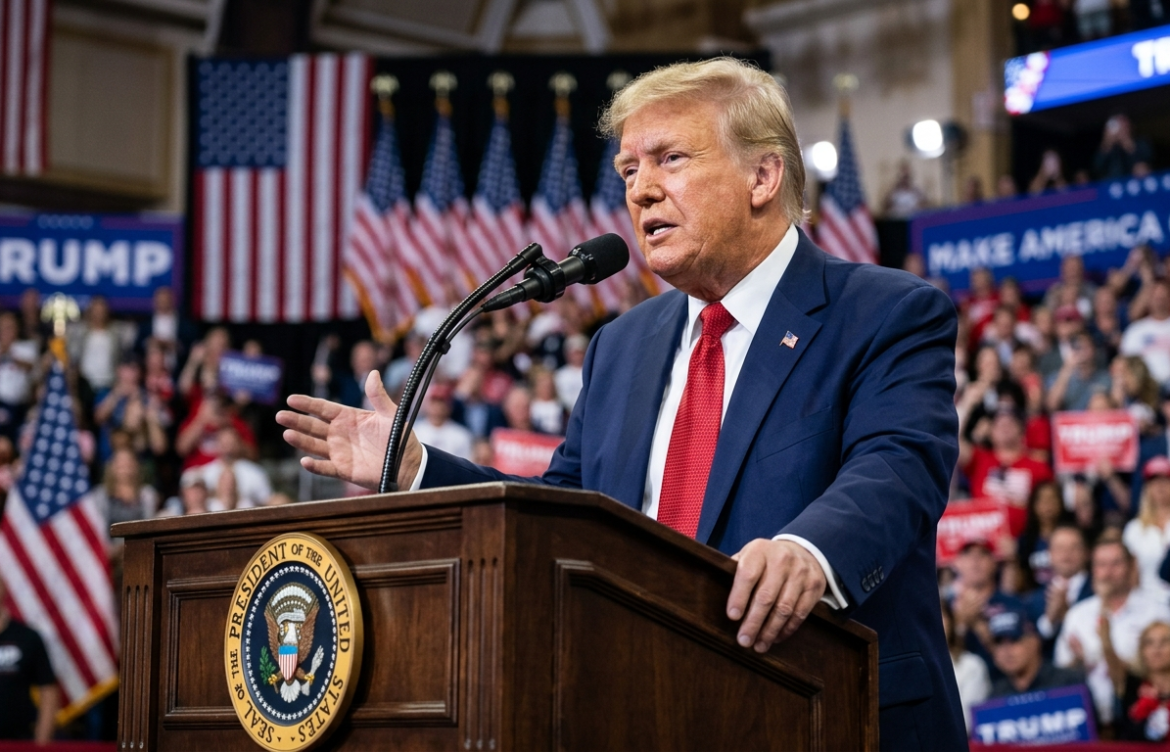
United States intelligence agencies subsequently concluded that the emails had been obtained by Russian military intelligence units, the GRU, and passed to WikiLeaks for publication as part of a deliberate Russian operation to influence the American election in favor of Donald Trump. Assange denied receiving the documents from Russian sources and denied any improper coordination with Russia or the Trump campaign. The question of whether WikiLeaks had knowingly served as a conduit for a foreign intelligence operation fundamentally altered its reputation among many of those who had previously regarded it as a valuable press freedom institution.
The Legacy of WikiLeaks: Press Freedom, Accountability, and Unresolved Questions
The legacy of WikiLeaks’s launch in 2006 and its subsequent publications remains profoundly contested. On one side of the debate are those who argue that WikiLeaks performed an essential function of investigative journalism, revealing genuine atrocities and abuses of power that governments had successfully concealed, and that the prosecution of Assange under the Espionage Act set a precedent that threatened every journalist who might ever receive and publish classified information in the public interest.
On the other side are those who argue that WikiLeaks’s indiscriminate publication of classified material, including the identities of informants and sources in dangerous situations, endangered lives and compromised legitimate national security operations in ways that no responsible journalistic organization would accept, and that Assange’s close operational relationship with foreign intelligence services, if proven, disqualified him from the press freedom protections he claimed.
The Electronic Frontier Foundation’s analysis of the WikiLeaks case and its implications for press freedom examines the press freedom dimensions of the Assange prosecution and the implications of the Espionage Act charges for the relationship between the US government and investigative journalism organizations worldwide.
What began in October 2006 as a website designed by an Australian hacker to accelerate the flow of secret information to the public became, over the following eighteen years, one of the most consequential and most controversial media institutions in the world. WikiLeaks changed what was possible in disclosure journalism, changed how governments managed their secrets, and changed the legal landscape that journalists and publishers operate within. Whether those changes represent a net gain or loss for the causes of accountability and press freedom remains genuinely disputed, and the argument will continue long after Assange has returned to his quiet life in Australia.