The Night at John D. Long Lake: What Susan Smith Did on October 25, 1994
On the night of October 25, 1994, in the small city of Union, South Carolina, a twenty-three-year-old mother named Susan Smith drove her burgundy 1990 Mazda Protégé sedan to the boat ramp of John D. Long Lake, a quiet body of water about two miles east of town off Highway 49. Strapped into their car seats in the back of the vehicle were her two young sons: Michael Daniel Smith, who was three years old, and Alexander Tyler Smith, who was fourteen months old. Shortly after nine o’clock in the evening, Susan Smith released the emergency brake, put the car in neutral, stepped out of the vehicle, and watched as the Mazda rolled slowly down the concrete boat ramp and into the dark water. The car floated on the surface for approximately six minutes before it slipped beneath the water and settled nose-down in the mud at the bottom of the lake, twenty-five feet below the surface. Michael and Alexander drowned in their car seats.
After the car disappeared beneath the water, Susan Smith ran approximately a quarter of a mile down the road to the home of Rick and Shirley McCloud. She was not wet. She was not injured. She told them she had been carjacked at gunpoint by a young Black man who had forced her out of her car at a red light on Highway 49 and driven away with her children still inside. She was hysterical and screaming. Rick McCloud called 911. Within minutes, the Union County Sheriff’s Department had dispatched officers to the scene, and the machinery of one of the most consequential criminal investigations in American history had been set in motion. For nine days, Susan Smith would maintain her false story, appearing on national television to plead for the return of her sons, while Michael and Alexander Smith lay dead at the bottom of the lake less than a mile from where she slept at night.
The crime and its aftermath — the false accusation of a Black man, the nationwide search, the eventual confession, the 1995 murder trial, and the national reckoning over race, motherhood, and justice that followed — made the Susan Smith case one of the most heavily covered and deeply disturbing criminal cases in American history. It exposed the cruelty of which a parent is capable, the speed with which media and public can be manipulated through racial stereotypes, and the complex psychological and social conditions that can surround an act of incomprehensible violence. Thirty years later, the case continues to command attention, as Susan Smith remains incarcerated and was unanimously denied parole in November 2024.
Susan Smith’s Early Life: Tragedy, Abuse, and the Psychological Background Behind the Crime
Susan Leigh Vaughan was born on September 26, 1971, in Union, South Carolina, a small, economically struggling mill town in the northwestern corner of the state. Union County in the 1970s and 1980s was a community shaped by the decline of the textile industry and characterised by tight-knit social networks, conservative religious values, and a racial history that would become starkly relevant in 1994. Susan was the daughter of Harry Ray Vaughan and Linda Harrison Vaughan, and she grew up with one older brother, Scotty. By all accounts she was a bright, sociable child who made friends easily and performed well in school. However, her childhood was marked from early on by profound instability and trauma that her defence attorneys would later argue was fundamental to understanding the crime she committed.
When Susan was six years old, her parents divorced. On January 15, 1978, her father, Harry Ray Vaughan, shot himself. Susan was not yet seven years old. The suicide of a parent is among the most psychologically traumatic events in a child’s development, and clinical evidence presented at Susan’s 1995 trial would document its long-term effect on her emotional regulation, her capacity for relationships, and her vulnerability to depression. Her mother, Linda, subsequently married Beverly Russell — known as Bev Russell — a local businessman in Union who would go on to hold prominent positions in South Carolina’s Republican Party and the Christian Coalition, the influential conservative religious organisation associated with Pat Robertson. Russell presented himself publicly as a pillar of the community and a man of Christian values. He was, by Susan’s own account and his own admission, a sexual predator.
Beverly Russell began sexually molesting Susan when she was a teenager living in his household. The abuse continued for years. Both Susan and Russell acknowledged at the 1995 trial that their sexual relationship had continued until approximately six months before the murders — meaning that, by Russell’s own admission, he was engaged in a sexual relationship with his stepdaughter until she was twenty-two years old. The defence argued that this history of prolonged sexual abuse by a trusted authority figure, combined with the early loss of her biological father through suicide, had created the conditions for the severe depression, dependent personality disorder, and emotional instability that Susan displayed throughout her adult life. At age thirteen, shortly after the disclosure of the abuse, Susan attempted suicide for the first time. After graduating from Union High School in 1989, she made a second suicide attempt following the end of a relationship with a married man. These two suicide attempts, both documented in clinical records introduced at trial, were critical elements of the defence’s argument that the events of October 25, 1994 were the product of a mind overwhelmed by despair rather than cold calculation.
Marriage to David Smith, the Birth of Michael and Alexander, and a Troubled Relationship
Susan Vaughan met David Wesley Smith at Winn-Dixie, the supermarket where both of them worked during their late teenage years in Union. David Smith was born on January 1, 1971, making him approximately nine months older than Susan. The two began dating and became serious quickly, despite the volatility that characterised their relationship from early on. Susan became pregnant, and the couple married in March 1991, when Susan was nineteen years old. Michael Daniel Smith was born on October 10, 1991, the first of their two sons. Alexander Tyler Smith — known as Alex — was born on August 5, 1993. By the accounts of those who knew the family, both boys were healthy, affectionate children, and numerous witnesses at the trial and in subsequent media coverage testified to Susan’s genuine love for them in ordinary circumstances, making the nature of the crime she committed all the more difficult to comprehend.
The marriage between Susan and David Smith was troubled throughout. There were infidelities on both sides. The couple separated more than once. By 1993 and into 1994, their relationship had deteriorated to the point of serious dysfunction. David was engaged in an extramarital affair with a woman named Tanya Canady. Susan had begun her own affair with Tom Findlay, who worked at the same company she did — Conso International Corporation, a textile accessories manufacturer based in Union, where Susan worked as an assistant in the administrative offices. The affairs were known within the small Union social circle in which the Smiths moved, contributing to the atmosphere of emotional crisis that surrounded Susan in the months before the murders. David and Susan separated in the spring of 1994, though they continued to see each other for the sake of the children and presented a united front to the public and media during the nine days of the false carjacking story.
The separation meant that on October 25, 1994, Susan had custody of the children and was driving with them in her car that evening. The events of that day — including what motivated Susan to do what she did at John D. Long Lake — became the central question of both the police investigation and the subsequent murder trial. The prosecution’s answer was clear and damning: Susan Smith killed her children because she wanted to be with Tom Findlay, and Tom Findlay had told her he did not want children.
Tom Findlay, the Letter, and the Motive: Why the Prosecution Said Susan Smith Killed Her Sons
Tom Findlay was, by the standards of Union, South Carolina, a man of considerable social and economic standing. He was the son of J. Cary Findlay, the owner and founder of Conso International Corporation, the company where Susan Smith worked. Tom himself worked at the company as a graphic artist and was known in Union social circles as one of the town’s most eligible bachelors — attractive, well-connected, and from one of the most economically successful families in the area. He and Susan had begun a romantic relationship during the period of her separation from David. For Susan, whose life had been characterised by instability, abandonment, and failed relationships, the relationship with Findlay represented something she desperately wanted: a stable, affluent, socially respectable future.
In the days before October 25, 1994, Tom Findlay wrote Susan Smith a two-page letter. The letter was recovered by investigators from the submerged car along with Susan’s wedding dress, photo albums, and other personal possessions. It was introduced as the prosecution’s most powerful piece of evidence at trial, and its contents were devastating to Susan Smith’s case. In the letter, Findlay told Susan that he cared about her but that there were things about her that were not suited for him, and he made explicit what those things were: I am speaking about your children. He continued: I’m sure that your kids are good kids, but it really wouldn’t matter how good they may be. The fact is, I just don’t want children. Findlay’s letter effectively told Susan that a future with him — the future she wanted most — was incompatible with the existence of Michael and Alexander.
At trial, Tom Findlay testified that he had seen Susan three times on October 25, 1994 — the day of the murders — and that she had been visibly overwrought and emotionally distraught. He acknowledged the letter and its contents. Findlay proved to be a complex and somewhat sympathetic figure in the courtroom: he spoke of Susan with genuine care, describing her as very caring, very loving, a good friend to everyone, and said they had remained on good terms even after he ended their affair. But the prosecution’s narrative was relentless: Susan Smith had killed her children because Tom Findlay did not want children, and she had chosen the love of a man over the love of her sons. Lead prosecutor Tommy Pope put it directly in closing arguments: On the night of October 25, Susan Smith made a choice — a horrible, horrible choice. She chose the love of a man over the love of those boys.
The False Carjacking Story: Nine Days of Deception and the Racial Dimension of a Devastating Lie
At approximately 9:15 on the evening of October 25, 1994, Susan Smith arrived at the home of Rick and Shirley McCloud and told them that a young Black man had carjacked her vehicle at a red light on Highway 49 and driven away with her children inside. She described the carjacker as a young Black male, approximately twenty to thirty years old, wearing a dark knitted cap, jeans, a plaid flannel shirt, and a black t-shirt underneath. He had brandished a gun. He had ordered her out of the car at the intersection. He had told her not to worry, that he was not going to hurt her. This story — carefully enough detailed to sound plausible, generic enough to be difficult to disprove — became the foundation of nine days of national media frenzy and a police investigation that consumed enormous resources in Union County and beyond.
Susan appeared on national television multiple times during the nine-day search, making tearful, apparently anguished pleas for the return of her sons. She sat beside David Smith, who had been informed of the carjacking and who stood beside his estranged wife in apparent good faith, believing the story she told him. The image of a devastated young mother begging a faceless criminal for the return of her babies was compelling and heartbreaking, and the national media covered the case intensively. However, the story Susan Smith told was built on one of the oldest and most toxic racial stereotypes in American history: the predatory Black man threatening a white woman and her children. In Union County, South Carolina, a community with a history of racial tension, the effect of the accusation was immediate and alarming.
The Black community in Union and in the surrounding region was placed under intense pressure and suspicion. According to Gary Henderson, the Spartanburg Herald-Journal reporter who covered the case and later wrote a book about it, the Black community was on edge — really on edge — and afraid that the white community was going to turn on them. Police conducted searches in predominantly Black neighbourhoods. Black men in Union who fit the vague description Susan had provided were stopped and questioned. The racial dynamics of the false accusation were not merely a backdrop to the case; they were central to Susan’s choice of alibi. She understood, consciously or not, that in that time and place, the accusation of a young Black man was the story most likely to be believed without question. Lead prosecutor Tommy Pope later acknowledged the terror of that reality: if she had named someone, an innocent Black man could have ended up in prison. He said he would have quit his job if that had occurred.
Investigators, however, were skeptical of Smith’s account from very early in the case. Sheriff Howard Wells and his deputies noted several immediate inconsistencies. Carjackers, in the experience of law enforcement, virtually never abduct children; the risk and complication of having a screaming toddler and infant in the vehicle added nothing to a criminal interested only in the car. The traffic light on Highway 49 at the intersection Susan described was a demand-activated signal, meaning it would only turn red if another vehicle was present and had triggered the sensor — but Susan had told police there were no other cars at the intersection. Investigators also noted that Susan consistently asked those around her whether Tom Findlay had come to see her, a preoccupation that struck those who knew about it as deeply incongruous for a woman who should have been consumed by anguish over her missing children.
The Investigation: Sheriff Howard Wells, the Mounting Doubts, and the Confession on November 3
Howard Wells, the Union County Sheriff, was a central figure in both the investigation and the eventual unravelling of Susan Smith’s story. Wells, who had known Susan Smith and her family for years — Union was a small enough community that many people knew one another — led the investigation with careful professionalism, working simultaneously to pursue the carjacking story publicly while privately growing increasingly certain that Smith herself was responsible for her sons’ disappearance. Within the first two days of the investigation, Wells and his investigators had developed serious doubts about the carjacking account. They had identified the timing inconsistencies, the implausibility of the motive, and the demographic oddity of a carjacker who retained the children but not the car. By day three or four, investigators were searching John D. Long Lake, among other bodies of water near the route Susan had described driving that evening.
The nine days of the investigation were a sustained exercise in investigative patience and psychological pressure. Wells and his team were gathering evidence while allowing Susan Smith to continue her public appeals, monitoring her behaviour for further inconsistencies, and building the circumstantial case that they hoped would lead to either a discovery of the car or a confession. They had divers in John D. Long Lake within the first week, though the lake was murky, deep, and the car had settled in a portion of the bottom that was difficult to survey from the surface. The search was conducted under conditions of enormous public and media scrutiny. Smith continued to give interviews, to cry before cameras, and to maintain her story with an apparent conviction that investigators found both impressive and deeply troubling.
On November 3, 1994 — nine days after the crime — Sheriff Wells sat down with Susan Smith for what he described as a soft interview, a conversational rather than confrontational approach designed to give her an opportunity to tell the truth. The interview lasted approximately two hours. Gradually, under Wells’s patient questioning, the story collapsed. Smith admitted that she had not been carjacked. She confessed that she had driven to the boat ramp at John D. Long Lake, that she had released the brake, that she had stepped out of the car, and that she had watched the Mazda roll into the water with Michael and Alexander still strapped in their seats. She directed investigators to the lake. Within hours, divers from the South Carolina Wildlife Department had located the submerged vehicle and the bodies of her sons.
Steve Morrow, a diver for the South Carolina Wildlife Department who testified at the 1995 trial as a prosecution witness, described the scene in the lake with a quiet devastation that held the courtroom in silence. He shone his flashlight through the murky water into the submerged vehicle and, as he testified, I was able to see a small hand against the glass. He described the car as having nose-dived into the mud, and he saw the boys’ heads hanging downward in their car seats. Inside the car, investigators found Michael and Alexander, still buckled in, and also Susan’s wedding dress, family photo albums, and personal mementoes. The car pulled from the bottom of John D. Long Lake carried with it, investigators would later observe, everything that symbolised Susan Smith’s life — everything except her husband, who had been standing beside her on television telling lies.
The Victims: Michael Daniel Smith and Alexander Tyler Smith
Michael Daniel Smith was born on October 10, 1991, in Union, South Carolina. He was three years old at the time of his death, ten days before what would have been his fourth birthday. By all accounts of family members, neighbours, and those who knew the Smith family, Michael was an active, curious, and sociable child who was well-loved by both his parents and his extended family. He had brown hair and his father’s eyes and, in the photographs that circulated during the nine-day search, wore a warm smile that made the case feel viscerally personal to millions of Americans who watched the story unfold on television.
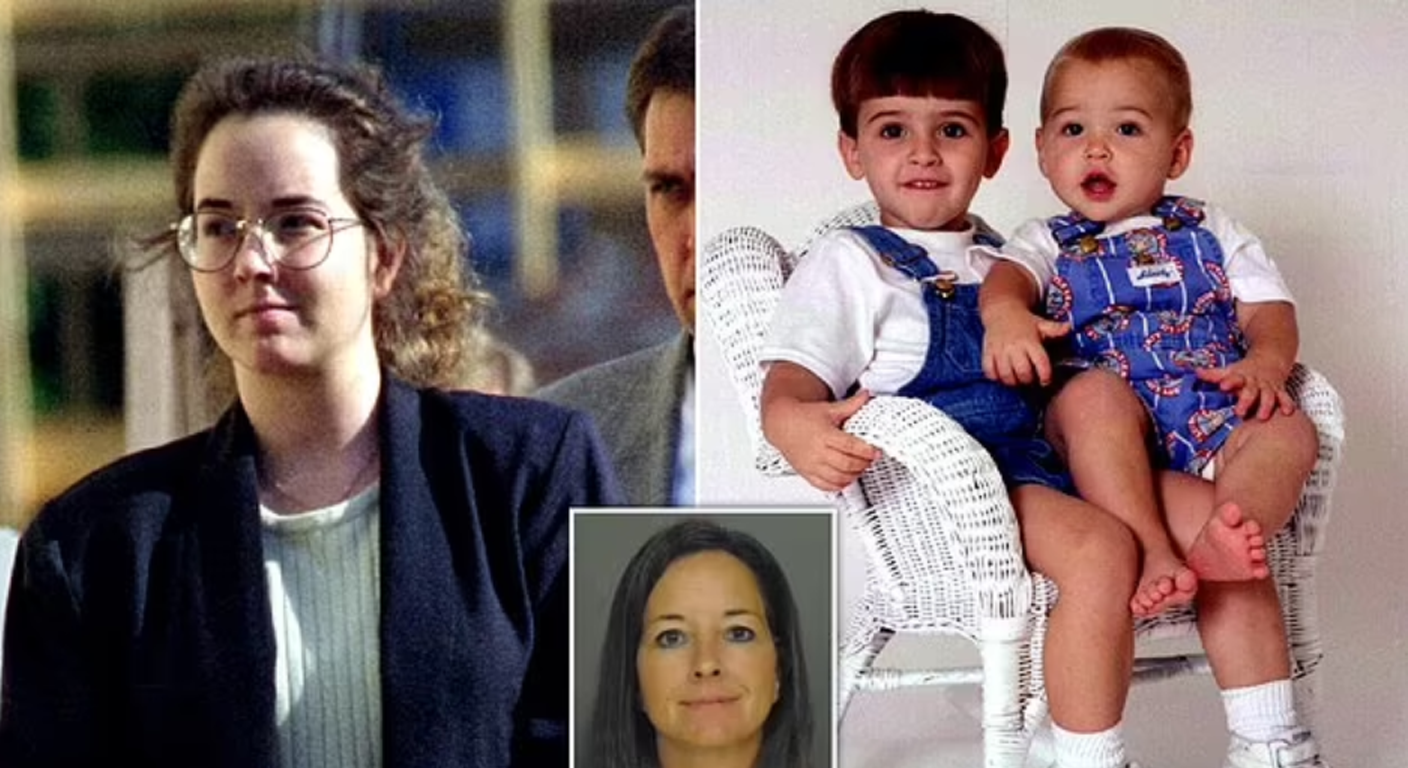
Alexander Tyler Smith — known in the family as Alex — was born on August 5, 1993. He was fourteen months old at the time of his death, barely beyond infancy, unable to understand or communicate in language, utterly dependent on the adults around him for everything. In the photographs released during the search, he appears as a plump, bright-eyed baby. The image of the two brothers together — the older boy with his arm around his infant sibling — became one of the defining images of the case and of the particular cruelty of the crime. Both boys were dressed in their regular clothes and strapped into their car seats, as if they were simply going for a drive, when their mother stepped out of the car and let it roll into the lake.
David Smith, the boys’ father, has spoken about his sons at every subsequent public opportunity in the thirty years since the murders. At the November 2024 parole hearing, he appeared before the board visibly shaken and tearful, describing the loss of Michael and Alex in terms that made clear the grief had never diminished. He told the board that he plans to attend every future parole hearing to ensure that Michael and Alexander are not forgotten. It’s just not enough, he said through tears when describing the thirty years Susan had served — fifteen years per child, as he framed it. David Smith’s current wife, Tiffany Smith, also spoke at the parole hearing, describing the extent to which her husband’s grief affects him daily: he cannot get out of bed some days because of the pain.
The 1995 Murder Trial: Judge Howard, Prosecutor Tommy Pope, and Defence Attorneys Bruck and Clarke
The trial of Susan Smith for two counts of first-degree murder began on July 18, 1995, in Union County, South Carolina, before Judge William Howard. It lasted ten days and became one of the most closely watched criminal trials in American history, drawing intense national and international media attention. The judge made the significant decision not to allow cameras in the courtroom — a deliberate choice influenced by his concern about what the television coverage was doing to the contemporaneous O.J. Simpson murder trial, which was being broadcast live and, in the judge’s view, had transformed into a spectacle that undermined the judicial process. As a result, unlike the Simpson trial, the Susan Smith proceedings were reported through pool correspondents and sketch artists rather than live television, giving the proceedings a somewhat different texture in the public consciousness.
The lead prosecutor was Tommy Pope, the solicitor for the 16th Judicial Circuit of South Carolina. Pope was a skilled and experienced prosecutor who had served in Union County for years and who brought a combination of analytical precision and moral passion to the case. His approach at trial was built around two pillars: the letter from Tom Findlay as the motive, and the physical and testimonial evidence establishing that the killings were deliberate rather than the product of a moment of suicidal impulse. Pope’s closing argument was widely described as one of the most powerful and memorable in South Carolina legal history. He told the jury that when Susan Smith released the brake and let the car roll into the lake, it was like pulling a trigger, and that the six minutes the car floated on the surface — during which Smith watched from the shore — gave her ample time to change her mind, to pull the brake back up, to save her sons. She did not.
The defence team consisted of David Bruck and Judy Clarke, two highly experienced capital defence attorneys. Bruck had a long career defending clients in capital cases in South Carolina and would go on to represent Dzhokhar Tsarnaev, one of the Boston Marathon bombers. Clarke had a distinguished capital defence career that would later include representing Ted Kaczynski, the Unabomber, and Jared Loughner, the Tucson mass shooter. In their opening statements, Clarke argued that this was not a case about evil but about despair and sadness. The defence’s theory of the case was that Susan had driven to John D. Long Lake that night intending to kill herself along with her children — a botched murder-suicide in which her own survival instinct caused her to exit the car at the last moment, leaving her sons to die without her. The defence called expert witnesses to testify about Susan’s history of depression, her dependent personality disorder, her childhood trauma, and the sexual abuse she had suffered at the hands of Beverly Russell. Bev Russell himself took the stand and confirmed the sexual abuse.
The jury took only two and a half hours to convict Susan Smith of two counts of murder on July 22, 1995. The speed of the verdict was a reflection both of the overwhelming weight of the prosecution’s evidence and the jury’s clear rejection of the defence’s botched-suicide theory. The penalty phase of the trial, which determined whether Smith would be sentenced to death or to life imprisonment, was more closely contested. Tommy Pope argued passionately for the death penalty, and the prosecution presented evidence and arguments designed to establish that the crime merited the ultimate punishment. The defence, in the penalty phase, placed renewed emphasis on Susan’s traumatic childhood, her mental health history, and the sexual abuse by Beverly Russell. After deliberation, the jury voted against the death penalty. Susan Smith was sentenced to two concurrent terms of life imprisonment with the possibility of parole after thirty years. The sentence was delivered on July 28, 1995.
The Racial Dimension: A False Accusation and the Dangerous Power of a Racial Stereotype
No analysis of the Susan Smith case is complete without a sustained examination of the racial dimension of the false carjacking accusation. When Susan Smith invented a Black male carjacker as the villain of her fabricated story, she was not randomly selecting a demographic; she was deliberately exploiting one of the most deeply embedded and destructive racial stereotypes in American history — the myth of the predatory Black man threatening the safety of white women and their families. This stereotype has a long and lethal history in the American South, having served for centuries as a justification for lynching, segregated criminal justice, and the systematic terrorisation of Black communities. Susan Smith’s use of this particular lie placed her false accusation within that tradition, whether she was conscious of doing so or not.
The response in Union County and nationally was exactly what the racially charged accusation was designed to produce. The story of a Black man carjacking a young white mother and abducting her children activated deep-seated anxieties about crime, race, and safety that were prominent in American public discourse in the autumn of 1994. The O.J. Simpson case — in which a Black man was accused of murdering his white wife — had been generating national headlines since June of that year. Political discourse about crime, welfare, and welfare reform was saturated with racial coding. Susan’s description of the carjacker was generic enough to apply to a large portion of the Black male population of Union County, and investigators were briefly in the position of potentially needing to arrest someone fitting that description on the basis of Smith’s account alone.
Within the Black community of Union, the accusation produced fear, anger, and a profound sense of vulnerability. Community leaders urged calm. Some residents were subjected to additional scrutiny. The wrongful targeting of an innocent Black man as the result of a white woman’s false accusation was, as Tommy Pope acknowledged years later, a very real possibility that haunted him throughout the investigation: if she had genuinely named someone, the machinery of law enforcement and public opinion might have produced a catastrophic miscarriage of justice. Pope told CNN that he would have resigned from his office if an innocent man had been arrested and charged. The near-miss was a reminder of how effectively racial stereotyping can function as a weapon and how dangerous it remains when deployed within a criminal justice system still imperfectly insulated from its racial history. After Susan’s confession, her brother issued a public apology to the Black community of Union, acknowledging the harm the false accusation had caused.
Life Behind Bars: Disciplinary Record, Prison Relationships, and the Controversy That Has Continued
Susan Smith was booked into the Camille Griffin Graham Correctional Institution in Columbia, South Carolina, immediately following her sentencing in July 1995. She was subsequently transferred to the Leath Correctional Institution near Greenwood, South Carolina, where she has remained incarcerated. Her time in prison has not been without incident. In 2010, Smith was disciplined twice for the use of drugs while imprisoned. She was also disciplined in 2010 for what prison authorities classified as mutilation — conduct that scarred or damaged her own body. In 2012, she received a disciplinary charge for the unauthorised use of another inmate’s PIN number. She was disciplined again for drug use in 2015. Between 2015 and 2024, a period of nine years, she had no disciplinary incidents on her record. In August 2024, she was disciplined for speaking with a documentary filmmaker and providing the filmmaker with contact information for her friends, family, and victims without authorisation — a violation that her attorneys acknowledged at the 2024 parole hearing.
Smith’s personal life in prison attracted media attention in the years following her incarceration when records obtained under South Carolina’s open records law revealed that she had been conducting multiple romantic and quasi-romantic telephone and text message relationships with men on the outside, some of whom were aware of her identity and criminal history. Smith told the parole board that the public disclosure of these private communications constituted a violation of her privacy and had upset her. The revelation that she was simultaneously maintaining conversations about the future with several men simultaneously — while serving a life sentence for drowning her children — reinforced for many observers the view that she remained fundamentally self-absorbed and lacking in the kind of genuine remorse that might support a case for rehabilitation. The image of the woman who had cried on national television for nine days while her children lay dead in a lake, and who had in prison been conducting multiple relationships and drug use, confirmed for many the prosecution’s original characterisation: Susan has always focused on Susan.
David Smith, who divorced Susan in May 1995 while she was awaiting trial, has remained one of the most visible opponents of her release. He remarried, and he and his current wife, Tiffany, have continued to speak publicly about Michael and Alex and to attend significant legal proceedings related to Susan. His remarks at the November 2024 parole hearing were among the most emotionally powerful of the proceeding: he said through tears that he had never felt any remorse from his ex-wife, that her actions had nearly caused him to take his own life, and that thirty years — fifteen years per child — was simply not enough. He stated his intention to attend every future parole hearing for as long as he is able to do so, to ensure that the board does not forget who the real victims of the case were.
The 2024 Parole Hearing: Susan Smith’s First Appearance Before the Board and Its Outcome
On November 20, 2024, Susan Smith appeared before the South Carolina Board of Paroles and Pardons for the first time, having become eligible for parole after serving the mandatory thirty-year minimum of her life sentence. The hearing was conducted in Columbia, South Carolina, with Smith participating via video link from the Leath Correctional Institution. It was a public proceeding, attended by David Smith and fourteen other witnesses who testified in opposition to Smith’s release, as well as by the media and members of the public. The hearing was emotionally intense from beginning to end.
Smith began her testimony struggling to speak, breaking down in tears almost immediately and pausing for several seconds before composing herself enough to continue. She told the board that she knew what she had done was horrible, that she would give anything to be able to go back and change it, and that she loved Michael and Alex with all her heart. She expressed regret for the resources she had wasted during the nine-day false carjacking story, telling the board she was sorry she had put law enforcement through that. She invoked her Christian faith as a source of strength and healing, telling the board that God had forgiven her and that she was a changed person. Her attorney, Tommy A. Thomas, told the board that his client was truly remorseful. The board asked Smith about her disciplinary record in prison, including the drug use and the 2024 incident with the documentary filmmaker. She said she had learned from her mistakes.
The board also heard from Tommy Pope, the original lead prosecutor, who told the panel that in thirty years he had not seen or heard evidence of genuine remorse from Smith and repeated his long-standing assessment: Susan has always focused on Susan. Pope noted the logistical and resource burden the false accusation had imposed on law enforcement and the broader community of Union County, whose police and investigators had spent nine days chasing a fictional carjacker while the real perpetrator sat in front of television cameras pleading for her children’s return. Fourteen witnesses testified against Smith’s release, and the board’s deliberations were brief. The decision was unanimous: parole was denied. Under South Carolina law, Smith is eligible for another parole hearing every two years, meaning she can next appear before the board in 2026. Given the unanimous denial, the presence of an organised opposition from the victims’ family, and the disciplinary incidents on her record, legal experts and criminologists assessed her chances of future release as extremely limited.
The Broader Legacy of the Susan Smith Case: Media, Race, Parenting, and American Criminal Justice
The Susan Smith case left marks on American culture, criminal justice, and public discourse that extend well beyond the specifics of what happened at John D. Long Lake on October 25, 1994. Its most immediate and significant practical legacy was its contribution to the development of the AMBER Alert system. The nine-day public search for Michael and Alexander Smith — a search conducted on the basis of a false story but widely covered by national media — demonstrated both the power of broadcast media to mobilise public attention in a missing-child case and the vulnerability of that system to exploitation through false reporting. The AMBER Alert system, which was developed in 1996 as a collaborative initiative between law enforcement and news media in Arlington, Texas, following the abduction and murder of nine-year-old Amber Hagerman, drew on the lessons of the Susan Smith case among others in developing protocols for broadcasting missing-child alerts in ways that could reach the broadest possible audience with maximum speed.
The racial dimension of the case entered the broader conversation about race and criminal justice in America at a particularly charged moment. The autumn of 1994, when Susan Smith made her false accusation, was the same period during which the O.J. Simpson murder case was beginning to consume national attention in ways that would deepen racial divisions rather than heal them. The Smith case added another data point to the ongoing national argument about race, crime, and the reliability of eyewitness testimony and police investigation in a racially polarised society. It demonstrated, with uncomfortable clarity, how readily a racial stereotype could be mobilised as a tool of deception, and how little was required to direct the force of law enforcement toward an entire racial group on the basis of a single false accusation. Scholars of criminal justice and race have returned to the case repeatedly in the decades since, as one of the clearest examples of how racial stereotyping functions as an instrument of manipulation within the American justice system.
The case also ignited debates about the psychology of mothers who harm their children — a subject that is uniquely disturbing to cultural assumptions about maternal instinct and parental love. The defence’s argument that Susan Smith’s crime was the product of severe depression, dependent personality disorder, and a traumatic history of abuse and abandonment forced a public confrontation with the reality that mothers are not immune to the psychological conditions that can produce violence, and that the cultural idealisation of maternal love can itself obstruct the recognition of warning signs. Clinical experts who testified at the trial described a woman whose emotional development had been severely disrupted by early bereavement and prolonged sexual abuse, and who had come to base her entire sense of identity and worth on the validation of romantic relationships with men. These clinical frameworks were intended to explain rather than excuse — and the jury, in convicting Smith in two and a half hours, clearly regarded them as insufficient mitigation for the deliberate killing of two children.
The trial itself became a touchstone in the evolving media landscape of the 1990s. Judge William Howard’s decision not to televise the proceedings, explicitly motivated by concern about the Simpson trial’s transformation into entertainment, reflected a broader judicial anxiety about the relationship between live courtroom television and the integrity of the justice process. The Susan Smith trial was thus covered extensively by print and broadcast media but without the moment-by-moment visual spectacle that the Simpson proceedings generated, giving it a different character in public memory — deeply felt but less theatrically documented. Tommy Pope, reflecting on the case thirty years later, remained haunted by its central fact: that a woman chose to end the lives of her sons in pursuit of a romantic relationship, and that a fictional Black carjacker nearly destroyed the life of an innocent man in the process.
Susan Smith’s Defence: Mental Health, Childhood Trauma, and the Debate Over Culpability
The defence case presented by David Bruck and Judy Clarke at the 1995 trial was built on a substantial and clinically documented foundation. The attorneys called expert witnesses who testified that Susan suffered from dependent personality disorder, a condition characterised by an excessive and pervasive need to be cared for that leads to submissive and clinging behaviour, fear of separation, and an inability to tolerate being alone or rejected. In conjunction with the major depressive episodes documented in Susan’s clinical history, the dependent personality disorder diagnosis offered a framework within which her choice to kill her children rather than lose Tom Findlay could be understood as the product of an overwhelmed and disordered mind rather than simple cold-blooded murder.
The defence also made extensive use of Susan’s history of trauma. Bev Russell’s testimony confirming the prolonged sexual abuse was intended to demonstrate that Susan had been systematically victimised by powerful authority figures throughout her life — first losing her father to suicide, then being abused by her stepfather, then being abandoned in relationships. The defence argued that each of these experiences had deepened her depression and her desperate dependence on romantic attachment, and that by October 1994, the combination of Findlay’s rejection and the cumulative weight of years of psychological damage had produced a crisis of suicidal proportion. The botched-murder-suicide theory — that Susan had intended to die with her children but that her own survival instinct had involuntarily impelled her from the car — was both the strongest and the most problematic element of this argument.
The prosecution dismantled the botched-suicide theory with a piece of physical evidence that was both simple and irrefutable. Investigators had tested the 1990 Mazda Protégé to determine how long it would float before sinking. The car, they found, floated for approximately six minutes on the surface of the lake before it submerged. Six minutes is a significant period of time — long enough to wade into the water, long enough to reach the car, long enough to pull the door open and unbuckle a three-year-old and a toddler. Susan Smith stood on the shore and watched the car float for those six minutes. She made no attempt to save her sons. The prosecution’s argument was direct: a woman who intended to commit suicide would have stayed in the car; a woman who was overcome by sudden instinct and leapt free would have tried to rescue her children in the minutes before the car sank. Susan did neither. She stood on the shore and watched. This evidence, more than any other single element, destroyed the botched-suicide theory in the jury’s mind.
The Small Town of Union: Community Impact and the Weight of a Crime That Defined a Place
Union, South Carolina, the small city where the Smith case unfolded, has never entirely escaped its association with the events of October and November 1994. With a population of approximately 10,000 people at the time of the murders, Union was the kind of close-knit community where everyone knew everyone, where the social circles of the key participants — Susan and David Smith, Tom Findlay, Sheriff Howard Wells, the Findlay family — overlapped and intersected in ways that gave the case an intimacy absent from crimes in larger, more anonymous cities. The trial was held in Union County Courthouse, within a few miles of the lake where the crime had occurred, and was attended by community members who had watched the nine-day search play out in their own neighbourhood.
John D. Long Lake, the site of the murders, became a de facto memorial in the years following the case. A commemorative marker was erected near the boat ramp where Susan Smith released the brake of her car. Visitors have continued to come to the lake in the decades since, some drawn by genuine grief and commemoration, others by the curiosity that attaches to famous crime scenes. The lake and the boat ramp appear in journalistic and documentary accounts of the case with regularity, their concrete and water providing a physical focus for the abstract enormity of what happened there. In a July 1995 photograph taken just days before the conclusion of Susan Smith’s trial, visitors can be seen walking down the ramp where Michael and Alex were drowned, the angle and the light giving the ordinary landscape a quality of unbearable weight.
The racial trauma inflicted on the Black community of Union by the nine-day false accusation was real and lasting. Gary Henderson, the journalist who covered the case and wrote a book about it, has spoken extensively about the fear and anger that circulated through the Black community during those nine days, and about the particular vulnerability of a community that had every historical reason to regard such accusations with alarm. The community’s relief when the truth was revealed was mixed with a bitter recognition of how close the situation had come to producing the injustice that racial stereotyping had so often produced in American history. Susan’s brother’s apology to the Black community, while welcome, was understood as inadequate compensation for nine days of fear and stigma imposed without any basis in fact.
Michael and Alexander Smith: Remembering Two Boys the World Should Not Forget
Michael Daniel Smith would have turned thirty-three years old in October 2024. Alexander Tyler Smith would have turned thirty-one in August of the same year. They are remembered, three decades after their deaths, by their father David, by their extended family, by the communities of Union County, and by the millions of people who followed the case and who have never been able to forget the image of two small boys strapped in their car seats at the bottom of a lake in South Carolina. Their brief lives — three years and fourteen months respectively — were characterised by the ordinary joys and experiences of early childhood: play, family, the developing recognition of the world around them. Michael was old enough to call for his parents, old enough to know the faces of the people who loved him. Alex was barely past infancy, not yet walking steadily, entirely dependent on the adults in his world.
The enduring significance of the Susan Smith case lies not in the courtroom arguments or the media coverage or even the racial and sociological questions it raised, important as all of those are. It lies in the fact that two children who had done nothing wrong, who had no part in the adult conflicts and emotional crises that surrounded them, were killed by the person most responsible for their safety and wellbeing. The crime violated the most fundamental of human obligations: the protection by a parent of a child. Everything else that the case generated — the false accusation, the media spectacle, the trial, the cultural debates — flows from that central and irreducible fact. Michael and Alex Smith were three years old and fourteen months old, and they were strapped in their car seats in the back of their mother’s car, and they died in the dark water of a lake in South Carolina because their mother decided she wanted something more than she wanted them to live.
David Smith told the 2024 parole board that he attends these hearings and will continue to attend them so that Michael and Alex are not forgotten. It is the most important thing he does. The names Michael Daniel Smith and Alexander Tyler Smith deserve to be spoken with the same frequency and gravity as the name Susan Smith, whose crime is inseparable from their existence and their death. They were the victims. They are the reason the case matters. And thirty years after the night at John D. Long Lake, their father’s determination to speak their names before any board considering their mother’s release is the most fitting memorial to two boys who never had the chance to grow up.